Have Something to Say? Your Legislators DO Listen

By Sheila Freed

LEAN has been urging everyone to do Advocacy by using the Nevada legislative website. We’ve told you how easy it is to connect with your state Senator or Assembly Member. I know many of us are skeptical, and doubt that our legislator or anyone else actually reads what we send. Well, I can tell you someone must read at least some of them. I recently emailed my Assembly Member, who happens to be Pat Hickey, about AB 223, a bill dealing with protection of elders and other vulnerable persons. The bill was due for a hearing a couple of days later, and I wanted to point out a possible unintended consequence of the legislation. I asked that the language of the bill, which I support, be tailored to address the unintended consequence. I copied the chair of the committee that would hear the bill, the ranking minority member, and the primary sponsor of the bill. I received an acknowledgement message from Assemblyman Hickey, which did not surprise me. But I was really surprised to find my email included in the “exhibits” package that was prepared for the hearing. I think this proves that legislators really do seek thoughtful input. My faith in the system received a big boost. Try it!

So Just What Is a Fair Minimum Wage for Nevadans?

Since America began pulling out of the Great Recession, a lot has been said and written about the struggling middle class, and how the recovery has only been for the wealthy.  Sixteen years ago, the ELCA adopted a Social Statement titled “Sufficient, Sustainable Livelihood for All, A social statement on economic life.” In the very first paragraph, it says the current market-based economy meets people’s needs to an amazing degree and many are prospering as never before. At the same time, others continue to lack what they need for basic subsistence. The Statement goes on, “Our faith in God provides a vantage point for critiquing any and every system of this world, all of which fall short of what God intends. Human impoverishment, excessive accumulation and consumerism driven by greed, gross economic disparities, and the degradation of nature are incompatible with this reign of God.”

These strong words predate the current debate over whose politics and what economic policies are most beneficial, but the issues haven’t changed since 1991, and really since the days of the Prophets. LEAN always starts with the ELCA Social Statements when analyzing proposed legislation, and “Sufficient, Sustainable Livelihood for All” has come into play a lot in the current legislative session. A number of bills have been introduced that really do chip away at the status of working people.

Earlier in this year’s Nevada legislative session, State Senator Tick Segerblom created a stir when he proposed increasing the minimum wage to $15 per hour (Senate Joint Resolution 8). At present, the minimum wage in Nevada is $7.25 per hour if health insurance is offered, $8.25 if no health insurance is offered and the employee must buy insurance elsewhere. A year’s full-time employment amounts to about 2,000 hours (40 hours x 52 weeks) and at $8.25 per hour, a year’s income would be $16,500.  It’s pretty difficult to live on that, even if you’re a single person with no dependents. The $15 per hour rate would make a year’s earnings $30,000, still not a very good living. Senator Joe Hardy introduced a somewhat competing measure, SJR 6. His bill doesn’t overtly reduce the minimum wage, but would have the effect of doing so for many workers. Right now, an employer is considered to offer health insurance if a plan is available through the employer at a cost to the worker of no more than 10% of his wage. So our minimum-wage worker would be able to buy insurance for $1,450 per year.  ($7.25 per hour with insurance x 2000 hours =$14,500.) Senator Hardy’s plan tweaks the formula to say that the employer is counted as offering health insurance (and therefore able to pay at a rate of $7.25, not $8.25) if the insurance costs no more than 10% of wages or 10% of the federal poverty level for a family of four, whichever is greater. That sounds pretty innocuous until you know that right now the federal poverty level for four is $24,250. This means that the employer can still be counted as offering health insurance if the plan costs $2,450 per year. A worker living on $14,500 per year may very well decline the employer plan if the cost goes from $121 per month to $204 per month. But the employer would still qualify as “offering health insurance” and could continue to pay $7.25.

This is just one example of a host of bills that require careful analysis to understand the impact. There isn’t room here to discuss others, but we hope to have more soon. Our Advocate, Rev. Mike Patterson, needs your prayers. He works hard to keep up with analysis of the bills, and then in committee hearings he has to speak, sometimes in opposition to powerful business interests. This is why “Sufficient, Sustainable Livelihood for All” is so important: It’s an anchor for LEAN’s positions, and a clear statement of how we think our beliefs should be applied in this material world. It’s worth reading. Find it at www.elca.org, or through Google.

Cool Tools for Staying Informed … And Heard

By Sheila Freed

We are already a quarter of the way through the 120-day Legislative Session. There are about 1,100 Bill Draft Requests and in less than a month, they all must be introduced. Even people with strong interest in a particular issue can feel they’ll never successfully track what is going on.

Help is available, however. The Nevada Legislature has a wonderful website that enables private citizens not only to stay abreast of what’s going on, but to register their views. Let’s walk through a couple of these “cool tools.”

First, you may not know who your legislators are. Go to www.leg.nv.state.us, the Legislature’s home page. Down the right side is a list of topics. Find “Who’s My Legislator” and click on it. A window will open showing a map. In the top right corner is a space to put your home address. You’ll get back information on who your State Senator and Assembly Member are, complete with contact information.

If you want to learn more about that person, go back to the home page. Look at the top left corner where it says “Legislator Information.” Click on “Assembly” or “Senate” and then choose from the menu at the top of the page to get to an alphabetical list with each legislator’s background. There’s a ton of other information on the “Assembly” and “Senate” pages, including upcoming meetings and the daily calendar.

Politicians often find it safer to study a problem than actually take action to fix it. Have you ever wondered what happens to those studies? Back on the home page, right above “Assembly” and “Senate” is an option for “Research/Library.” Choosing that will get you to the home page for the Research Division of the Legislative Counsel Bureau. The Bureau’s reports on all kinds of policy issues are there.

If you’re interested in a particular topic, there’s a couple of ways to find all the bills that deal with that topic. On the Research Library page, scroll down to “Session and Interim Info” and find “Quick Look-Up by Bill or Subject. Using the subject search for the 2015 session will get you to the same alphabetical sort that is used to index the entire Nevada Revised Statutes, and you’ll find bills from Abandoned Property to Youth Parole Bureau. (Sorry, no Z’s.) If you click on the blue bill number, you’ll go to a page showing the current status of the bill, and a link to the text. As the bill goes through the committee process and the text is revised, you can follow the changes. Each new version shows in a different color.

Another way to find topics of interest is from the Legislature home page. Near the top of the list on the right side is “BDR List.” Clicking there will take you to a page where you can look at the “full list” or “divided list.” Choose “divided list” and you’ll get a search window. You can put in your Legislator’s name to see which bills that person has  sponsored, or you can put in a topic such as “education” or “health care.” This is not a comprehensive search, but it’s a start. Eventually there will be a blue number such as “AB 123” next to each BDR number. That’s the bill number once the BDR gets introduced as a bill. If you click on the blue, you go to the same place described earlier, with the status of the bill and a link to the text.

If you want to know why the language of a bill gets changed, go back to the page where you first looked for the text, the one that says “Status of Bill.” Toward the right, you’ll see information about the committees that have debated the bill. You can read the minutes of those meetings and look at the exhibits or handouts that are presented by people who testify about a bill.

So by now you’re well informed on the bills you have an interest in. You know how to contact your legislator because you looked at the “Assembly” and “Senate” choices on the legislative home page. Their email addresses and phone numbers are right next to their names, and it only takes a few minutes to express your views.

If you want to reach a wider audience, go back to the home page and scroll down the list on the right side. You’ll find “Share Your Opinion on Legislative Bills.” That opens a box where you can enter a bill number, then indicate “for” or “against” and add comments. Identifying information is required, to show you’re a live voter, not the creation of some activist or publicist. But here’s another cool thing: At the top of the “Share Your Opinion” box you can choose “View Comments.” Enter a bill number, and you’ll see all the comments others have made about that bill. You can choose “Reports” and see the results sorted in a dozen different ways. Reading the comments can be pretty entertaining.

So who needs video games? It’s possible to spend hours on the legislative website, getting smart and having fun. There’s no shortage of issues, many of them controversial. Part of our vocation as people of faith is to “speak truth to power,” and the webmasters at the Legislature make it easy. Lutheran-Episcopal Advocacy in Nevada (LEAN) urges you to do just that.
LEAN MLK Day event sheds light on urgent Nevada needs

Lutheran-Episcopal Advocacy in Nevada thanks everyone who helped with our event on Martin Luther King, Jr. Day — all who attended, all who responded to our appeal for donations, all who stuffed backpacks, and the businesses and individuals who provided food. We especially thank our outstanding speakers, and Office Depot for the generous discount on school supplies.

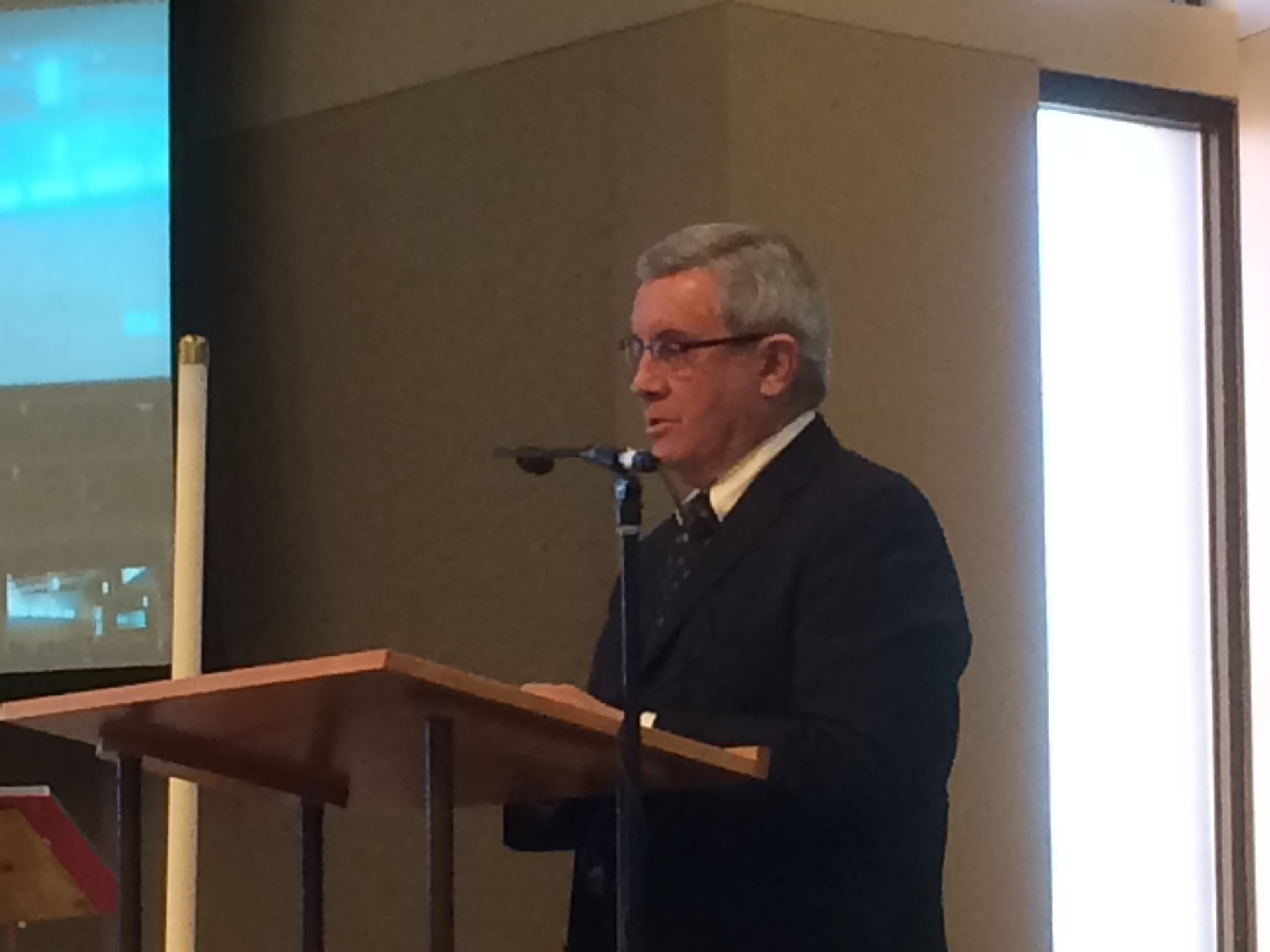
Nevada Chief Justice James Hardesty speaks at LEAN's Martin Luther King Jr. Holiday event at Lutheran Church of the Good Shepherd in Reno, Jan. 19, 2015.

Nevada Chief Justice James Hardesty speaks at LEAN’s Martin Luther King Jr. Holiday event at Lutheran Church of the Good Shepherd in Reno, Jan. 19, 2015.

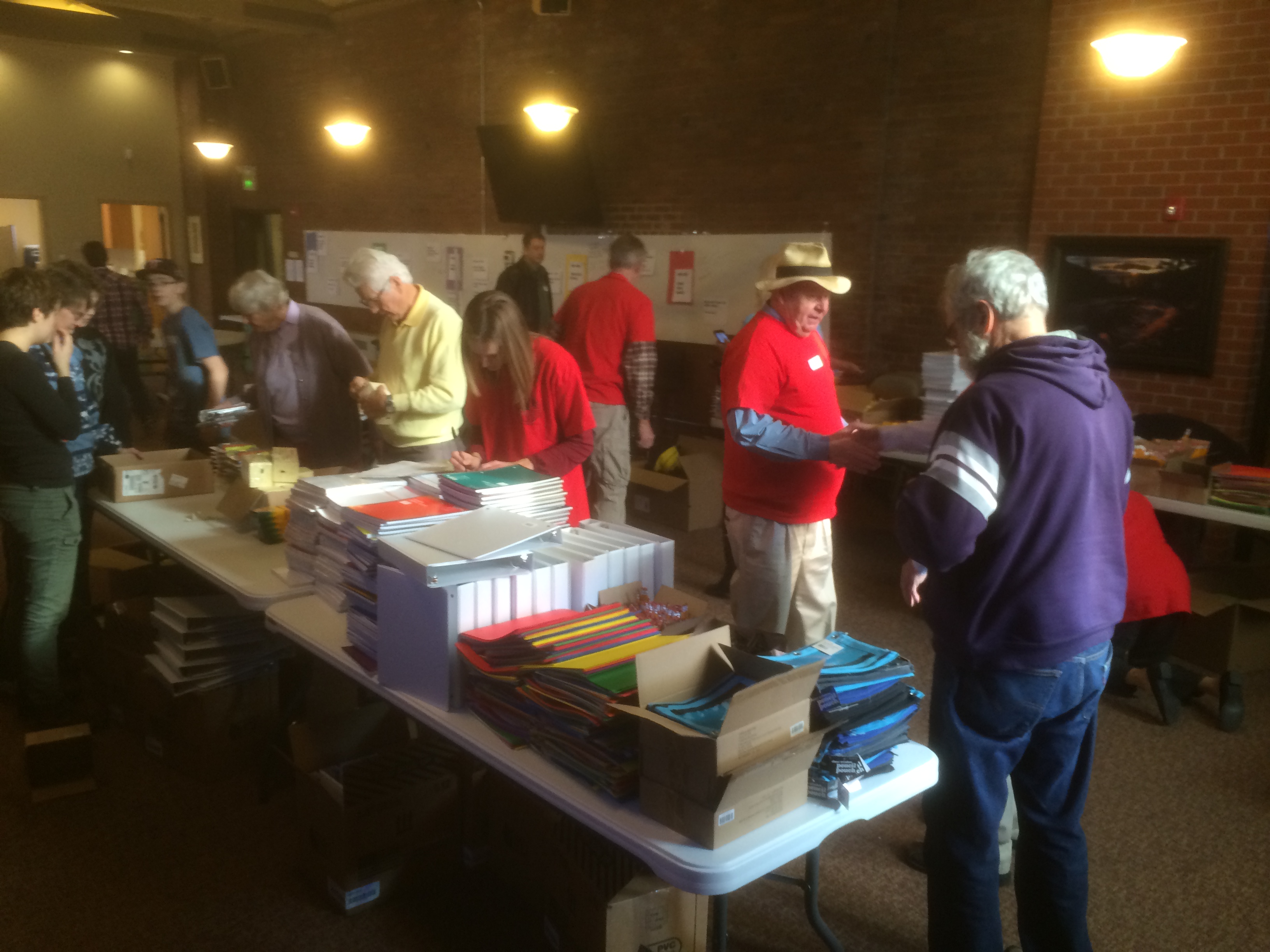
Volunteers prepare school materials for backpack stuffing at Lutheran Church of the Good Shepherd, Jan. 19, 2015

Volunteers prepare school materials for backpack stuffing at Lutheran Church of the Good Shepherd, Jan. 19, 2015

LEAN’s event on the King holiday was to learn about issues that will be coming up in the 2015 legislative session, and to do the “Backpack Challenge,” designed to demonstrate to legislators that our schools need proper funding. Those who attended heard speakers, some in Las Vegas, some in Reno, connected by video cast.

James Hardesty, Chief Justice of the State Supreme Court, was the featured speaker. He began by giving credit to the faith community for its advocacy in past years for rehabilitation and re-entry programs. He said it has had the effect of changing the culture at the Nevada Department of Corrections. Justice Hardesty described the work of the Nevada Commission on Administration of Justice, and shared some items the Commission will propose to the Legislature. Among those are uniform assessment tools, so that regardless where in the state one is, the same criteria will determine whether a person is fit to release on bail, or whether that person should be paroled. The Commission would like more money allocated to Drug Court and Mental Health Court.

Mr. Mike Raponi spoke about education. He is director of the State of Nevada Office of Career Readiness, Adult Learning, and Educational Options. Some exciting programs are gearing up to train Nevada’s workforce for the technical jobs of the future. Built into the program are incentives to stay in school and graduate on time.

Mr. Shane Piccinini spoke in Reno on behalf of the Food Bank of Northern Nevada. As the public policy advocate for the Food Bank, his agenda is ensuring that federal funding for food programs is not cut. It might be surprising that at the state level, there is sometimes resistance to federal food programs. There are start-up costs and matching-funds requirements that some legislators reject. Who knew there is a Governor’s Council on Food Security? This group is working with the Legislature to remove barriers to federal help for hungry people, especially school children.

The Reverend Lionel Starkes, chair of the Union of Black Episcopalians, spoke in Las Vegas. He recalled some of the inspiring words of Dr. Martin Luther King, Jr. He linked Dr. King’s words and actions to the biblical charge to proclaim freedom to the captives. He noted that many remain captive today—to racism, economic and educational inequality, and that it is incumbent on us in the faith community to continue to work for equality for all.

Fill a Backpack for a Nevada Legislator

By Sheila Freed

The December issue of The Lutheran magazine featured an article about Advent, and how much we miss if we plunge right into the busyness of Christmas right after Thanksgiving. But the thing that struck me most in the article was an illustration by the author, Gertrud Mueller Nelson. Now that we are in the season of Epiphany, the image seems particularly appropriate. It shows the Holy Family in modern dress. Baby Jesus is sitting in a shopping cart. The family is bundled up against the weather, and father, unshaven and with a backpack on his back, pushes the cart past urban high-rises. An angel flies overhead. This could represent the flight into Egypt. But I think there is more to it than that.

Jesus came for the poor, the homeless, the dispossessed of every age, and they are very much with us today. We who do Advocacy talk about the difference between Charity and Advocacy, and we recognize that both are important. Charity is about direct aid to those in need, and Advocacy is about making structural changes in society so the causes of need go away. 

Lutheran-Episcopal Ministry in Nevada (LEAN) will have an event on January 19, Martin Luther King Jr. Day, involving both charity and dvocacy. It’s the perfect time to learn about issues that will be on the agenda of the 2015 Nevada Legislature. Since public school funding is a major issue as always, LEAN will be doing Charity as well. It’s our way of telling legislators we’re concerned about schools and we want them to be, too. Your help is needed.

All new and returning state senators and assembly members have been invited. Those who attend will assemble backpacks filled with school supplies. The backpacks will be given to a low-income school of the legislator’s choice. We’re doing this in January, the middle of the school year, because many children and teachers have used all the supplies they started with in the fall, and there isn’t money to buy more. If you’re living out of a shopping cart, buying notebook paper isn’t likely to be your highest priority, but doing well in school is the way up and out. That is why we’re asking you to consider donating to this effort. Our Advocate, Rev. Mike Patterson, has arranged with Office Depot to buy supplies at a huge discount, so donations will go a long way. Donations can be sent to LEAN at the address above, or through your church office, marked “LEAN backpacks.”

If you prefer to donate items instead of cash, please use this list as a guide: Pencils, pencil bags, ballpoint pens, glue sticks, crayons, colored pencils, highlighters, 3-ring binders, spiral notebooks, erasers, pocket folders, sticky notes, copy paper, lined paper.

If there are questions about this project or about LEAN, please contact Rev. Mike Patterson (mp4675@att.net), or your Parish Communicators.