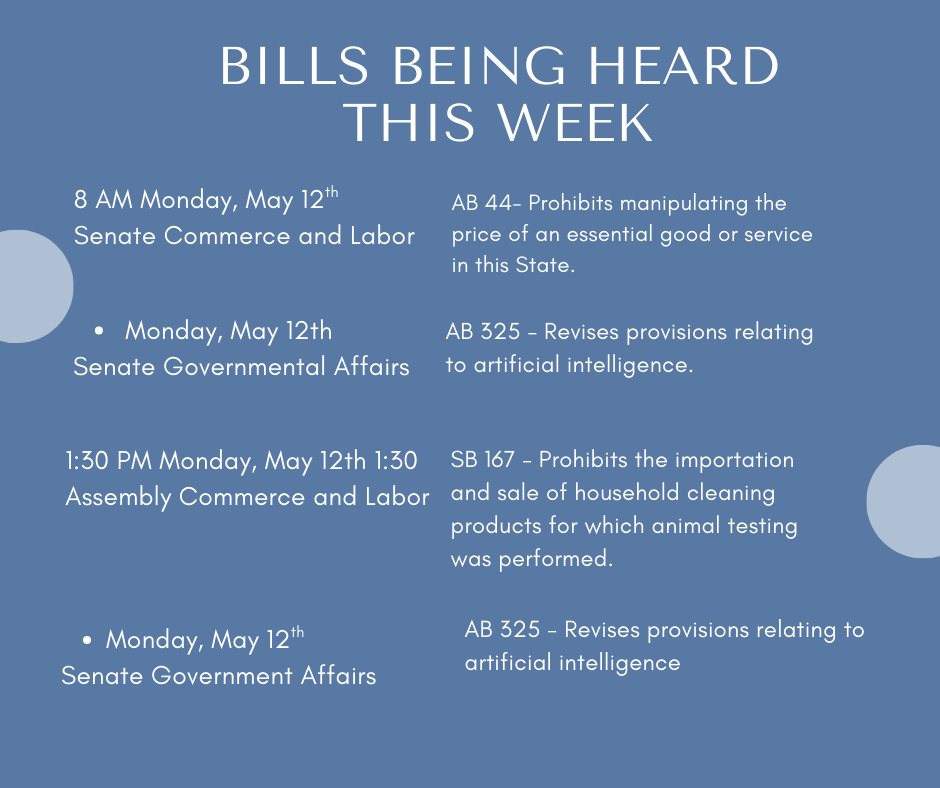
AB 44 – Amends the Nevada Unfair Trade Practice Act to include manipulating the price of an essential good or service as an unlawful act. An essential good or service is defined as something necessary for daily living (like food, medicine, or shelter), where the cost exceeds $750 over 30 days or $9,000 over a year. The bill makes it illegal to intentionally manipulate the price of such goods or services through fraudulent or deceptive actions, resulting in price increases that don’t align with basic supply and demand.
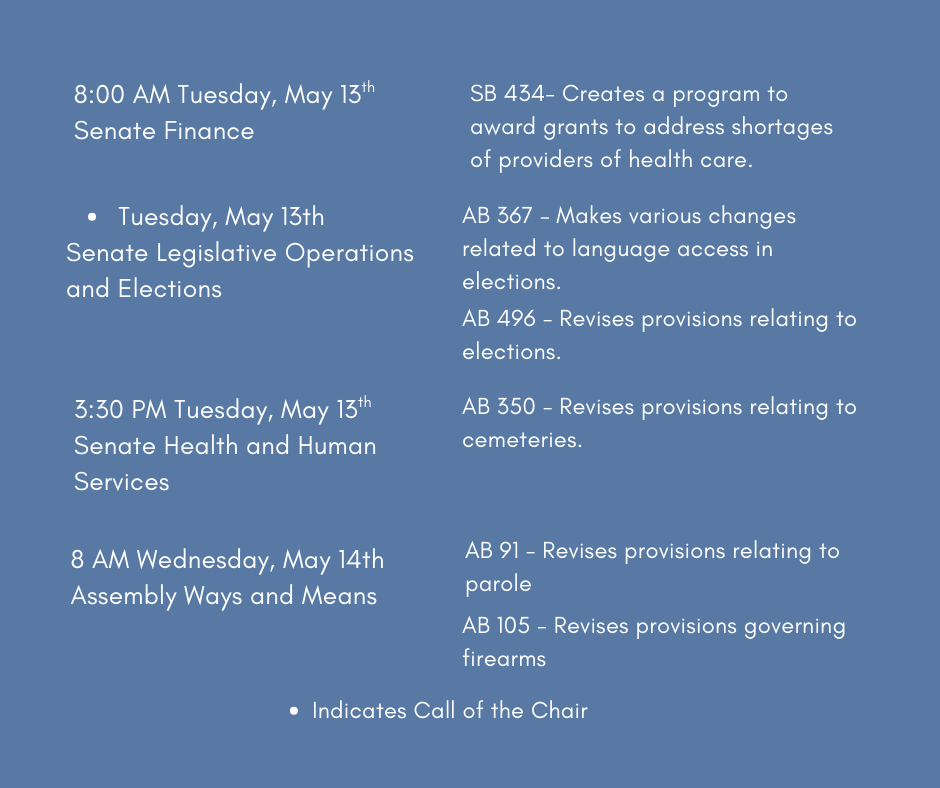
AB 91 – This bill allows the State Board of Parole Commissioners to grant second look parole to individuals convicted of category A or B felonies if they meet specific criteria, such as posing no significant risk to public safety and serving a portion of their sentence. It also extends eligibility for parole to prisoners sentenced for crimes committed before the age of 25, rather than 18, under certain conditions. The bill outlines procedures for parole hearings and the supervision of parolees by the Division of Parole and Probation.
AB 105 – This bill prohibits the possession of firearms within 100 feet of an election site, with exceptions for law enforcement, security personnel, and lawful firearm possession in vehicles or private property. Violations are typically a gross misdemeanor, but if the firearm is possessed with the intent to disrupt the election process, it is a category D felony. The bill also aligns existing firearm-related definitions with these new provisions.
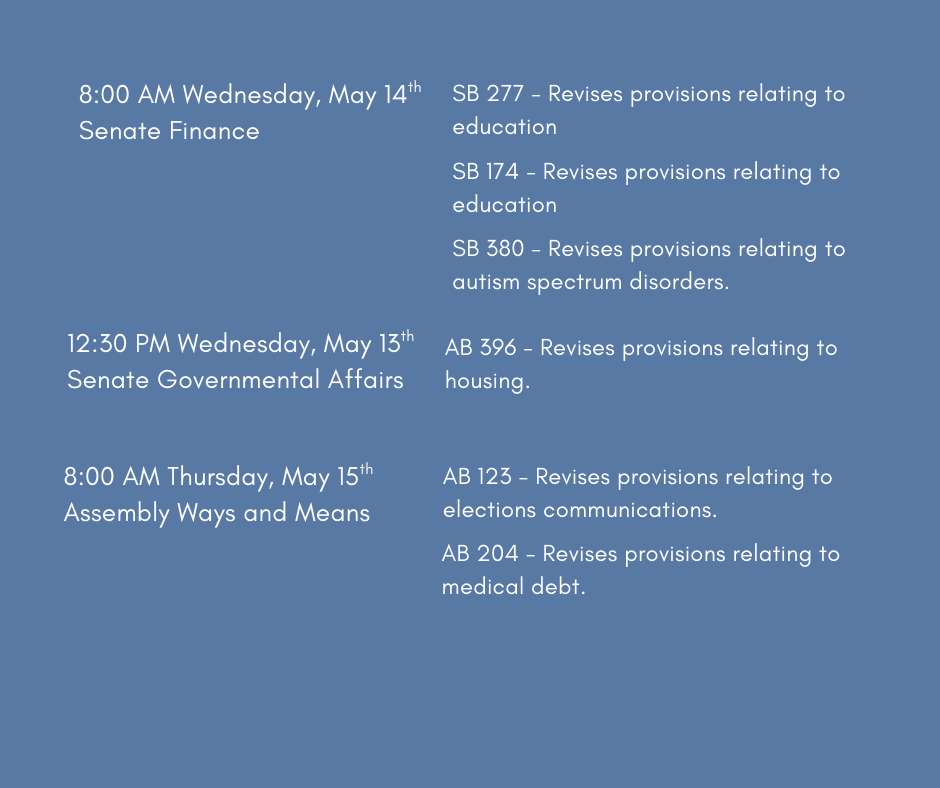
AB 123 – This bill makes it illegal for a person, during a political campaign, to threaten the life of another with reckless disregard for the risk of harm caused by their speech. The person must also place the recipient of the threat in reasonable fear that the threat will be carried out. Violations would result in a misdemeanor for the first offense and a gross misdemeanor for subsequent offenses.
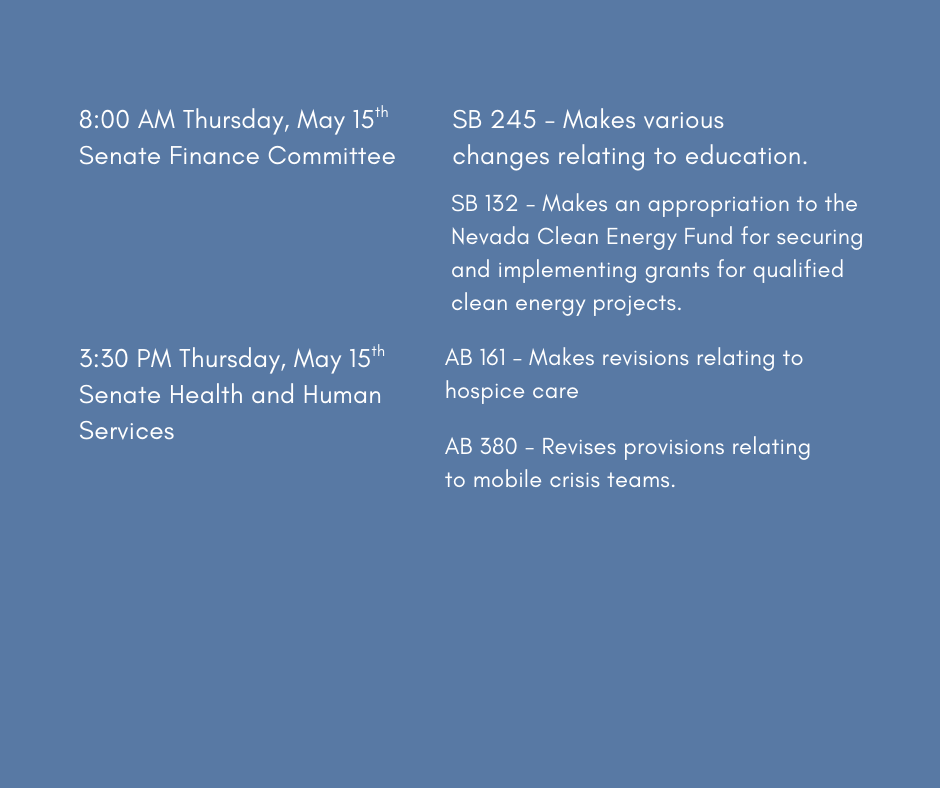
AB 161 – This bill imposes additional requirements on programs of hospice care, including accreditation by a national agency, acceptance of Medicare payments, and enhanced oversight during the first two years of licensure. It also sets standards for medical directors, staff training, patient rights, and establishes independent review boards for compliance, among other operational changes.
AB 204 – This bill prohibits health care entities and collection agencies from reporting medical debt to consumer reporting agencies, voiding any reported debt, and restricts certain aggressive collection actions such as garnishing wages or foreclosing on property. It also mandates a waiting period of at least 180 days before engaging in extraordinary collection actions, requires proper notice to the consumer, and ensures that consumers eligible for financial assistance are refunded if they overpay.
AB 325 – Existing law mandates the development of emergency management plans by state and local agencies. This bill requires that these plans ensure final emergency response decisions are not made by artificial intelligence (AI), defines AI in the context of emergency management, and prohibits public utilities from using AI to decide on service reductions or shutdowns during disasters.
AB 350 – This bill requires cemetery authorities to petition the district court for an order before disinterring or removing human remains from a cemetery, rather than making the decision themselves. It also removes the authority of county boards of commissioners to make rules about cemetery maintenance and instead requires them to ensure cemetery owners comply with specific maintenance requirements.
AB 367 – This bill expands language accessibility in elections by requiring the Secretary of State to provide voting materials and election information in additional languages, review language accessibility data biennially, and establish a toll-free interpretation assistance hotline. It also mandates bilingual election board officers, allows mobile device access to interpretive services for voters with disabilities, ensures online voter registration is available in multiple languages, and creates a Language Access Advisory Committee to assess and improve language accessibility programs.
AB 380 – The bill revises the structure and flexibility of mobile crisis teams supporting the 9-8-8 mental health crisis hotline by removing location and establishment requirements. It also updates team composition to include professionals qualified in behavioral health, along with law enforcement, emergency medical personnel, or paraprofessionals such as peer support providers or community health workers.
AB 396 – This bill requires larger counties and cities to adopt ordinances allowing accessory dwelling units (ADUs) on residential properties, with an expedited approval process and restrictions on certain conditions. It also voids conflicting local regulations, revises rules for common-interest communities—including leasing restrictions, termination voting requirements, and resale disclosures—and increases fines for certain violations.
SB 132 – Makes a $5 million appropriation to the Nevada Clean Energy Fund for securing and implementing grants for qualified clean energy projects; and providing other matters properly relating thereto.
SB 167 – This bill prohibits the sale or import of household cleaning products in Nevada if animal testing was conducted on or after January 1, 2030, with some exceptions for regulatory requirements. The prohibition does not apply to products tested before 2030 or manufacturers who use data from prior animal testing. Additionally, violating this provision is considered a deceptive trade practice, subject to civil and criminal penalties.
SB 174 – This bill requires school districts and charter schools to develop policies allowing private instructional personnel to provide medically necessary treatment to students with autism spectrum disorder in a school setting. It also mandates background checks for such personnel, ensures compliance with the Individuals with Disabilities Education Act, prohibits certain fees, and requires reporting to the
SB 434 – This bill establishes the Statewide Health Care Access and Recruitment Grant Program to address critical shortages of healthcare providers in Nevada. It creates an account to fund the program, sets guidelines for transferring money into the account, and mandates a biennial assessment of the state’s healthcare needs. The bill also outlines the application, review, and oversight process for grants to support projects addressing healthcare provider shortages, with specific requirements for matching contributions and reporting by grantees. Additionally, it includes provisions for the suspension or termination of grants for noncompliance or misuse of funds.
SB 277 -This bill requires the Commission on Professional Standards in Education to adopt regulations allowing individuals employed in school counseling or social work positions to complete required internship or practicum hours while working. It also mandates that public schools, if funds are available, employ a full-time school social worker and discourages the use of independent contractors for these services when feasible.
SB 380 – This bill requires peace officers to complete at least 4 hours of in-person training on autism spectrum disorders as part of their certification and includes continuing education on interactions with individuals with developmental disabilities. It also defines “autism spectrum disorder” for training purposes and allows applicants for registration as behavior technicians to begin practicing under supervision before the Board issues a determination on their application.
 Lutheran Engagement and Advocacy in Nevada