Election season is here, and Nevadans are being flooded with campaign advertisements, political mailers, text messages, social media posts, and promises about the future of our communities.
But how do we know what to believe? How do we separate facts from political spin? And how do we make informed decisions when every candidate seems to have something to say about what is best for Nevada?
At Lutheran Engagement and Advocacy in Nevada (LEAN), we believe an informed community is a powerful community.
How to Do Election Research is designed to help Nevadans look beyond campaign slogans, ask better questions, and make informed decisions before casting their ballots.
Bring your faith and values into the conversation.
In Part 1, we learned how to recognize misleading information.
In Part 2, we explored how to research candidates and their records.
In Part 3, we looked at how to compare candidates using the same questions and standards.
Now we come to another important question:
What does our faith have to do with how we evaluate public policy?
For people of faith, our values don’t disappear when we enter the voting booth.
But faithful civic engagement is also bigger than asking:
“Which candidate is the Christian candidate?”
No political party or candidate perfectly represents our faith.
Instead, we can ask deeper questions.
Start With Your Faith Tradition
For Lutherans, we don’t have to begin from scratch.
The ELCA has spent decades studying, debating, praying, and adopting social teaching on many of the issues facing our communities.
These include:
Economic life and poverty
Health care
Housing and homelessness
Immigration
Education
Racism and racial justice
Criminal justice
Gender, sexuality, and human dignity
Caring for creation
Peace
Civic engagement and democracy
These teachings don’t tell you who to vote for.
They give us a framework for asking faithful questions.
Ask: Who Is My Neighbor?
Jesus repeatedly calls us toward our neighbor.
So when evaluating a policy, don’t only ask:
“How will this affect me?”
Also ask:
Who will this affect?
What will it mean for someone experiencing homelessness?
For a family struggling to afford groceries?
For a rural community without adequate health care?
For immigrants and refugees?
For children?
For older adults?
For people whose experiences are very different from our own?
Pay Attention to Those Most Affected
It is easy to debate public policy as an abstract idea.
But policies affect actual people.
Before deciding what you think about an issue, listen to people who will live with the consequences.
Ask:
Whose voices are missing from this conversation?
Look Beyond Charity
Our congregations do incredible work feeding people, providing clothing, supporting shelters, helping refugees, responding to disasters, and caring for neighbors.
That work matters.
But faith also invites us to ask:
Why is our neighbor hungry in the first place?
Why can’t someone afford housing?
Why does a community lack health care?
Why are some voices excluded from decisions?
Service responds to immediate needs.
Advocacy asks what systems and policies are creating those needs.
We need both.
Remember: Faithful People Can Disagree
Two people can share the same faith and reach different conclusions about the best public policy.
Our goal isn’t to force everyone into the same political position.
Our goal is to engage one another with curiosity, humility, evidence, and a commitment to our neighbors.
As You Research Candidates, Ask:
How does this policy affect my neighbor?
Who benefits?
Who carries the burden?
Whose voice is missing?
Does this policy protect human dignity?
Does it promote the common good?
How does it compare with the social teaching of my faith tradition?
Faithful civic engagement isn’t about telling people how to vote.
It is about helping one another ask better questions.
Study the issues. Listen to your neighbors. Learn what your faith teaches. Ask difficult questions. Then make your own informed decision.
Because our faith doesn’t give us permission to stop thinking.
It calls us to think more deeply about how our choices affect our neighbors.
An informed and engaged community is a powerful community.
LEAN Voter Information Guide: 2026 General Election
Key dates
Election Day is Tuesday, November 3, 2026, and it is not too late to register: online registration and same-day registration stay open through Election Day.
Date
What happens
Oct 6
Passed: last day to register by mail or at the county office
If you register or update online now, you must vote in person and show your ID (start date varies by county)
Oct 30
Early voting ends (Friday)
Nov 3
Election Day: polls open 7 a.m. – 7 p.m.; same-day registration available at the polls
Step 1: Check your status
Confirm you are registered at your current address at nvsos.gov/votersearch. It takes about a minute.
Registered at your current address? You’re set. Watch your mailbox for your ballot, or skip to Step 3 to vote in person.
Moved, changed your name, or not registered? Go to Step 2. If you moved within Nevada, you still need to update your address.
Step 2: Register or update
You can still register for the November 3 election two ways. Both require a Nevada driver’s license, Nevada DMV ID card, or Tribal ID.
Online, now through Nov 3.Go online. Register early: once same-day registration begins (Oct 20–21, depending on county), anyone who registers online must vote in person and won’t get a mail ballot.
In person when you vote. During early voting (Oct 17–30) or on Election Day, you can register and vote at the same visit. Bring:
Your Nevada driver’s license, Nevada DMV ID card, or Tribal ID
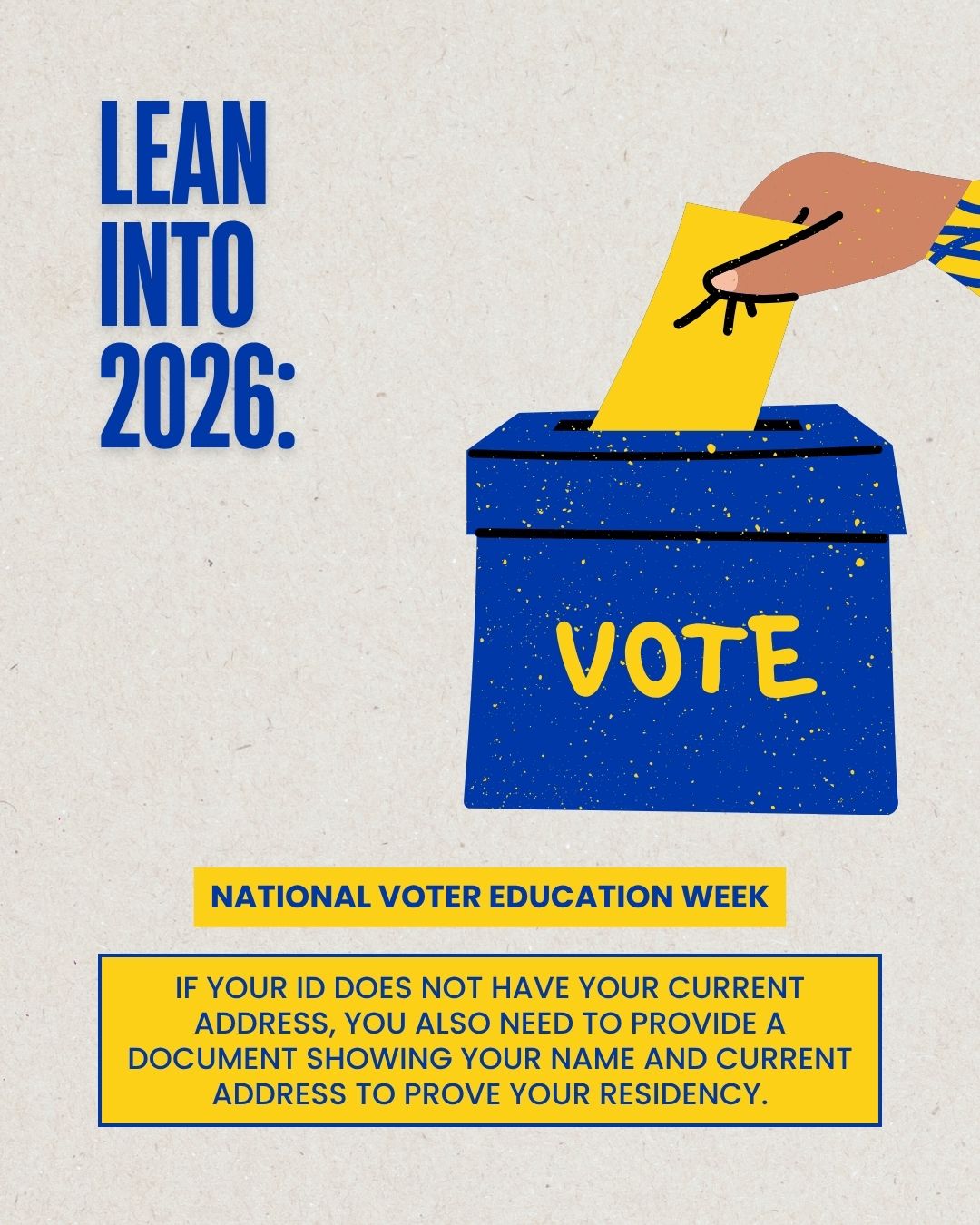
Proof of your current address, if your ID shows an old address: a utility bill, bank statement, paycheck, rental agreement, vehicle registration, or other government document with your name and current address
No Nevada license or ID yet? You can’t use online or same-day registration, so visit the DMV first or contact your county election office.
To vote at your current address, you must have lived in your Nevada county for 30 days and your precinct for 10 days before Election Day (Fair Elections Center).
Step 3: Find where to vote
Look up your voting locations at nvsos.gov/votersearch, the same page you use to check your status, or on your county election office’s website.
In Washoe and Clark counties, you can vote at any vote center in your county during early voting and on Election Day (Clark County). Early voting sites and hours differ from Election Day sites, so check both.
LEAN: add the county vote-center link for the communities you serve here.
Ways to vote
Nevada mails a ballot to every active registered voter, and you can choose any of these three ways to vote.
Option
When
How
By mail
Arrives in October
Sign the envelope and mail it postmarked by Nov 3, or drop it in any official dropbox in your county before polls close. Mail at least a week early.
Early in person
Oct 17 – 30
Any early voting site in your county. You can also drop off your mail ballot there.
Election Day
Nov 3, 7 a.m. – 7 p.m.
Any Election Day vote center in your county. If you’re in line by 7 p.m., stay in line: you can still vote.
The controller serves as the chief fiscal officer of the state, meaning they’re responsible for administering the state’s accounting system, registering vendors, selling claims against the state and collecting any debts owed to the state. The office also provides citizens and government agencies with financial information, and produces a lengthy annual financial report and a simplified version meant for the general public. About 45 people work in the controller’s office. The controller does not have any special authority to develop the state budget or to set tax policy.
Nevada’s treasurer is the state’s chief financial officer, responsible for receiving, safeguarding and disbursing state funds. The office oversees roughly $7 billion in state investments and helps manage the state’s financial stability.
The treasurer also represents Nevada in conversations with bond-rating agencies and helps issue state bonds—decisions that can affect the cost of borrowing for public priorities such as schools, infrastructure and other essential services.
The office administers programs that directly affect Nevadans, including unclaimed property, college-savings accounts and the Millennium Scholarship for eligible Nevada high school graduates.
Treasurers may serve up to two four-year terms. Although the office manages state money, it does not directly write Nevada’s budget or set tax policy.