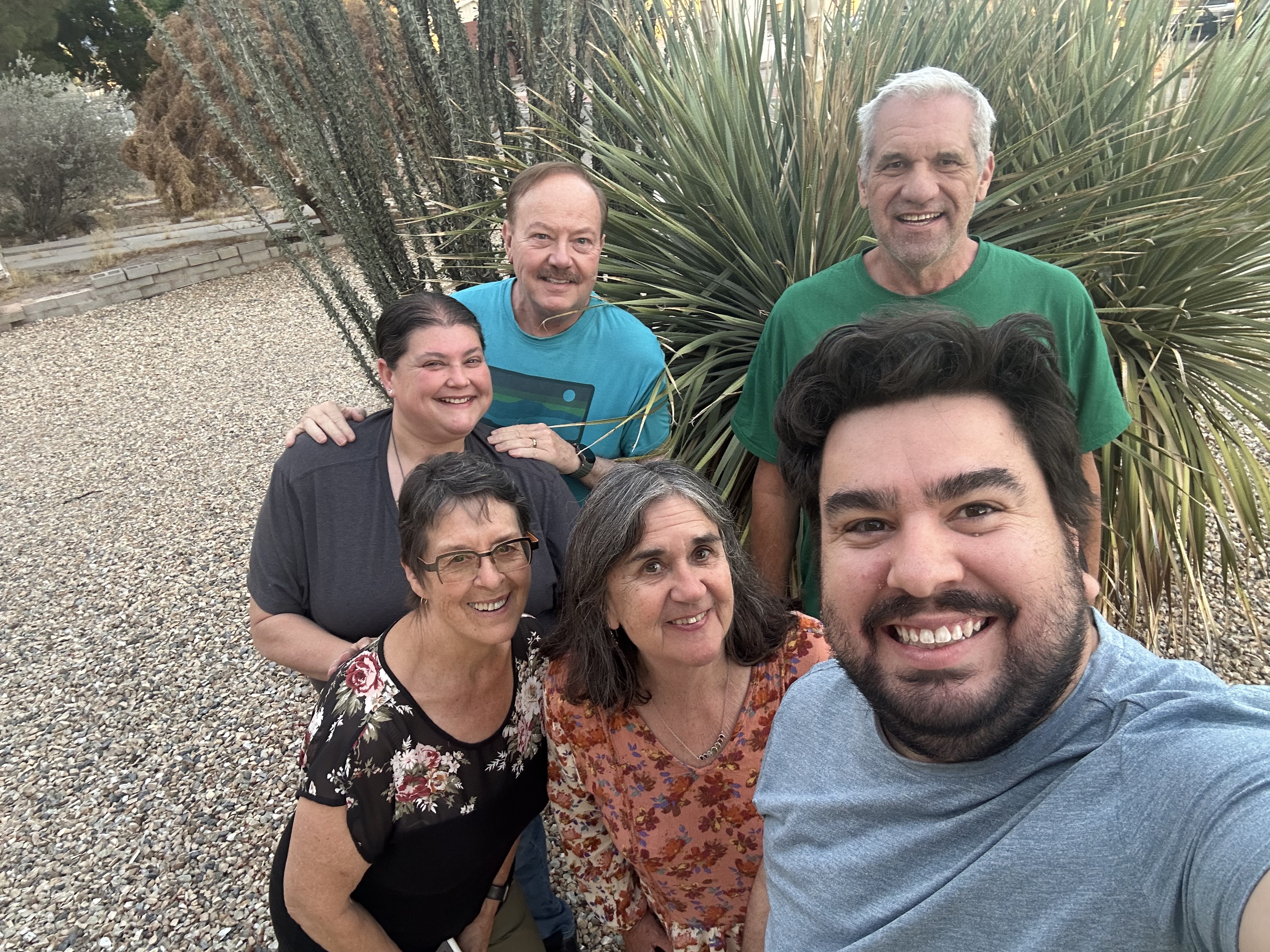
Grace and Peace to you from Las Cruces, New Mexico
It has been a very busy and emotionally draining two days, and it is hard to believe that we have only seen a sliver of the realities facing our siblings close to the United States-Mexico Border. When I share my stories, I plan to not use names as I do not want folks to be targeted or placed in danger given the sensitivities.
On Sunday, our group arrived to El Paso exhausted from a days travel, and the group was welcomed by our Immersion Coordinator. I arrived much later in the evening, and the drive from El Paso to Las Cruces was beautiful. The mountains that rise from the Valley floor of the Chihuahua Desert. I came on this journey by way of coincidence, I was not planning on coming, and a spot opened up a couple weeks prior to the trip. For myself, the Border is personal, as a third generation Mexican American, who lives in the hyphened space I have seen immigration from a first hand perspective, and I have also lived in a way that many of my own family members have that desensitized experience and have largely assimilated into dominate culture leaving their Mexican roots behind in favor of the privileges of whiteness, and their abilities to pass.
On Monday morning, we made our way to the BSC Hospitality Center, and arrived to an empty place, and we were shared the facility has largely been vacant since January 2025, as migrants are no longer able to come the legal way, as the asylum cases are no longer being accepted. Prior to January, many asylum seekers/ refugees were required to register using the CBP one app, and then present themselves at the Border at the time of their appointment, and there were usually only about 200 appoitnments per day. There was never a crisis like political rhetoric suggests, they were not criminals and drug dealers, who were coming across the border, but people seeking asylum and refugee status. Following the legal way to enter the United States, now those avenues are largely blocked due to the Trump Administration policies.
After touring the facility and hearing stories from those who worked on the ground these past couple of years, it was a streamlined approach. It was warming to hear from those who worked first hand with many of those feeling violence, and hearing stories about children being able to finally be children when they arrived because they were safe.
We later heard from a Director at Lutheran Family Services, who does this work to help resettle refuges who have been accepted into the United States, the vetting process, what the process looks like as, our partners of Global Refugee, formerly Lutheran Social Services. This is an intensive process, and again it takes time to vet the people, and hopefully reunite them with a sponsor, who can help support them and help with adjusting to a new life here in the United States.
Later in the evening, we heard from a woman, who has done extensive work in the Borderlands of New Mexico especially in communities, which have been left behind and have been underserved. Many of which, lack basic infrastructure like water and housing. She has helped many of these communities find their voice, and to advocate on behalf of them, empower these communities, and raise the quality of life in many of these communities that are largely filled with farm workers and migrants.
As I continue this journey, I carry the stories of those we’ve met with me — stories of resilience, pain, hope, and grace. They are a call to remember our shared humanity, to resist apathy, and to be moved by compassion. I am reminded that faith calls us not just to feel, but to act — to stand with our neighbors at the margins and speak truth in love. May we have the courage to do so.
With you on the Journey,
Rev. Paul M. Larson
 Lutheran Engagement and Advocacy in Nevada