Grace and peace to you from Las Cruces, New Mexico.
I sat there in a cold courtroom. The benches reminded me of church pews—but with no padding. They were bare and uncomfortable. As I looked ahead, I saw the backs of nearly eighty non-residents, many of whom were first-time offenders. It was heartbreaking to hear them state their ages. I cried when I heard my own birth year spoken aloud. Someone was thirty-three. Others were just eighteen, twenty, twenty-two. All they were doing was trying to live the American Dream.
It’s the dream I grew up hearing about on TV, the one exported around the world through shows like Friends and The Fresh Prince of Bel-Air. This idea of freedom, opportunity, and safety. But here were God’s beloved children, treated not as dreamers, but as criminals.
That afternoon, we met with an attorney who shared about the escalating situation on the ground. Since January 2025, parts of the New Mexico border have been militarized with tanks and soldiers. And as recently as April, the United States Department of Defense designated a 170-mile stretch of land along the U.S.-Mexico border as a National Defense Area—a military zone that had previously been under Bureau of Land Management control. Within this zone, troops can detain migrants without invoking the 1807 Insurrection Act. Trespassing in this area could now result in a felony.
As someone who follows the news, I was stunned that I had missed this. Even more disturbing was learning that many migrants currently in CBP custody had no idea what was about to happen to them.
Humanity is being denied. Rights are being denied. Dignity is gone.
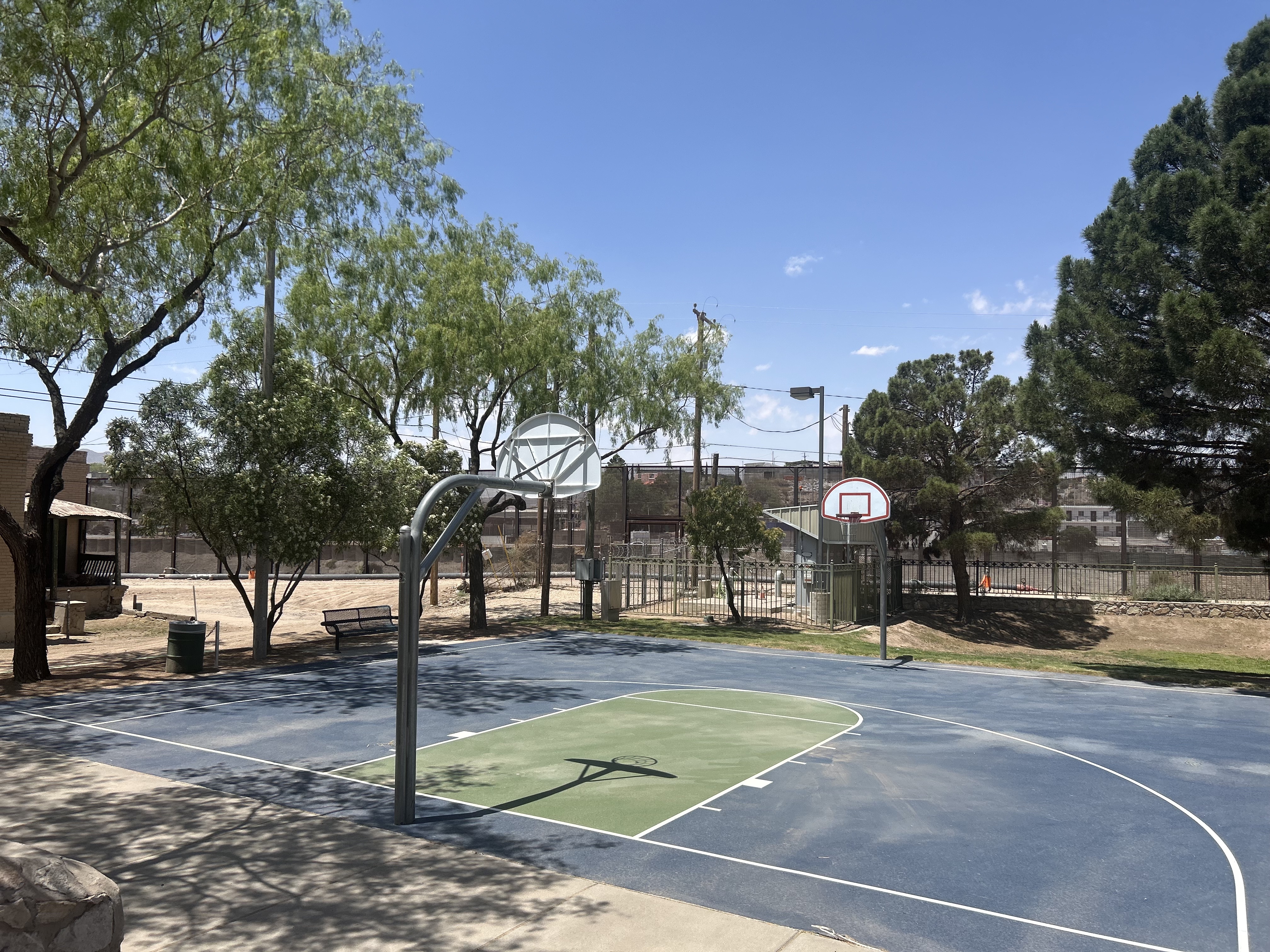
On Wednesday morning, we arrived at Doniphan Park in El Paso. It looked like any park—there were dog pickup bags, a half basketball court, a playground. But just beyond the fence was Ciudad Juárez. A whole other city. Birds flew freely back and forth across the border, undeterred by patrol or policy. The border was quiet. No crowds. Just silence. In the distance: traffic. Was it El Paso? Was it Juárez? It was hard to tell.
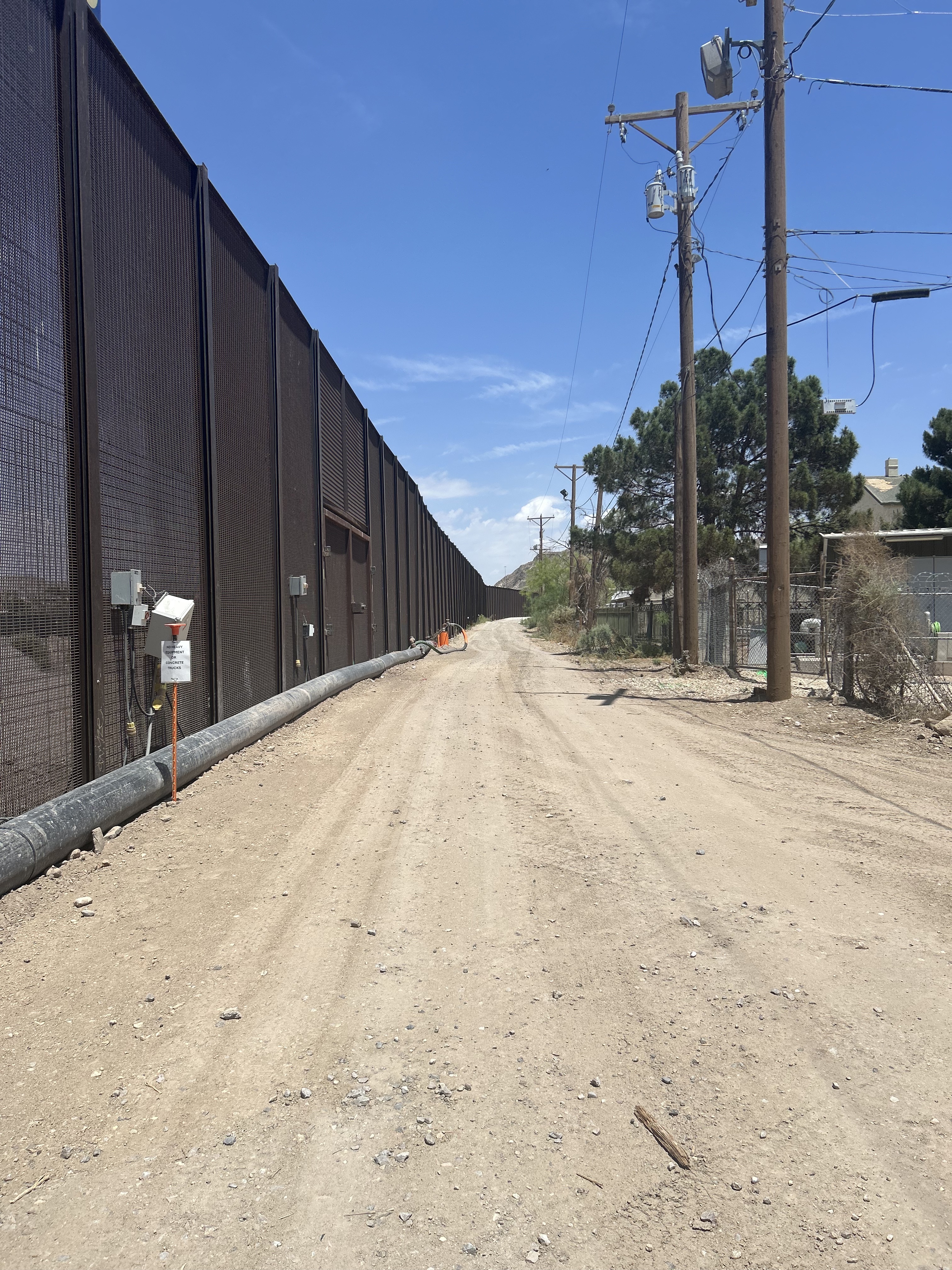
Through the fence, I could see the other side clearly. There were no memorial crosses. No signs remembering loved ones. It felt like a dead zone, surrounded by cameras and sensors.
Earlier that morning, a man told us about inauguration day: how CBP began releasing migrants every ten minutes until noon, when the soldiers and the media arrived. Migrants were ushered away quickly, quietly, to avoid the spectacle. Many remember those final days with deep grief and a strange sense of holiness.
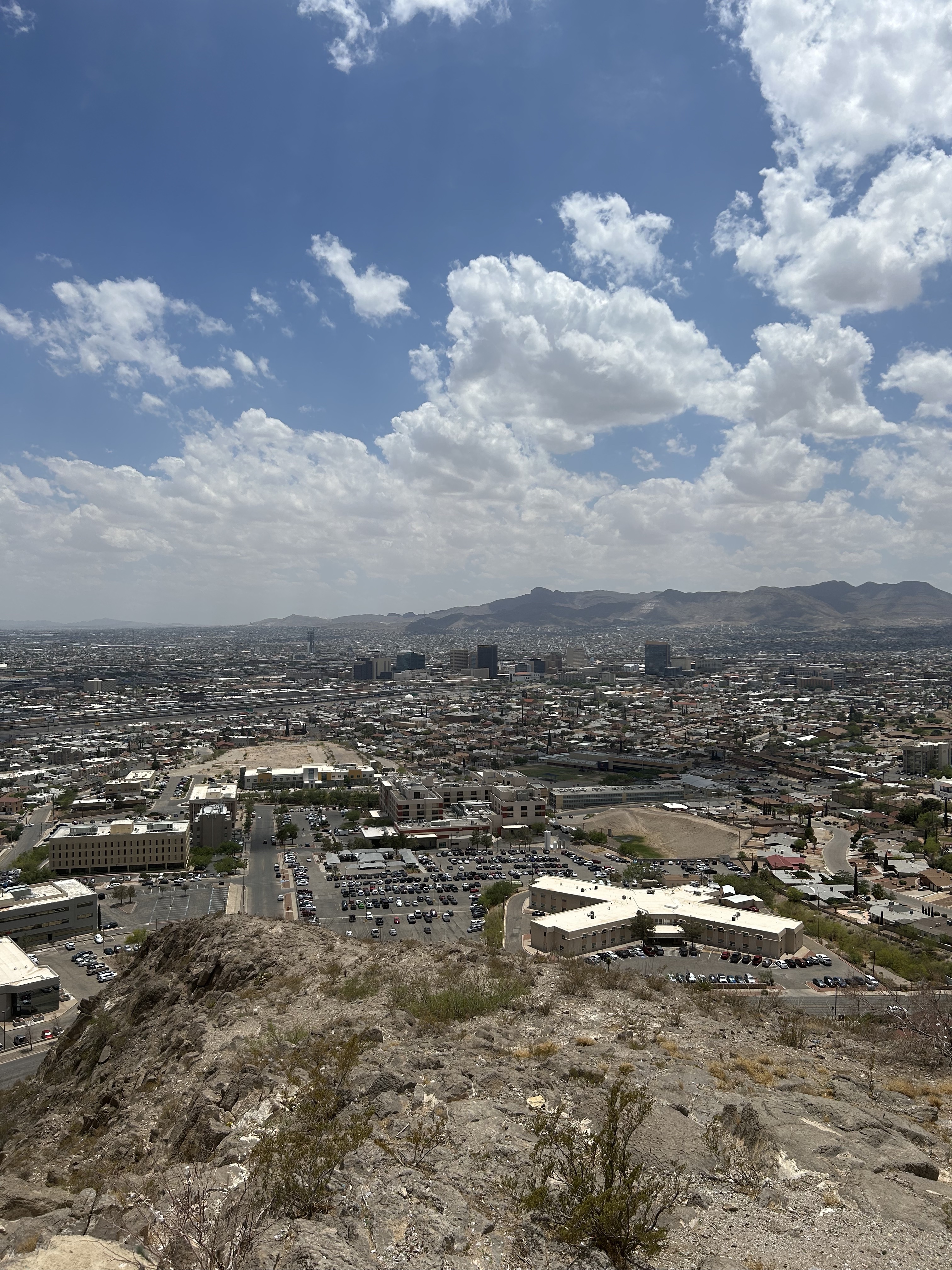
Later, we drove up Scenic Drive to zoom out and see the bigger picture—two cities, intertwined and indistinguishable, separated only by a line. A fence. A story we tell ourselves about who belongs.
As I stood there, looking out across two cities divided by a fence, I couldn’t help but ask: what are we defending? Who are we becoming?
This journey hasn’t provided me with easy answers—but it has deepened my questions. It made me feel the weight of systems that treat people not as neighbors, but as threats. It made me realize that the Gospel isn’t something safely tucked away in a sanctuary. The Gospel is weeping in a courtroom. It is waiting at the border. It is crying out from cages and courtrooms and desert crossings.
It felt even more hollow when I learned of the militarized zone, where human dignity can be criminalized.
And yet, there were glimpses of God amazing grace. Birds that fly over fences. People who show up. People who advocate. Families who resist despair. And us, witnesses, disciples, neighbors, called not just to experience, but to respond.
If we believe that nothing can separate us from the love of God—not height nor depth, not borders nor walls—then we must also believe that we are called to bridge these divides. To proclaim dignity where it is denied. To witness to humanity where it is erased. To be, in the words of the prophet Micah, a people who do justice, love kindness, and walk humbly with our God.
Let us remember. Let us tell the stories. Let us act.
Amen.
With you on the Journey,
Rev. Paul Larson

 Lutheran Engagement and Advocacy in Nevada