Thank you, Governor Lombardo for signing AB 161 into law.
Thank you, Governor Lombardo for signing AB 161 into law.
AB 82 – This bill requires the Governor of Nevada to annually proclaim certain days as “Diwali Day,” “Eid al-Fitr Day,” “Vaisakhi Day,” and “Vesak Day” in the state. These proclamations recognize these specific cultural and religious observances.
AB 98 – This bill requires the Governor of Nevada to annually proclaim April 10 as “Dolores Huerta Day” to honor her contributions, in line with existing law that sets certain days of observance to commemorate important persons or occasions.
AB 144 – This bill instead establishes the second Monday in October as “Indigenous Peoples Day” instead of August 9th.
AB 201 – This bill expands the automatic sealing of eviction case court files by allowing tenants to request sealing if the landlord does not oppose it or if an appeal is resolved in specific ways. Additionally, it creates a rebuttable presumption that sealing is in the interests of justice if a motion is filed more than one year after the eviction order. This change aims to provide greater tenant protections while balancing public interest considerations.
AB 223 – This bill introduces several changes to the relationship between landlords and tenants, including expanded tenant rights to terminate rental agreements without penalty if the landlord fails to maintain a habitable dwelling, requirements for landlords to accept multiple forms of rent payment, and increased tenant protections in cases of utility interruptions or safety concerns. It also revises the amount tenants can recover for unlawful acts by landlords and establishes procedures for expedited legal relief in disputes over unaddressed maintenance issues.
AB 237 – This bill removes the population requirement, allowing any county, regardless of size, to create the office of registrar of voters and appoint individuals to the position, granting them the powers and duties of the county clerk regarding elections.
AB 244 – This bill removes the population requirement, allowing any county, regardless of size, to create the office of registrar of voters and appoint individuals to the position, granting them the powers and duties of the county clerk regarding elections.
AB 245 – This bill makes it a gross misdemeanor for individuals under 21 to possess or control semiautomatic shotguns or semiautomatic centerfire rifles, with penalties for those who knowingly permit minors under 21 to handle such firearms. It also strengthens storage requirements and prohibits children aged 14 or older from handling semiautomatic shotguns or centerfire rifles, with specific conditions for storing non-semiautomatic firearms.
AB 278 – This bill designates the month of July of each year as “Muslim American Heritage Month” in the State of Nevada and requires the Governor to issue annually a proclamation encouraging the observance of this month.
AB 280 – This bill enhances rental agreement transparency by requiring a separate appendix detailing all fees, their purposes, and tenant rights. It also mandates fee refunds in certain cases, prohibits application fees for minors, and temporarily caps rent increases for seniors and Social Security recipients between July 2025 and December 2026.
AB 306 – This bill requires county clerks in certain counties to establish designated locations with mail ballot drop boxes for voters to return mail ballots during the period between the end of early voting and the day before the general election. It also ensures that ballots dropped off in these locations are counted and expands the options for voters to have someone return their mail ballot on their behalf.
SB 89 – This bill prohibits individuals who have been convicted within the past 10 years of certain offenses, such as hate crimes or violent crimes motivated by characteristics like race, religion, or sexual orientation, from purchasing, owning, or possessing firearms. It also specifies that each firearm purchase by such a person is a separate violation. Additionally, the bill allows individuals convicted of these offenses before July 1, 2025, to retain firearms they legally owned prior to that date.
SB 93 – Establishes labor standards for the awarding of federal grants by state agencies for broadband development in Nevada. It requires agencies to prioritize applicants who certify they will use a qualified, well-trained workforce and offer high-quality jobs, particularly for underrepresented communities. The bill also mandates that certain applicants must meet safety, training, and wage requirements or be signatories to collective bargaining agreements, and sets provisions for the application of public works laws.
SB 141 – The bill requires county, city, and town jails in Nevada to establish policies for the supervision, care, housing, and medical treatment of transgender, gender non-conforming, gender non-binary, and intersex prisoners, similar to existing state prison regulations. It also authorizes local law enforcement agencies to implement cultural competency training for jail staff to improve interactions with these populations.
SB 167 – This bill prohibits the sale or import of household cleaning products in Nevada if animal testing was conducted on or after January 1, 2030, with some exceptions for regulatory requirements. The prohibition does not apply to products tested before 2030 or manufacturers who use data from prior animal testing. Additionally, violating this provision is considered a deceptive trade practice, subject to civil and criminal penalties.
SB 171 – This bill prohibits health care licensing boards from disqualifying or disciplining providers solely for offering lawful reproductive health care or medically necessary gender-affirming health care services. It also prevents the Governor from extraditing individuals charged in other states for crimes related to providing or assisting with gender-affirming health care services unless the offense is also a crime in Nevada. Additionally, the bill restricts state agencies from aiding investigations or proceedings in other states targeting individuals or entities for providing gender-affirming health care services, with certain exceptions.
AB 25 – This bill updates healthcare provisions for incarcerated women, requiring that access to medical and behavioral health services, including pelvic exams and mammograms, align with community standards and national guidelines rather than being mandated annually. It also allows incarcerated individuals to verify their identity for notarial acts using an inmate ID or a signed declaration. Additionally, it repeals the program of regimental discipline previously used as an alternative to incarceration.
AB 30 – This bill extends existing law to include local detention facilities alongside the Department of Corrections in providing records to assist in evaluating and treating defendants found incompetent to stand trial.
AB 38 – existing law governing manufactured homes, mobile homes, and factory-built housing to include provisions for manufactured buildings, addressing topics like trip permits, certificates of compliance, sales regulations, and enforcement actions. It also introduces new tenant and landlord protections, such as restrictions on retaliatory actions, improved disclosure requirements, and guidelines for landscaping responsibilities, while clarifying various licensing, auditing, and reporting procedures for dealers and distributors of these types of housing.
AB 48 – This bill allows the board of trustees of a school district to assign a pupil who is a perpetrator of discrimination, bullying, or cyber-bullying to another school in the district if requested by the perpetrator’s parent or guardian. It also prohibits both the victim and the perpetrator from being assigned to the same school if both are moved due to the violation.
AB 50 – This bill authorizes county boards of commissioners to establish and maintain electronic databases to support the reunification and identification of victims of mass casualty incidents, while ensuring the confidentiality of the information and outlining the conditions for its disclosure. It also grants civil immunity to counties, medical facilities, and their agents for actions related to the database and reporting of information,
AB 89 – This bill requires regional, local, and state facilities for the detention and rehabilitation of children to adopt policies that generally prohibit unclothed searches, except under extraordinary circumstances, and establish specific requirements for any such searches.
AB 96 – This bill requires that the master plan in counties with a population of 100,000 or more (currently Clark and Washoe Counties) include a heat mitigation element. The heat mitigation element must outline strategies such as creating public cooling spaces, providing public drinking water, and adding shade over paved surfaces.
AB 150 – This bill extends protections to tribal judges in Nevada. It makes it a felony for someone to threaten or intimidate a tribal judge with the intent to influence their actions, similar to protections already in place for public officers. It also expands the definition of “officer” to include tribal judges for enhanced penalties related to assault or battery, and grants tribal judges the ability to obtain court orders to protect their personal information and request alternate addresses for their driver’s licenses or identification cards.
AB 153 – Extends existing requirements for providing support in completing the Free Application for Federal Student Aid (FAFSA) to school districts that operate education programs for incarcerated persons. Similar to other educational entities, these school districts must assist incarcerated pupils and their families with FAFSA completion and report relevant information to the State Treasurer.
AB 253 – This bill expands existing laws to allow health care providers practicing in reproductive health, employees or volunteers at health care facilities providing reproductive health services, and providers of gender-affirming care to request court orders for maintaining personal information confidential. It also allows these individuals and their spouses, domestic partners, or minor children to request an alternate address be displayed on their driver’s licenses, commercial driver’s licenses, or identification cards, similar to current protections available to other at-risk individuals.
AB 241 – This bill mandates that counties and cities adopt ordinances allowing permits for multifamily or mixed-use developments on commercially zoned property, with an expedited approval and appeal process. It also invalidates conflicting local regulations and ensures judicial review timelines apply to these provisions.
AB 266 – This bill enhances breastfeeding support by requiring the Department of Health and Human Services to provide online information about Medicaid coverage and community lactation services, along with a public education program. It also prohibits places of public accommodation from discriminating against breastfeeding individuals, establishes enforcement mechanisms through the Nevada Equal Rights Commission, and allows victims to pursue civil action or file complaints for violations.
AB 309 – This bill amends existing law regarding temporary orders for protection against domestic violence. It requires that such orders served on an alleged perpetrator in custody inform them of their right to contest the application for an extended order by filing an affidavit. If the person does not file an affidavit and remains in custody at the time of the hearing, the court may hold the hearing without their presence and may grant the extended order without further input from the incarcerated person.
AB 380 – The bill revises the structure and flexibility of mobile crisis teams supporting the 9-8-8 mental health crisis hotline by removing location and establishment requirements. It also updates team composition to include professionals qualified in behavioral health, along with law enforcement, emergency medical personnel, or paraprofessionals such as peer support providers or community health workers.
SB 188 – This bill codifies federal regulations into state law, requiring healthcare facilities and providers to ensure meaningful access to services for individuals with limited English proficiency by providing free, accurate, and timely language assistance. It also establishes qualifications for interpreters, prohibits requiring patients to provide their own interpreters, and outlines enforcement mechanisms, including administrative sanctions and professional discipline for non-compliance.
SB 268 – This bill requires health insurance policies, including Medicaid, to cover dental services provided by dental hygienists with a special endorsement, without dentist supervision, to the same extent as services provided under dentist supervision. It also authorizes the Commissioner of Insurance to enforce compliance by suspending or revoking the certifications of non-compliant insurers and health organizations.
SB 405 – This bill establishes the Transit-to-Trails Task Force, which is responsible for identifying high-priority areas for expanding trail access through public transit and seeking funding for this expansion. The Task Force is also required to submit a biennial report on its activities, findings, and legislative recommendations.
SB 421 – This bill requires county or city clerks to recruit election board officers for polling places on Indian reservations or colonies unless the tribe declines. It also mandates at least one training class for election board members staffing these locations, either in person or remotely, unless the tribe opts out.
Grace and peace to you from Las Cruces, New Mexico.
I sat there in a cold courtroom. The benches reminded me of church pews—but with no padding. They were bare and uncomfortable. As I looked ahead, I saw the backs of nearly eighty non-residents, many of whom were first-time offenders. It was heartbreaking to hear them state their ages. I cried when I heard my own birth year spoken aloud. Someone was thirty-three. Others were just eighteen, twenty, twenty-two. All they were doing was trying to live the American Dream.
It’s the dream I grew up hearing about on TV, the one exported around the world through shows like Friends and The Fresh Prince of Bel-Air. This idea of freedom, opportunity, and safety. But here were God’s beloved children, treated not as dreamers, but as criminals.
That afternoon, we met with an attorney who shared about the escalating situation on the ground. Since January 2025, parts of the New Mexico border have been militarized with tanks and soldiers. And as recently as April, the United States Department of Defense designated a 170-mile stretch of land along the U.S.-Mexico border as a National Defense Area—a military zone that had previously been under Bureau of Land Management control. Within this zone, troops can detain migrants without invoking the 1807 Insurrection Act. Trespassing in this area could now result in a felony.
As someone who follows the news, I was stunned that I had missed this. Even more disturbing was learning that many migrants currently in CBP custody had no idea what was about to happen to them.
Humanity is being denied. Rights are being denied. Dignity is gone.
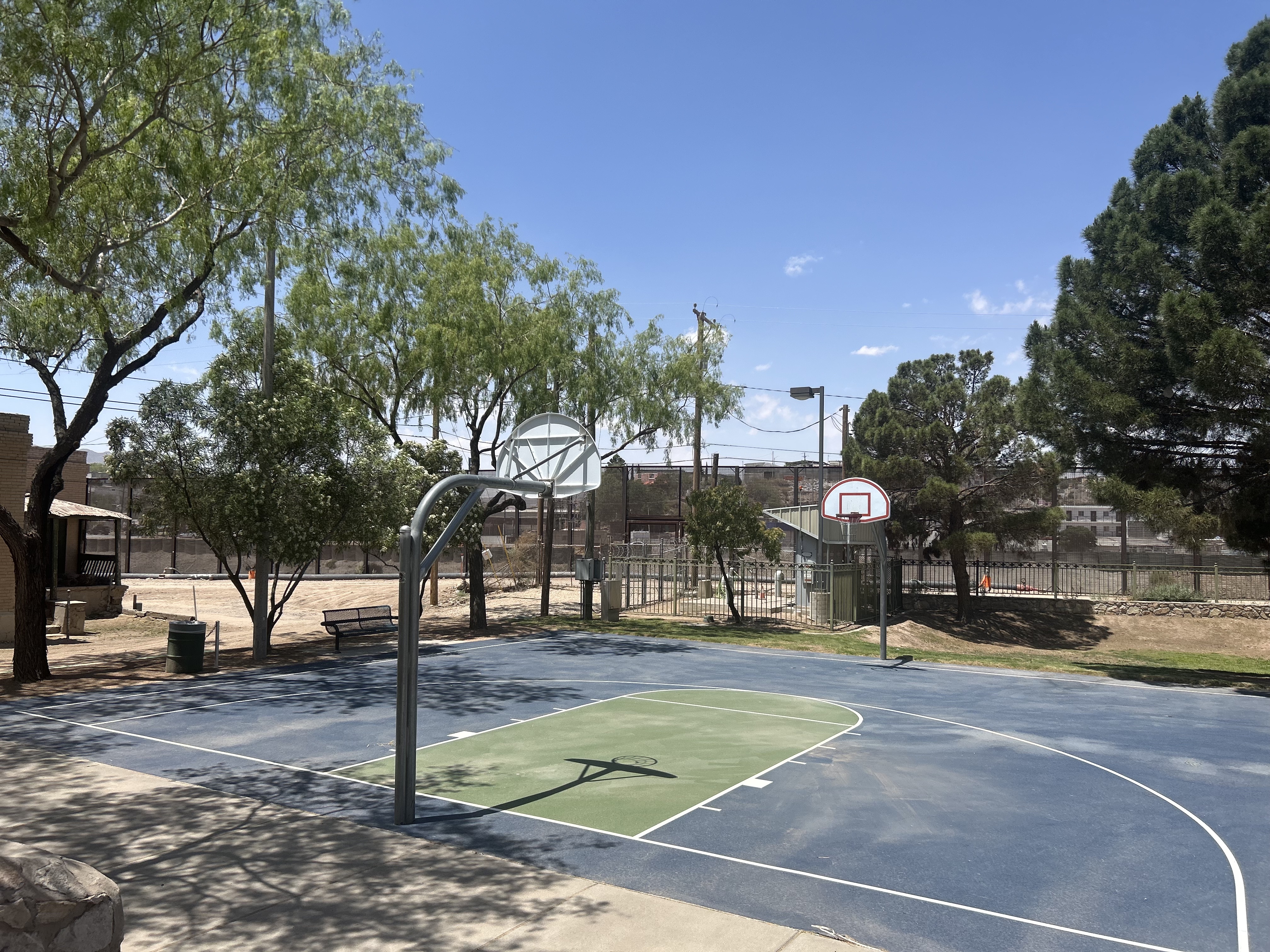
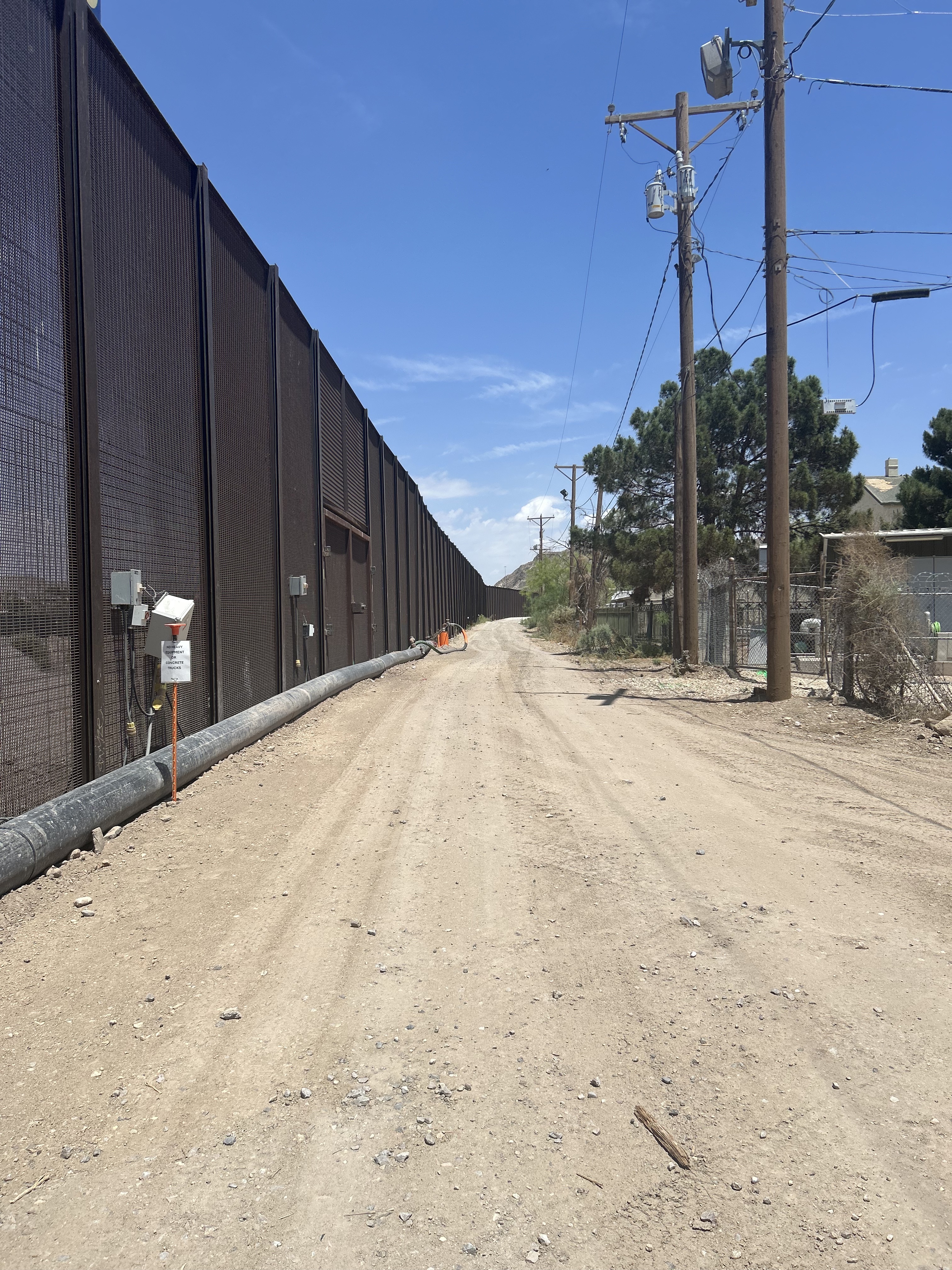
On Wednesday morning, we arrived at Doniphan Park in El Paso. It looked like any park—there were dog pickup bags, a half basketball court, a playground. But just beyond the fence was Ciudad Juárez. A whole other city. Birds flew freely back and forth across the border, undeterred by patrol or policy. The border was quiet. No crowds. Just silence. In the distance: traffic. Was it El Paso? Was it Juárez? It was hard to tell.
Through the fence, I could see the other side clearly. There were no memorial crosses. No signs remembering loved ones. It felt like a dead zone, surrounded by cameras and sensors.
Earlier that morning, a man told us about inauguration day: how CBP began releasing migrants every ten minutes until noon, when the soldiers and the media arrived. Migrants were ushered away quickly, quietly, to avoid the spectacle. Many remember those final days with deep grief and a strange sense of holiness.
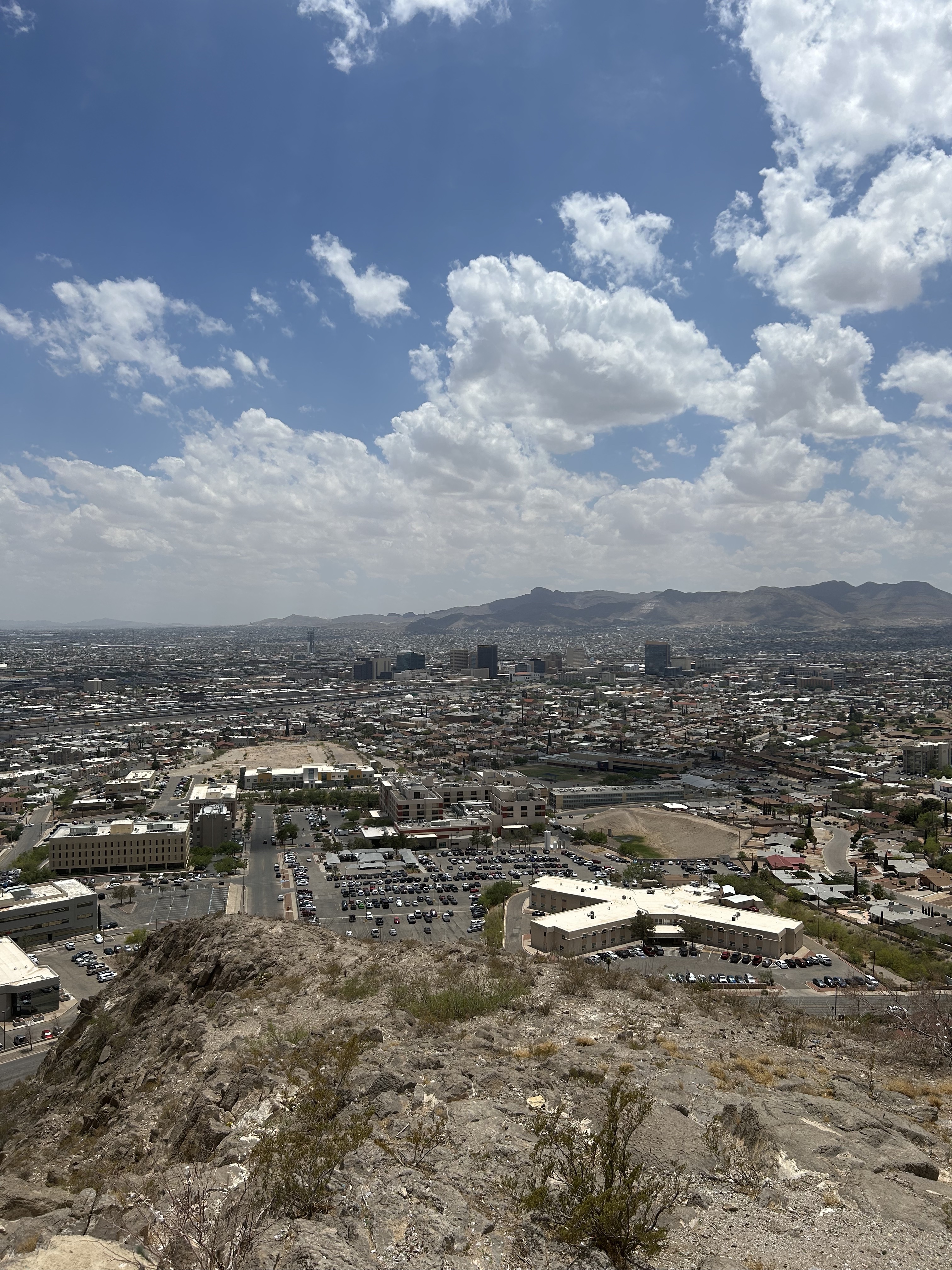
Later, we drove up Scenic Drive to zoom out and see the bigger picture—two cities, intertwined and indistinguishable, separated only by a line. A fence. A story we tell ourselves about who belongs.
As I stood there, looking out across two cities divided by a fence, I couldn’t help but ask: what are we defending? Who are we becoming?
This journey hasn’t provided me with easy answers—but it has deepened my questions. It made me feel the weight of systems that treat people not as neighbors, but as threats. It made me realize that the Gospel isn’t something safely tucked away in a sanctuary. The Gospel is weeping in a courtroom. It is waiting at the border. It is crying out from cages and courtrooms and desert crossings.
It felt even more hollow when I learned of the militarized zone, where human dignity can be criminalized.
And yet, there were glimpses of God amazing grace. Birds that fly over fences. People who show up. People who advocate. Families who resist despair. And us, witnesses, disciples, neighbors, called not just to experience, but to respond.
If we believe that nothing can separate us from the love of God—not height nor depth, not borders nor walls—then we must also believe that we are called to bridge these divides. To proclaim dignity where it is denied. To witness to humanity where it is erased. To be, in the words of the prophet Micah, a people who do justice, love kindness, and walk humbly with our God.
Let us remember. Let us tell the stories. Let us act.
Amen.
With you on the Journey,
Rev. Paul Larson

Grace and Peace to you from Las Cruces, New Mexico
It has been a very busy and emotionally draining two days, and it is hard to believe that we have only seen a sliver of the realities facing our siblings close to the United States-Mexico Border. When I share my stories, I plan to not use names as I do not want folks to be targeted or placed in danger given the sensitivities.
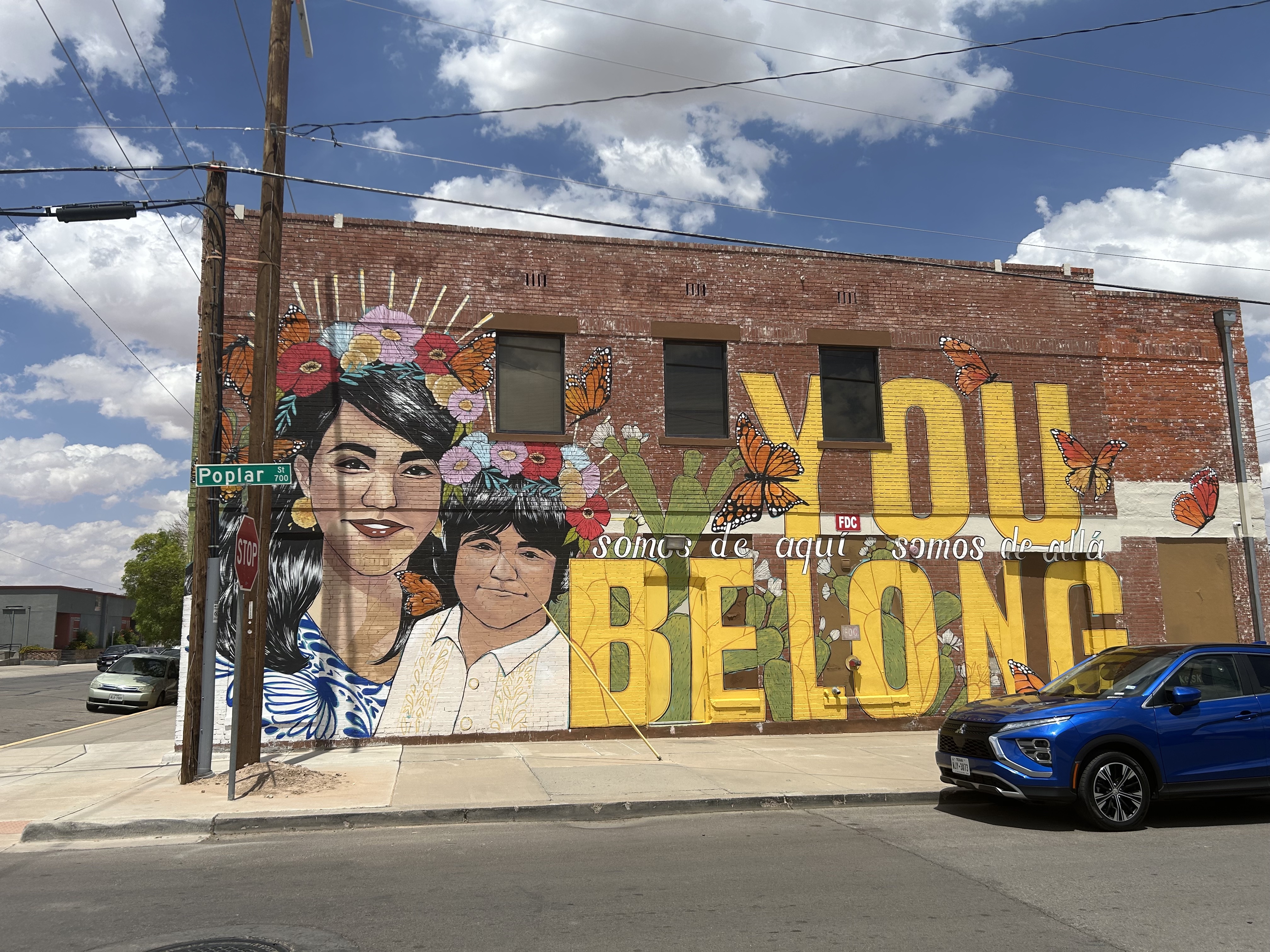
On Sunday, our group arrived to El Paso exhausted from a days travel, and the group was welcomed by our Immersion Coordinator. I arrived much later in the evening, and the drive from El Paso to Las Cruces was beautiful. The mountains that rise from the Valley floor of the Chihuahua Desert. I came on this journey by way of coincidence, I was not planning on coming, and a spot opened up a couple weeks prior to the trip. For myself, the Border is personal, as a third generation Mexican American, who lives in the hyphened space I have seen immigration from a first hand perspective, and I have also lived in a way that many of my own family members have that desensitized experience and have largely assimilated into dominate culture leaving their Mexican roots behind in favor of the privileges of whiteness, and their abilities to pass.
On Monday morning, we made our way to the BSC Hospitality Center, and arrived to an empty place, and we were shared the facility has largely been vacant since January 2025, as migrants are no longer able to come the legal way, as the asylum cases are no longer being accepted. Prior to January, many asylum seekers/ refugees were required to register using the CBP one app, and then present themselves at the Border at the time of their appointment, and there were usually only about 200 appoitnments per day. There was never a crisis like political rhetoric suggests, they were not criminals and drug dealers, who were coming across the border, but people seeking asylum and refugee status. Following the legal way to enter the United States, now those avenues are largely blocked due to the Trump Administration policies.
After touring the facility and hearing stories from those who worked on the ground these past couple of years, it was a streamlined approach. It was warming to hear from those who worked first hand with many of those feeling violence, and hearing stories about children being able to finally be children when they arrived because they were safe.
We later heard from a Director at Lutheran Family Services, who does this work to help resettle refuges who have been accepted into the United States, the vetting process, what the process looks like as, our partners of Global Refugee, formerly Lutheran Social Services. This is an intensive process, and again it takes time to vet the people, and hopefully reunite them with a sponsor, who can help support them and help with adjusting to a new life here in the United States.
Later in the evening, we heard from a woman, who has done extensive work in the Borderlands of New Mexico especially in communities, which have been left behind and have been underserved. Many of which, lack basic infrastructure like water and housing. She has helped many of these communities find their voice, and to advocate on behalf of them, empower these communities, and raise the quality of life in many of these communities that are largely filled with farm workers and migrants.
As I continue this journey, I carry the stories of those we’ve met with me — stories of resilience, pain, hope, and grace. They are a call to remember our shared humanity, to resist apathy, and to be moved by compassion. I am reminded that faith calls us not just to feel, but to act — to stand with our neighbors at the margins and speak truth in love. May we have the courage to do so.
With you on the Journey,
Rev. Paul M. Larson
 Lutheran Engagement and Advocacy in Nevada