From Sierra Pacific Synod Bishop Jeff R. Johnson.

In case you were wondering, Lutherans (of the ELCA variety) are crystal clear. Christian Nationalism is a “distortion of the Christian Faith.” It is an “unhealthy expression of patriotism.” It is not the way of Jesus. Don’t be confused by what you are hearing.

At our churchwide assembly in Phoenix this summer, we adopted a social statement on Civic Life & Faith. Article 38 states:

“At the time of this writing, there is a peculiar form of unhealthy patriotism gaining traction in the United States—Christian nationalism. Christian nationalist belief seeks to fuse selected Christian ideas about what should be the national way of life with a comprehensive cultural framework. That framework incorporates highly selective narratives, practices, symbols, and value systems. For example: “In a Christian nation, social power is placed in the service of the Christian religion.” Christian nationalism explicitly seeks to implement such a legislative framework. Yet, this “turns God into a mascot for the state.

​​”In hardline strains of Christian nationalism, only white, U.S.-born, Christian believers are considered genuine U.S. citizens. This privileging of white, U.S.-born Christians is connected to our country’s violent practices of white supremacy, such as Jim Crow laws or the hundreds of years of Black African slavery.

“Such belief in an intrinsic moral and intellectual superiority of white European Christian civilization has been used to justify as natural and right that white Christians, especially males, should be in power. Such views about race, ethnicity, sex, social/economic class, and religion deny that one’s birth in the nation or one’s great contributions and service to the country are enough for a resident to be considered a “true American.” It distorts who is considered to be a true citizen of the nation.

“A comparison of any strain of religious nationalism, including Christian nationalism, with the actual teachings of Jesus and of the Holy Scriptures reveals that these values are not Christlike. Christian nationalism, in particular, perverts the Christian message by cherry-picking texts that interpret the Scriptures in ways that connect religion to domination. Christian nationalism fuses an imagined conception of a Christian nation with a false vision of God’s ultimate will. It confuses the kingdom of God with a particular government. Jesus rejects identification of earthly structures with God’s kingdom or will: “My kingdom does not belong to this world” (John 18:36). Lutherans teach that the kingdom of God is not a nation, not a particular culture, not a racial grouping, not a form of government, and not even a denomination or a religion (Article xx).

“For theological reasons, the ELCA repudiates Christian nationalism as a distortion of the Christian faith that crosses the line into idolatry. This church also realizes that Christian nationalism contradicts the U.S. motto, e pluribus unum (out of many, one). It effectively substitutes “we the (self-declared) true American-Christians” for “we the people.” It is an unhealthy form of patriotism that harms this country, divides it, and especially endangers the well-being of vulnerable members of our society.”
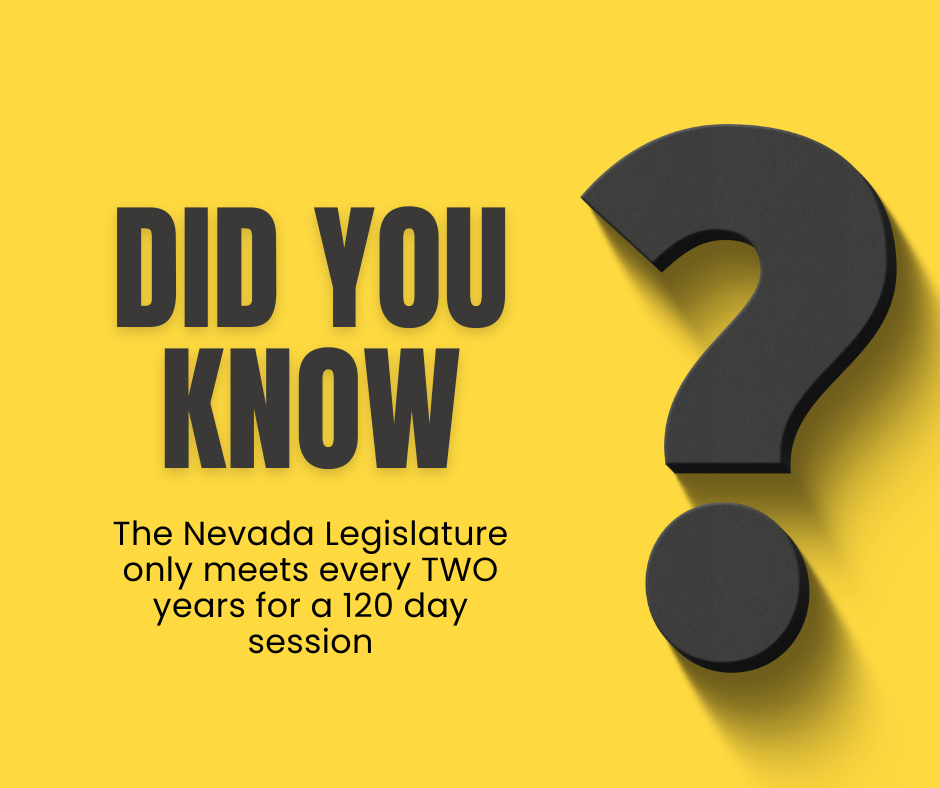

Did You Know?

Nevada’s 83rd Legislative session ended in June but it is STILL crucial that you get engaged now to the Interim session is happening.

You can help influence bills, meet with legislators, and testify in hearings to make your voices heard to ensure important issues get the necessary attention for change. Partner with us. There is power in organizing!

Reach out to Pastor Paul, Advocacy Director, paullarson@leanforjustice.org.

Bishop Eaton issues statement on death of Charlie Kirk

A message from Presiding Bishop Elizabeth Eaton:

As presiding bishop of this church, I want to address yesterday’s shooting in Utah. Charlie Kirk, known by millions for his views and videos supporting right-wing ideas, died by another senseless act of political violence. He was exercising his First Amendment right of free speech when he was shot and killed. This continues a long streak of political violence that shows no sign of subsiding. We’ve witnessed an attack on the husband of former House Speaker Nancy Pelosi, two attempts to assassinate President Donald Trump during last year’s campaign, the murder of two Minnesota state lawmakers, an arson attack on the home of Pennsylvania’s governor, a plot to kidnap Michigan’s governor, and too many more.

As I wrote last year, after the attempt on President Trump’s life in Butler, Pa., “God calls this church to say a definitive ‘no’ to political violence now and in the future. Political violence has a long history but no place in democracy. This church belongs to God, and our unity in Christ is a grace-filled and healing gift in a fractured society.”

This church teaches that disagreement is healthy and can lead to greater understanding and cooperation. But we have lost that sense of respectful debate and have degenerated into a society that treats differing opinions as personal attacks, erasing the humanity of some and abandoning the gospel of Jesus Christ. We must recommit ourselves to reflecting what Christ taught us through acts of forgiveness, healing and new life. I continue to hold that “God’s resolve for peace in human communities is unshakable.”

In this moment, I urge all of us in this church to embrace God’s call, to hear and embody the good news of Jesus Christ and to fulfill our roles as peacemakers through active civic engagement.

The Rev. Elizabeth A. Eaton
Presiding Bishop
Evangelical Lutheran Church in America    

Hunger Leader 101

“A hunger leader in our church is one who follows the way of Jesus by loving their neighbor, being a liaison between need and abundance, and building community through a common commitment to the mission of ELCA World Hunger.”

— Peter McLellan

What Can I Expect?

In this invitation to participate in the life of a hunger leader, you will explore an in-depth definition of “hunger leader” in a way that helps you see ELCA World Hunger’s justice ministry in your everyday life.

You will:

  • Walk through ELCA World Hunger’s definition of what a hunger leader is.
  • Engage stories of hunger leaders across the United States.
  • Learn more about what hunger leader ministry can look like.
  • Begin to define what hunger leadership looks like for you in your community.

What We Hope You Will Get from This

By the end of this course, we hope you will:

  • Understand what it means to be a hunger leader.
  • Feel like you can and do belong in the church’s work to end hunger.
  • Identify where the justice work of the church is and can be merged into your everyday life and the life of your community.
  • Begin to gain some confidence in your ability to lead in anti-poverty ministries.

So What Does “Hunger Leader” Even Mean?

Our invitation to you to become a hunger leader alongside ELCA World Hunger has a specific definition, that is also open enough for you to join us with your unique gifts:

A hunger leader in our church is one who follows the way of Jesus by loving their neighbor, being a liaison between need and abundance, and building community through a common commitment to the mission of ELCA World Hunger. 

Most Importantly…

We hope to convey that your work as a hunger leader alongside ELCA World Hunger is the most direct way to share in the anti-hunger ministry of our church. ELCA World Hunger is part of and accountable to the global Lutheran church. It is powered by people in all sorts of places and roles: some of us work for the ELCA churchwide office or synods, some are pastors, and most are volunteers who organize, network, and support our collective ministry.

We invite you to connect more deeply to our faith’s calling to end poverty. This work starts locally and reverberates around the world.

LEANing IN: The Lost and Found

Jesus tells us of a shepherd who leaves the ninety-nine to find the one, and of a woman who searches until her lost coin is restored. Both stories end the same way—with joy overflowing into celebration.

At Lutheran Engagement and Advocacy in Nevada, we believe this is what faith in action looks like: never giving up on those who are overlooked, unheard, or left behind.

Because God’s love searches, finds, and rejoices—so do we.

#LEANingIn #FoundByGrace #FaithInAction #ELCA