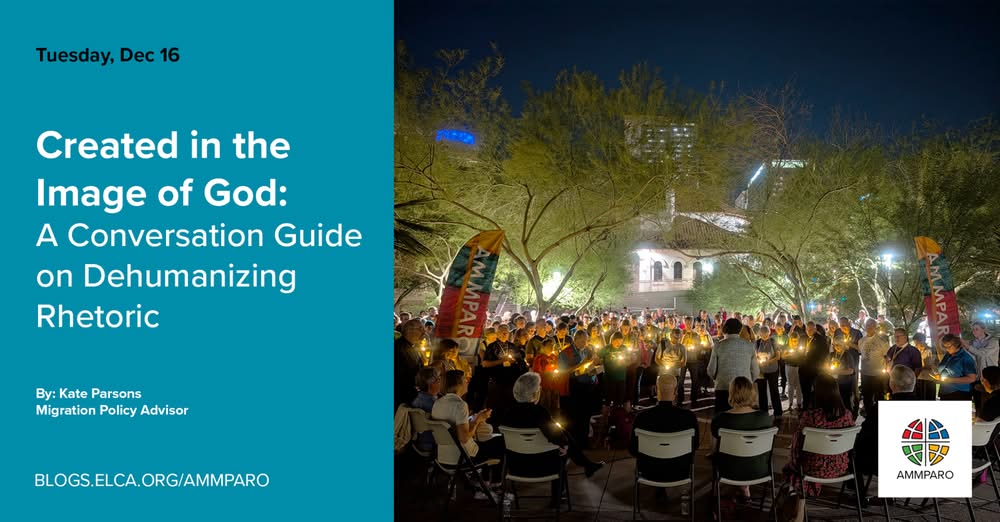
This 11-page ELCA resource affirms the Christian conviction that every human being is created in the image of God (imago Dei) and therefore possesses inherent, unbreakable dignity. Grounded in Scripture and Lutheran social teaching, it calls Christian communities to recognize, name, and respond to language and actions that deny or diminish this God-given worth, particularly toward immigrants and forcibly displaced people created in the Image of God.
The resource explains how dehumanizing language—such as metaphors of invasion, disease, criminality, or “us versus them” framing—erodes empathy, normalizes injustice, and lays the groundwork for discrimination and violence. Drawing on theological reflection, social science insights, and real-world stories, it highlights how such language contradicts Christian faith and the call to love one’s neighbor created in the Image of God.
It offers practical guidance for faithful response, encouraging individuals and congregations to challenge dehumanizing rhetoric, share humanizing stories, and engage others with curiosity, humility, and compassion. The resource emphasizes that Christians can disagree about policy while remaining rooted in shared dignity and respect for all people as children of God created in the Image of God.
Finally, the document outlines concrete ways to advocate for shared dignity in civic life—writing, calling, meeting with elected officials, and engaging media—so that public discourse and public policy reflect justice, hospitality, and the well-being of all. A concluding set of reflections and resources supports ongoing conversation, learning, and faithful action created in the Image of God.
Read the introductory blog post from ELCA Migration Policy Advisor, Kate Parsons.
Table of Contents
- Shared Dignity: A Lutheran Perspective
- Recognizing Language That Dehumanizes
- Responding With Shared Dignity
- Advocating for Shared Dignity
- Resources
Discussion Questions
1. Grounding in Faith & Scripture
- What does it mean to you that every person is created in the image of God (imago Dei)?
- How do Genesis 1:27 and Matthew 25 shape the way Christians are called to view and treat other people?
- The resource says human dignity is “immutable, indivisible, and inseparable from our being.” How does this challenge cultural ideas about worth being earned or lost?
2. Recognizing Dehumanizing Language
- What examples of dehumanizing language stood out to you in this resource?
- Where have you heard language that frames groups of people as threats, invaders, or less than human—whether in media, politics, or everyday conversation?
- Why do you think this kind of language is so powerful and persuasive, even when it is harmful?
3. Personal Reflection & Awareness
- Can you recall a time when you may have unknowingly accepted a “single story” about a group of people? What helped you recognize it?
- How do fear, frustration, or uncertainty make it easier to stop seeing others as fully human?
- What emotions arise for you when imagining challenging dehumanizing language in conversation?
4. Responding with Shared Dignity
- The resource suggests naming harmful language while affirming shared humanity. Which of the sample responses felt most realistic for you to use? Why?
- How can sharing personal or family stories—our own or others’—help humanize conversations about immigration or other polarized issues?
- What practices (prayer, Scripture, community support) might help you respond with grace rather than defensiveness?
5. Faith, Disagreement & Civic Life
- How can Christians hold strong convictions about policy while still honoring the dignity of those who disagree?
- What does it look like for the church to serve as a “prophetic presence” in times of polarized public discourse?
- When does silence become complicity in the face of dehumanizing language?
6. Moving Toward Action
- What is one concrete action—personal, congregational, or civic—you feel called to take after engaging this resource?
- How might your congregation create space for listening to voices and stories that are often unheard?
- What would it look like for your community to be known as a place where shared dignity is consistently named, practiced, and defended?
Optional Closing Question
- After reading and discussing this resource, how has your understanding of “loving your neighbor” deepened or changed?
 Lutheran Engagement and Advocacy in Nevada