ELCA World Hunger Resources

On the ELCA World Hunger website, there are plenty of good resources amiable for congregational engagement! 

Lifelines

For the World Hunger annual report please see the 2025 Fall Lifelines  issue, now available for download, as a PDF and interactive flipbook, and also available for order as a physical copy. 2026 Spring Lifelines should also be available by April.

Print/Digital Resources

Feeding Ministries Guide

If you are interested in starting a feeding ministry, this guide provides tips and strategies for planning, sourcing food, engaging volunteers, and much more. If you’re part of an existing feeding ministry, you’ll find ideas for growing, expanding or reimagining the work you’re already doing.

Backpack Buddies Guide

This helpful guide contains tips for starting a backpack hunger relief program in your community. It was developed in partnership with ELCA congregations already engaged in backpack buddy programs across the country. Approaching your local elementary schools is also an effective way to begin identifying specific needs in your community.

Know Your Neighborhood: Worksheet and Guide

This guide provides suggestions for finding data related to several areas that impact food security: housing, employment and food access. Data can help you and others know more about the challenges our neighbors face and the assets available in a community.

“At the Table”Vacation Bible 

“At the Table” is ELCA World Hunger’s 2025 VBS curriculum, inviting your community to learn how storytelling can make a difference in your neighborhood and the world.

“En la Mesa”/”At the Table” Bilingual English/Spanish VBS

For the first time ever, ELCA World Hunger has a bilingual VBS. Designed to be either a traditional VBS or an intergenerational program, each day offers large- and small-group activities, crafts, games, snacks and more.

Act 2 Day 4 Tomorrow

This overnight program brings youth together to learn about the role they can play in eradicating hunger and poverty in the world.

Generation Zero-Hunger Interactive Journey Guide

With your youth group or congregation, experience the challenges faced by a family in Nepal as they seek a sustainable livelihood with this interactive roleplaying guide. The setup is based on how ELCA World Hunger designed the track for the 2024 ELCA Youth Gathering. For an intergenerational activity, consider asking a group of youth and young adults to run this experience for your community.

Many other resources can be downloaded  here.

Videos

Intersections: Justice Ministries with ELCA Partners” — an ELCA World Hunger Documentary

“Intersections” was created to introduce the ELCA and its communities to the overlapping causes of hunger. Using the M.E.R.G.E. (Migrant, Economic, Racial, Gender, and Environmental) justice acronym as an illustration, the film follows the stories of three ELCA companion ministries and explores how the church is working at poverty’s tangled roots.

Consider playing this video at your table or running a discussion session at your synod assembly based off the documentary. If you are interested in putting on running a discussion around the film, and have any questions, please contact Peter McLellan at peter.mclellan@elca.org.

“We live in a hungry world” w/ Bishop Michael Rinehart

“ELCA World Hunger in Puerto Rico” w/ Everidys Concepción

Online Course: “What is a Hunger Leader?”

  • https://bit.ly/hungerleader— This 20-25-minute online learning resource introduces prospective, new, and longtime advocates to ELCA World Hunger’s ministries and invites them to join us. Through brief reflections and videos, this tool helps people in your network see themselves in the work of ending poverty. Share “What Is a Hunger Leader?” with your neighbors of any level of familiarity with anti-hunger ministry!
  • Print the attached flyer to display at your synod assembly tables.

How to Order Printed Resources

  • See attached flyer for how to order!

How to Create a QR Code

  • Click herefor a YouTube tutorial on how to create a QR code using Google Chrome web browser or Canva.

Please send us photos of your synod assembly table displays!

Thank you, and have a wonderful time at your assembly and engaging your congregations!
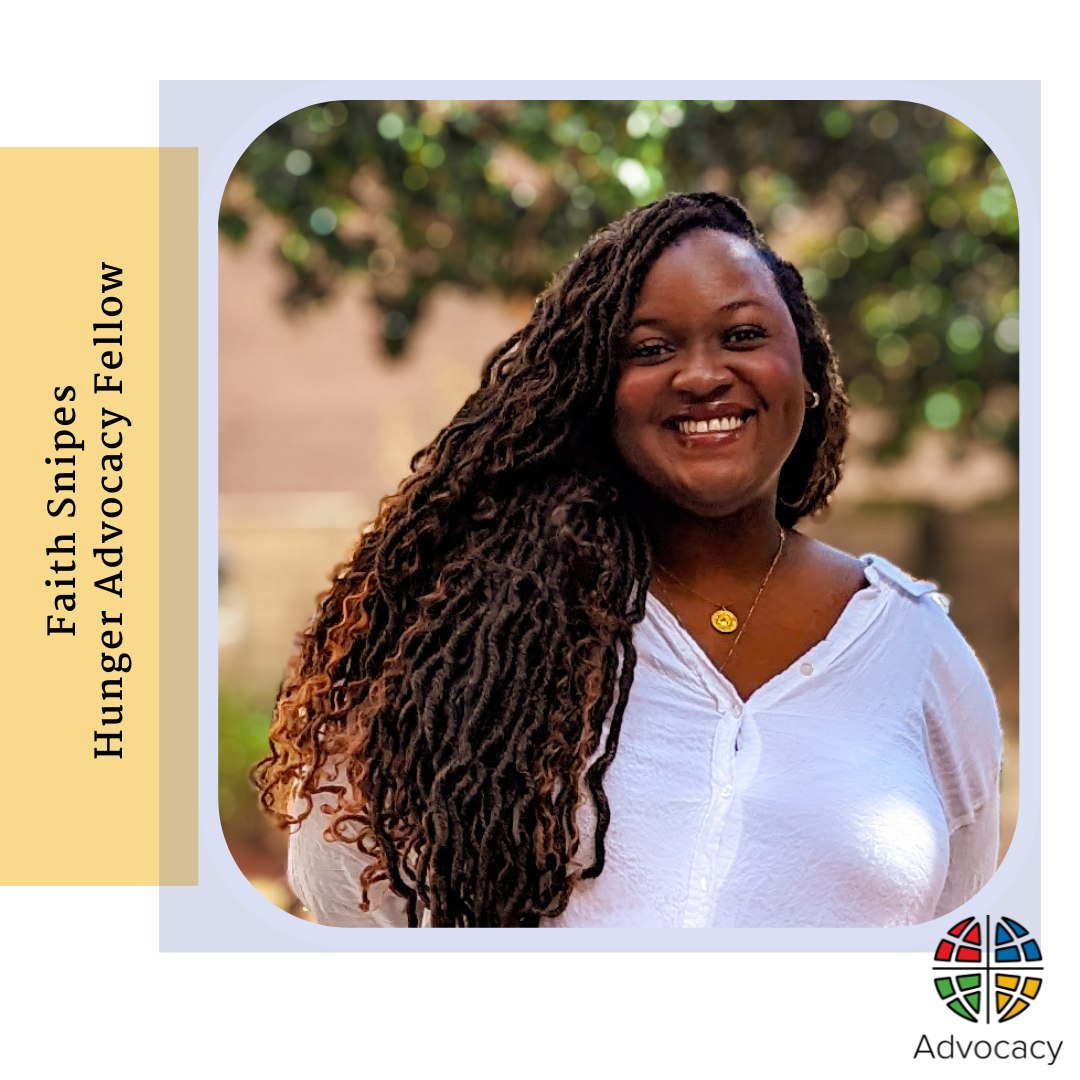
Welcome Faith Snipes to the ELCA Advocacy Team!

We welcome Faith Snipes to the ELCA advocacy team! Skills she brings to the position of ELCA World Hunger Advocacy Fellow come from her pursuit of a dual masters at American University and Wesley Theological Seminary, studying international peace, conflict resolution and theology. She has a keen interest in how religious leaders and communities can play a pivotal role in peacebuilding and reconciliation.

DATA CENTER PROBLEM

Over the past decade, Nevada has offered generous tax incentives to attract data centers. At the time, it was framed as economic development—jobs, innovation, growth.

But now, we are beginning to see the cost.

Data centers already have a profound impact on land, water, and energy use. And here in Nevada—a high desert state—those resources are not unlimited. Water is scarce, especially after a dry winter. Traffic is already strained along Interstate 80. And now, energy demand is surging in ways we did not anticipate.

In 2020, Nevada voters overwhelmingly approved a constitutional amendment requiring utilities like NV Energy to generate 50% of their electricity from renewable sources by 2030. It was a bold and necessary step toward a more sustainable future.

But earlier this month, reporting from The Nevada Independent revealed that NV Energy now expects to miss that target.

Why?

Because demand is skyrocketing.

In fact, NV Energy now projects nearly a 50% increase in energy demand compared to what it forecast just two years ago—driven in large part by data centers and other large-scale users.

At the same time, these facilities require massive amounts of water for cooling. And they are expanding rapidly. Today, there are roughly sixty data centers across Nevada, many clustered in the Reno-Tahoe Industrial Center.

Last week, Nevada lawmakers held a joint interim committee hearing to address these concerns. Advocates made one thing clear: we need standards. We need accountability. And we need to ensure that data centers are paying the true cost of the resources they consume.

Because right now, everyday Nevadans are the ones absorbing that cost—through higher energy bills, strained infrastructure, and environmental degradation.

Olivia Tanager of the Sierra Club Toiyabe Chapter put it plainly: regulations benefit everyone. Data centers should not be exempt.

Last week, I struggled. It was warm across much of the West. I told myself it was too early to turn on the air conditioning—but by Friday, I gave in. Later that evening, I sat on my porch, enjoying the warm spring air. And if I’m honest, I felt guilty. It’s only March. And yet, the Sierra Nevada already looks bare in ways that don’t feel normal. What little snow we had is disappearing fast. Climate change is not abstract. It is here. And at the very moment we should be accelerating our transition to clean energy, we are instead building infrastructure that dramatically increases demand—often without clear guardrails. We are moving in two directions at once.

We also do not live in isolation.

Global instability—from economic disruptions to ongoing conflict—continues to remind us how interconnected our systems are. We saw it during COVID. We saw it when global supply chains broke down. And we are seeing it again now.

What happens in one place affects us all.

And that is why public policy matters.

The decisions made in Carson City are not theoretical. They shape whether families can afford their energy bills. Whether communities have access to clean water. Whether we meet our climate goals—or fall short.

Policies are not just written.

They are lived.

And in many cases, they are the difference between stability and crisis… between health and harm… even between life and death.

Lutheran Engagement and Advocacy in Nevada continues to be deeply concerned about the rise of Data Centers in Nevada. We are a drought prone state, and clean water access continues to be a challenge.

So we must pay attention.
We must stay engaged.
And we must hold our elected leaders accountable.

Because the stakes are simply too high not to.

The Reality is Rent in Nevada is Really High

Rents across Nevada are reaching record highs. Families are stretching paychecks further each month just to stay housed.

Congregations are seeing it firsthand. People choosing between rent and groceries. Young families delaying stability. Seniors worried about displacement.

Housing costs are not random. They are shaped by policy decisions, budget priorities, and who holds power in state government.

Midterm elections determine who writes housing laws, who funds affordability programs, and who decides whether working families are protected or priced out.

When we talk about voting, this is what we mean.