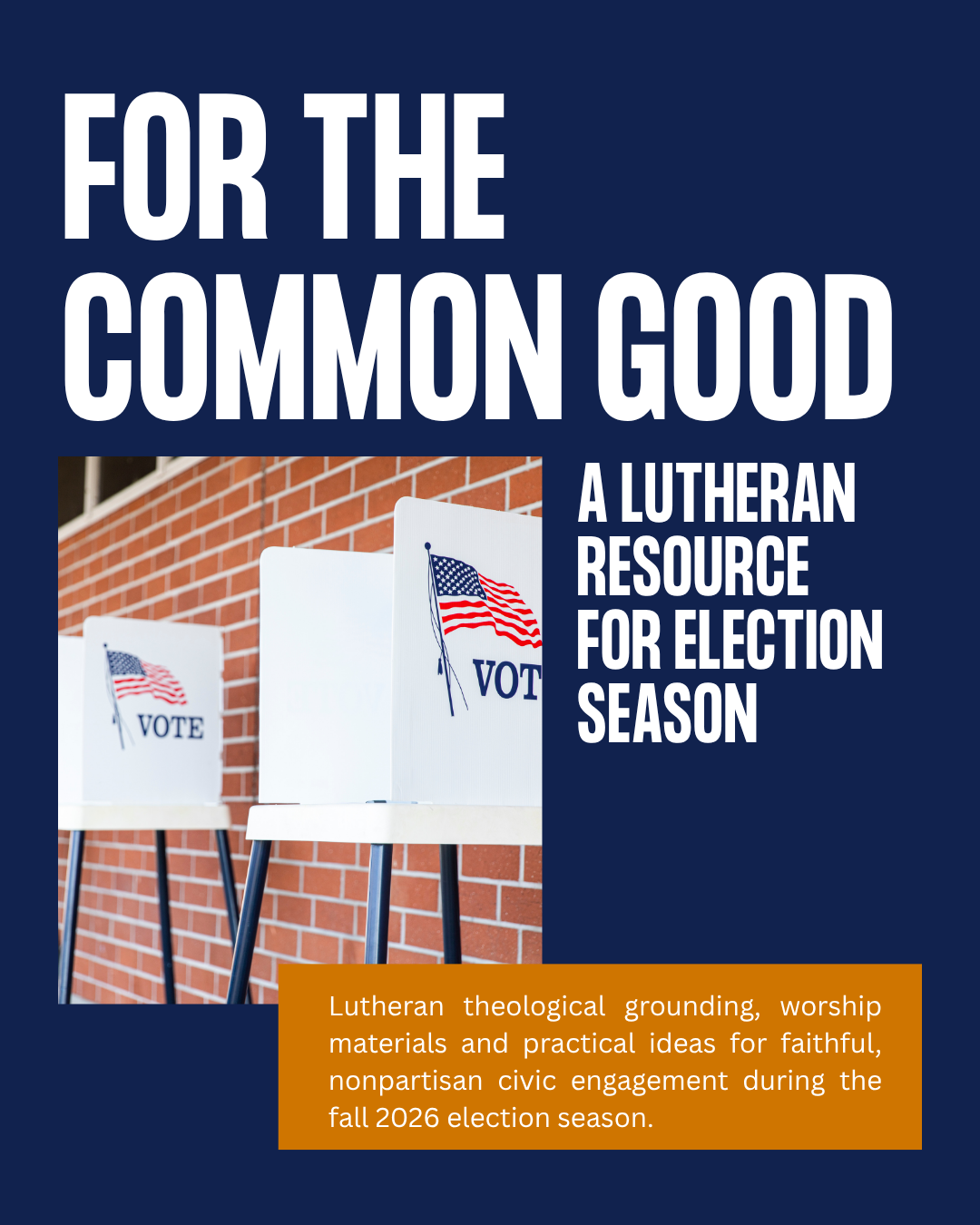
Pastors, deacons, worship planners, councils and advocacy teams are invited to download the resource and adapt its hymns, intercessions, prayer services and other tools for communities across Nevada. Help your congregation respond to anxiety and division with prayer, truthful discernment, humility and love of neighbor.
More than 20,000 unaccompanied immigrant children are at risk of losing legal representation after the federal contract supporting a nationwide network of nonprofit attorneys expired.
Many legal providers are continuing to represent children they already serve without pay. But organizations are increasingly unable to take new cases—leaving some children to navigate an immigration system, court hearings, and trained government attorneys on their own.
This is about more than legal paperwork. Attorneys help children understand their rights, seek protection from abuse, trafficking, neglect, or persecution, and connect with the support they need to build safe and stable lives.
As people of faith, we are called to care for children, welcome the stranger, and insist that every person is treated with dignity.
Nevada congregations can help by sharing trusted legal resources, supporting local nonprofit immigration services, protecting family confidentiality, and speaking out for stable legal representation for children.
In Northern Nevada, Catholic Charities of Northern Nevada’s Mother Cabrini Immigration Legal Services can be reached at 775-393-3877.
Earlier this month, we celebrated the 62nd Anniversary of the Wilderness Act. On September 3, 1964, President Lyndon B. Johnson signed the act into law.
The law created the National Wilderness Preservation System, beginning with 9.1 million acres. Today, it includes more than 111 million acres of congressionally designated wilderness across 44 states and Puerto Rico. These places are protected for the use and enjoyment of the American people—for you.U.S. Fish & Wildlife Service
Wilderness supports clean air and water, wildlife habitat, solitude and quiet recreation. Many wilderness areas are also ancestral homelands and places of ongoing cultural and spiritual importance to Tribal Nations and Indigenous peoples. U.S. Forest Service
This anniversary also calls us to tell the fuller story. The idea of an “unpeopled wilderness” has too often overlooked Indigenous peoples’ long-standing relationships with, knowledge of, and stewardship of these lands. Expanding Indigenous leadership and participation is essential to the future of wilderness.
Today, wilderness protections remain part of a broader national conversation about conservation, energy development, mining, logging, recreation, and public access. The Department of the Interior has pursued reviews and changes to several public-land conservation policies, including the Public Lands Rule. Department of the Interior
The Wilderness Act reminds us that public lands are a shared trust—held not only for this generation, but for those yet to come.
When families struggle to keep a roof over their heads, children often experience:
More school absences
Interrupted learning
Higher levels of stress
Lower academic performance
Research consistently shows that housing instability makes it harder for students to thrive in school. Children who experience eviction or frequent moves are more likely to miss school and fall behind academically.
Here in Nevada, families are balancing rent, groceries, utility bills, and back-to-school expenses while housing costs remain out of reach for too many working households.
Housing is not just about where we live. It is about whether children and families have the stability they need to learn, grow, and thrive.
That is why Lutheran Engagement and Advocacy in Nevada advocates for housing policies that help Nevada families remain safely housed.
Extreme heat is not just a weather issue. It is an education issue, a public-health issue, and an environmental-justice issue.
A new study highlighted by KNPR finds that when classroom temperatures rise above 73°F, students complete cognitive tasks more slowly and less accurately. Heat can also contribute to absenteeism and make it harder for children to learn.
But the burden is not shared equally. Students in under-resourced communities are more likely to attend schools with aging buildings, limited shade, and inadequate cooling. Many also return home to housing without reliable air conditioning.
In Nevada, extreme heat is no longer an occasional disruption. Our schools need plans that protect students and staff: monitoring classroom and bus temperatures, creating safe protocols for recess and athletics, investing in cooling and shade, and communicating clearly with families.
Every child deserves a safe place to learn. A student’s ZIP code should not determine whether their classroom is healthy, cool, and ready for learning.