The Governor is Nevada’s chief executive. Elected statewide to a four-year term, the Governor leads the executive branch, works with state agencies, proposes the state’s two-year budget, signs or vetoes bills passed by the Legislature, and can call the Legislature into special session when urgent action is needed.
The Governor cannot directly control inflation, gas prices, mortgage rates, or national economic policy. But the office has significant influence over the choices Nevada makes in response to the challenges families face.
The Governor’s budget proposal helps set priorities for public education, health care, housing, food assistance, behavioral health, public safety, transportation, and environmental protection. The Governor also appoints people to lead state agencies and serve on boards and commissions that shape decisions about utilities, licensing, land use, health, and more.
The Governor’s power to sign or veto legislation is especially important. A governor can advance—or stop—policies affecting prescription-drug affordability, paid leave, consumer protections, school meals, housing stability, wages, and access to care.
As voters consider candidates for Governor, LEAN encourages Nevadans to look beyond broad promises about “the economy” and ask:
How will this candidate help Nevada families afford housing, food, child care, health care, and utilities?
What public investments will they prioritize in the state budget?
How will they protect and strengthen schools, health care, and the social safety net?
How will they ensure that economic development creates family-sustaining jobs and benefits communities across Nevada?
How will they use their veto, appointment, and budget powers to advance equity, dignity, and the common good?
A strong Nevada is one where every person and community has what they need to live with dignity and thrive.
A candidate forum can help people of faith become informed voters, introduce candidates to the concerns of their communities, and build relationships with future public officials. It also requires careful planning and a firm commitment to nonpartisanship.
Churches and other 501(c)(3) organizations may conduct nonpartisan voter education, including candidate forums. They may not endorse or oppose candidates for public office. LEAN encourages faithful civic participation that is rooted in our baptismal call to seek the common good while treating every candidate and political party fairly.
A forum can be a meaningful ministry when a congregation or coalition can:
Attract a broad community audience;
Provide a neutral moderator and timekeeper;
Invite every qualified candidate for the same office;
Apply the same rules, deadlines, questions, and speaking time to each candidate; and
Plan and promote the event well in advance.
A forum may not be advisable if only one candidate is likely to participate, if the event is intended to promote or challenge a particular candidate, or if there is not enough time to organize it fairly.
In those cases, consider partnering with the League of Women Voters, other congregations, neighborhood groups, or community organizations. A congregation may also host a nonpartisan issue-education program without candidates.
Begin with one contested race
For a first forum, choose one contested race that directly serves the congregation’s community. This could include:
Nevada Assembly or State Senate;
City council or mayor;
County commission;
School board;
Board of regents;
County offices such as sheriff, district attorney, clerk, assessor, or treasurer; or
A congressional race.
Local candidates are often easier to schedule, and the conversation can focus on decisions that directly affect neighbors. A larger statewide or congressional forum may work best when organized by a coalition of congregations and community partners.
Invite all qualified candidates for the same office:
At the same time and in the same manner;
Under identical rules and deadlines;
Without regard to political party or viewpoint; and
With the same access to questions, format details, and logistical information.
Do not invite only the candidates viewed as most viable or most aligned with the sponsoring organization’s concerns.
Choose a broad conversation
For a congregation’s first forum, LEAN recommends covering several public concerns rather than centering the event on only one issue.
A broad forum helps voters understand how candidates approach the responsibilities of the office. It also helps protect the event’s nonpartisan character. Questions should be prepared independently and should give every candidate an equal opportunity to respond.
Faith may explain why a congregation cares about an issue, but questions should focus on a candidate’s public responsibilities—not their personal religious beliefs.
Select four to six themes that fit the office, then choose six to eight questions total.
Nevada questions to consider
Hunger and economic security
Nevada families continue to face rising food, housing, and utility costs. What policies would you support to reduce hunger and improve long-term economic stability?
What role should state and federal government play in protecting access to SNAP, school meals, and other nutrition programs?
How would you support workers and families whose wages do not keep pace with the cost of living?
Housing and homelessness
What policies would you support to increase the supply of safe, affordable housing in Nevada?
How should communities respond to unsheltered homelessness without simply moving people from one location to another?
What should government do to improve tenant protections, prevent evictions, and support seniors and families facing housing instability?
Health care
What would you do to protect and improve access to Medicaid, behavioral-health care, maternal health care, and rural health services?
How should Nevada address shortages in health-care professionals, especially in rural and underserved communities?
What responsibility does government have to ensure families can afford health care and prescription medications?
Education and children
What investments would you support to strengthen Nevada’s public schools, educators, and students?
How should Nevada ensure transparency and accountability for all public education dollars?
What would you do to address chronic absenteeism, literacy gaps, student mental health, and unequal educational opportunity?
Creation care, water, and energy
What responsibility does government have to protect Nevadans from extreme heat, wildfire smoke, and other climate-related risks?
How should Nevada balance water conservation, housing, agriculture, mining, and economic growth?
What policies would you support to make energy more affordable and reliable while protecting communities and creation?
How should Nevada address the energy, water, and tax impacts of large data centers and other major developments?
Democracy and civic life
What steps would you take to strengthen public confidence in Nevada elections while protecting access for every eligible voter?
Will you accept certified election results and oppose threats or violence against election workers and public officials?
How would you work with colleagues and constituents whose political views differ from your own?
Immigration and community belonging
What would a secure, orderly, and humane immigration system look like?
How should public officials protect due process, family unity, and the safety of children and families?
What role should state and local government play in ensuring that all Nevada communities can live, work, learn, and worship safely?
Should candidates receive questions in advance?
Give every campaign the topics, format, rules, and time limits in advance. LEAN recommends sharing the principal questions with all participating candidates at the same time, about five to seven days before the forum.
Advance questions encourage thoughtful answers and can make busy candidates more willing to participate. The goal is voter education, not surprise.
Moderators may ask neutral follow-up questions. Audience questions should be submitted in writing and screened by a politically diverse committee for relevance, clarity, duplication, and impartiality. Do not give one campaign additional preparation, private coaching, or earlier access to information.
Keep the format simple
A 60- to 75-minute forum might include:
Five minutes for welcome, rules, and a nonpartisan disclaimer;
One-minute opening statements;
About 40 minutes of prepared questions;
Ten to fifteen minutes of screened audience questions;
One-minute closing statements; and
A reminder about voter registration, early voting, mail ballots, and Election Day.
Rotate who answers first. Enforce identical time limits. Use a visible timekeeper. Ask the audience to withhold applause, and do not allow campaign fundraising during the event.
If campaigns may display literature, provide the same amount of space in a designated area for every candidate. If the event is recorded, notify candidates in advance and publish the full program rather than selected clips.
Plan for a candidate’s absence
Adopt an “empty-chair” policy before invitations are sent and share it with every campaign.
If only one candidate agrees to participate, the safest practice is to cancel that race’s forum rather than give one campaign exclusive exposure. If a candidate withdraws at the last minute, follow the policy that was announced to every campaign consistently.
Invite the whole community
Candidate forums should generally be open to the public. A broad and diverse audience strengthens the event’s value to voters and candidates alike.
Invite nearby congregations, interfaith partners, neighborhood associations, schools, food pantries, nonprofits, and community ministries. Promote the event through partner email lists, community calendars, libraries, local news outlets, and appropriate social-media groups.
Ask participating campaigns to share the same neutral announcement. Promotional materials should name every invited candidate and include this disclaimer:
This is a nonpartisan voter-education event. The sponsoring organizations do not endorse or oppose candidates or political parties.
Begin planning now
Nevada’s general election is Tuesday, November 3, 2026. Congregations planning a forum should confirm current registration, mail-ballot, and early-voting information through the Nevada Secretary of State.
Allow:
Six to eight weeks to organize and invite candidates;
Three to four weeks for public promotion;
Two weeks to finalize technology, accessibility, security, and volunteer roles;
Five to seven days to provide questions to candidates; and
Seven to ten days for the strongest promotional push.
Faithful participation without partisanship
A candidate forum is not an endorsement meeting or an effort to determine which candidate is “the Christian choice.” It is a ministry of public conversation.
Congregations can create a space where candidates are treated fairly, neighbors are heard, difficult questions are asked respectfully, and voters receive useful information. At a time of deep division, honest and hospitable conversation can itself be an expression of Christian public witness.
If your congregation is not ready to host a forum this year, attend one hosted by another community organization, watch a candidate debate, read candidates’ public statements, and make a voting plan. Local races matter deeply because local decisions shape our schools, neighborhoods, housing, public safety, health, and shared life.
Nevada needs more than 120,000 additional affordable homes. In East Las Vegas, a city-owned golf course could become 1,500 affordable homes alongside green space, a soccer field, job training, and other community resources.
The proposed Desert Pines redevelopment brings several major policy questions together: housing affordability, responsible water use, public land, neighborhood investment, infrastructure, and who ultimately benefits from government decisions.
The project also offers a contrast with the former Badlands Golf Club, where years of resistance and litigation ultimately cost Las Vegas approximately $286 million—without producing the affordable housing Nevada urgently needs.
Desert Pines is promising, but promises are not enough. Advocates must continue asking whether the homes will remain affordable, whether current residents will benefit, whether public space will be genuinely public, and whether safeguards will prevent displacement.
Our Lutheran commitment to love and serve our neighbors invites us to see housing as more than a commodity. A stable home provides the foundation from which people work, learn, raise families, remain healthy, and participate in community life.
The question is not simply whether Nevada can build more housing.
It is whether we will use our shared resources to build communities where everyone has a place to call home.
Nevada’s backcountry is more than scenery. It is habitat, watershed, cultural landscape, recreation, and part of our shared responsibility to generations yet to come.
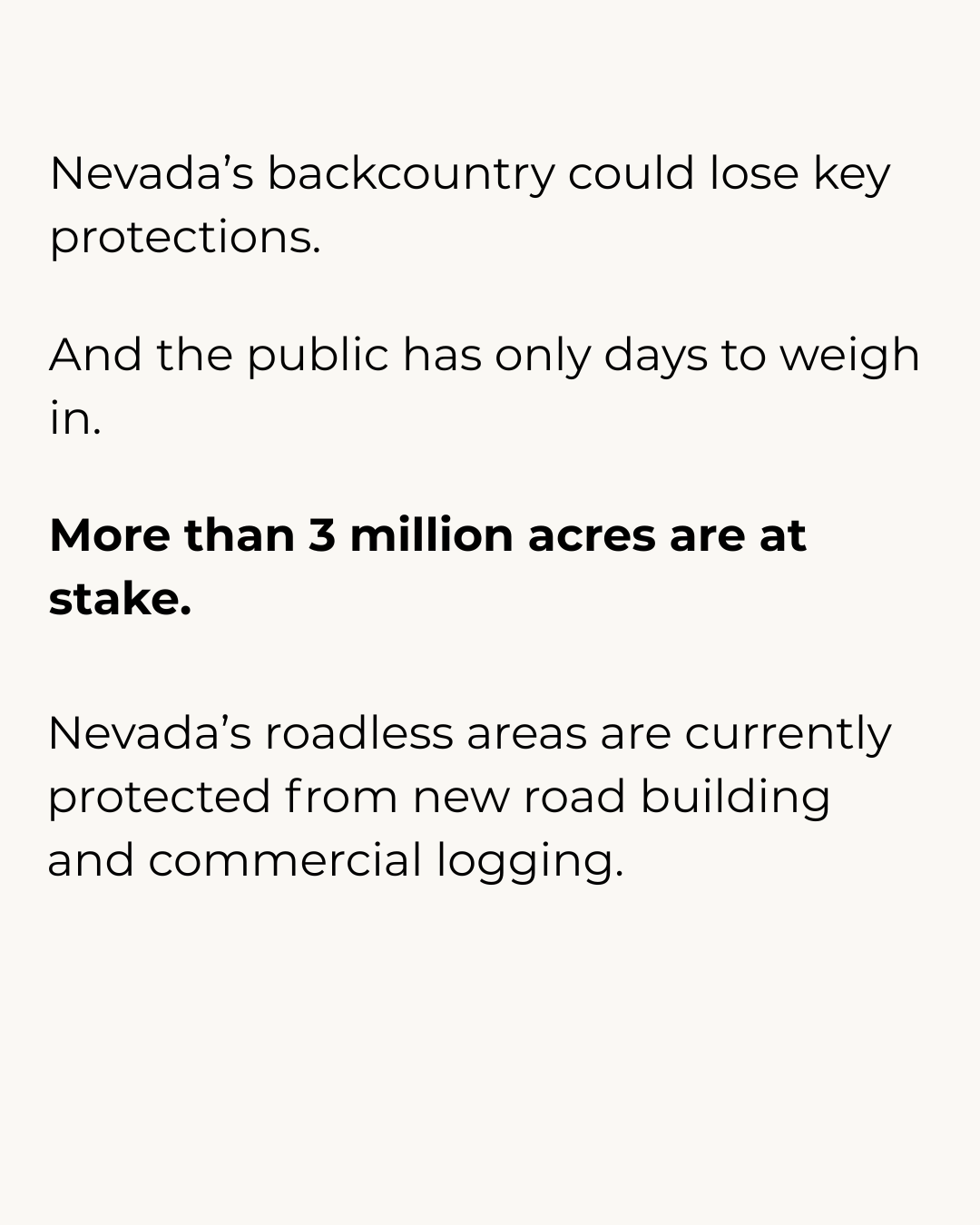
Proposed federal rule changes could remove roadless protections from more than 3 million acres in Nevada, opening currently protected lands to new road building and commercial logging. Another proposal could also expand off-road vehicle access on Forest Service lands.
Wildfire preparedness matters. Targeted, science-based forest restoration and fuel reduction can protect communities. But more roads do not automatically mean safer forests—and can bring more fragmentation, habitat loss, and opportunities for human-caused wildfire ignitions.
LEAN believes Nevada needs careful, locally informed stewardship that respects Tribal nations, protects public lands, and builds real wildfire resilience.
Public comment on the proposed Roadless Rule repeal closes October 6.
Connection to LEAN Action Alert and post explaining in-depth the Roadless Rule.
Northern Nevada’s McDermitt Caldera is becoming a focal point in the national rush for “critical minerals.” The region holds major lithium deposits, but it is also sagebrush habitat for sage-grouse, home to Lahontan cutthroat trout and rare plants, ancestral land for Tribal nations, and working range for local ranchers.
The proposed McDermitt Lithium project has been fast-tracked for exploration, with plans for 168 drill sites and more than 21 miles of new access roads. Advocates are raising serious questions about groundwater use in an already stressed basin, habitat fragmentation, Tribal consultation, and whether the public had adequate opportunity to weigh in.
WHY THIS MATTERS FOR NEVADA
Water is already scarce. The proposed drilling could require pumping an estimated 31.5 million gallons of groundwater. The McDermitt Creek/Quinn River basin has long faced groundwater pressure, and Nevada has denied further groundwater applications there for decades. Any review must take seriously the impacts on springs, streams, wildlife, ranching, and existing water users.
Wildlife protections cannot be an afterthought. The project area includes high-quality sage-grouse habitat and active breeding grounds. Sage-grouse depend on intact sagebrush landscapes, which are already being lost to wildfire, invasive species, climate change, and development. Roads, drilling, noise, lights, and disturbed soil can fragment habitat and further weaken a struggling population.
Tribal consultation must be meaningful, early, and ongoing. For Fort McDermitt Paiute, Shoshone, Bannock, and other Indigenous people, this is ancestral land with cultural sites, burial grounds, hunting areas, and places where traditional foods and medicines are gathered. Consultation cannot simply mean notice after major decisions are underway; it must include real opportunity to shape outcomes.
Rural livelihoods deserve protection. Local ranchers fear losing grazing access and water infrastructure while carrying the impacts of industrial activity. A just transition must not pit renewable-energy extraction against families who have cared for these landscapes and rely on them for their livelihoods.
Nevada should not have to choose between clean-energy materials and healthy communities.
We need a critical-minerals policy that protects scarce water, honors Tribal sovereignty, safeguards wildlife, respects rural livelihoods, requires strong reclamation, and ensures the public, not corporations, benefits from resources taken from public lands.