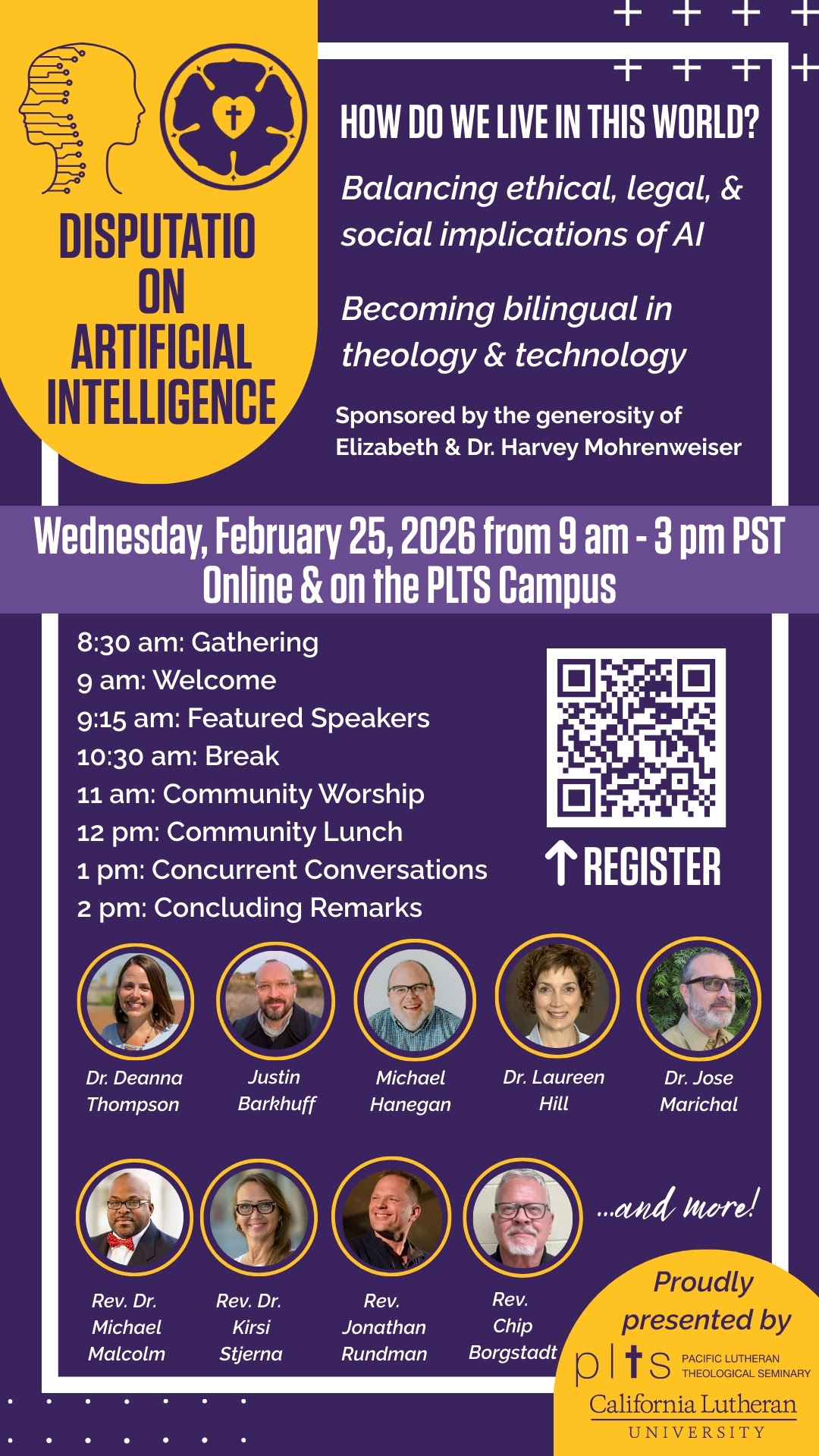
In a constantly evolving digital age, artificial intelligence (AI) has become part and parcel of modern life. Given its impact, as well as the overwhelming enthusiasm for and protest against it, how do we best live in the world with the reality of AI? How do we respond to it faithfully and theologically?
Join us online or in Berkeley on Wednesday, February 25 from 8:30 am – 3 pm for a dynamic day of inquiry! Learn more & register HERE!
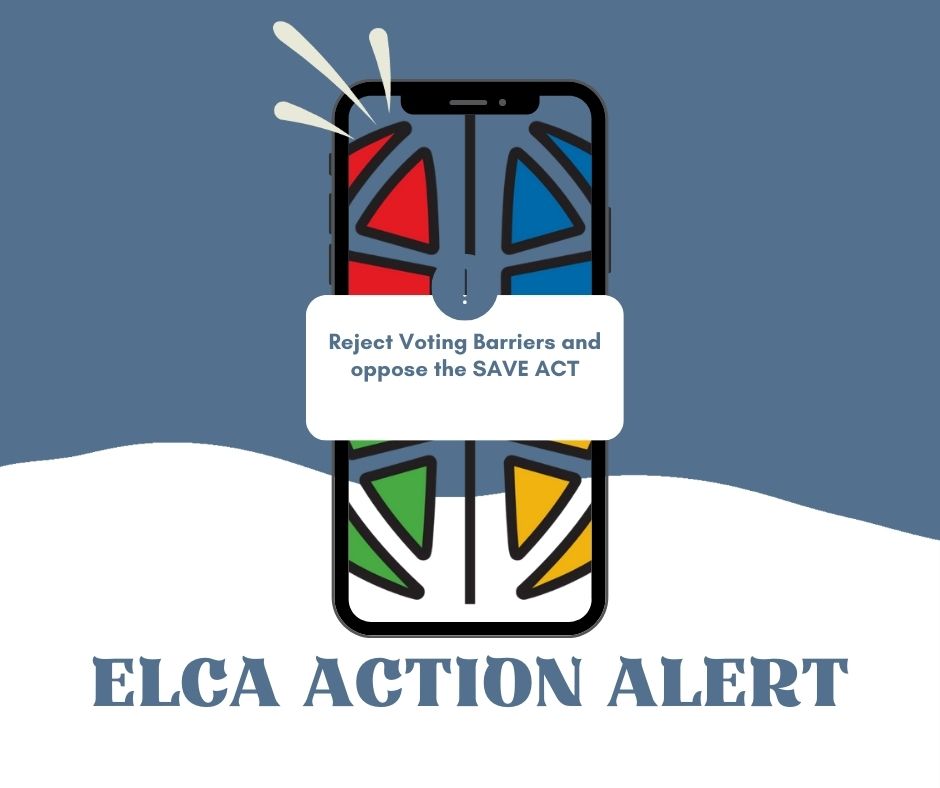
Ahead of a contentious midterm election, Congress is considering legislation that would raise barriers to voting. Take action.
Over the coming weeks, several lawmakers are quietly pushing for legislation that would make voting and voter registration more difficult for millions of American citizens. The SAVE Act, if enacted, would create additional burdens on voters to provide eligibility – which non-partisan experts say would not make any noticeable change to election security. The adjustments would disproportionately impact rural, low-income and marginalized communities, and members of Tribal Nations, by making it harder to both prove eligibility and register to vote. “These measures erect new barriers for people facing significant challenges registering and voting, especially those with unstable housing, geographic isolation, or limited access to government-issued documents,” assesses the National Low Income Housing Coalition in which the ELCA participates.
The ELCA strongly affirms voter participation as an exercise in citizenship and condemns efforts to restrict access – especially for low-income communities which are often left out of the election process. The ELCA social message “Government and Civic Engagement in the United States: Discipleship in a Democracy” urges rejection of “antidemocratic exclusion” efforts to restrict voting, including “requiring voters to show identification without issuing identification to all eligible voters,” purging voter rolls, and more.
2. Require strict proof of citizenship to register (and exclude common documents like drivers licenses) which millions of American citizens don’t have access to, such as a passport or birth certificate.
3. Place burden of verification not on internal state processes but on the efforts of individual citizens with the new regulation burdens.
Lawmakers should be aware of the challenges this legislation poses, and of the moral concerns from the Christian community ahead of any possible vote. Customizing this message with your top concerns and values will improve your impact. Urge Congress to reject the SAVE Act.
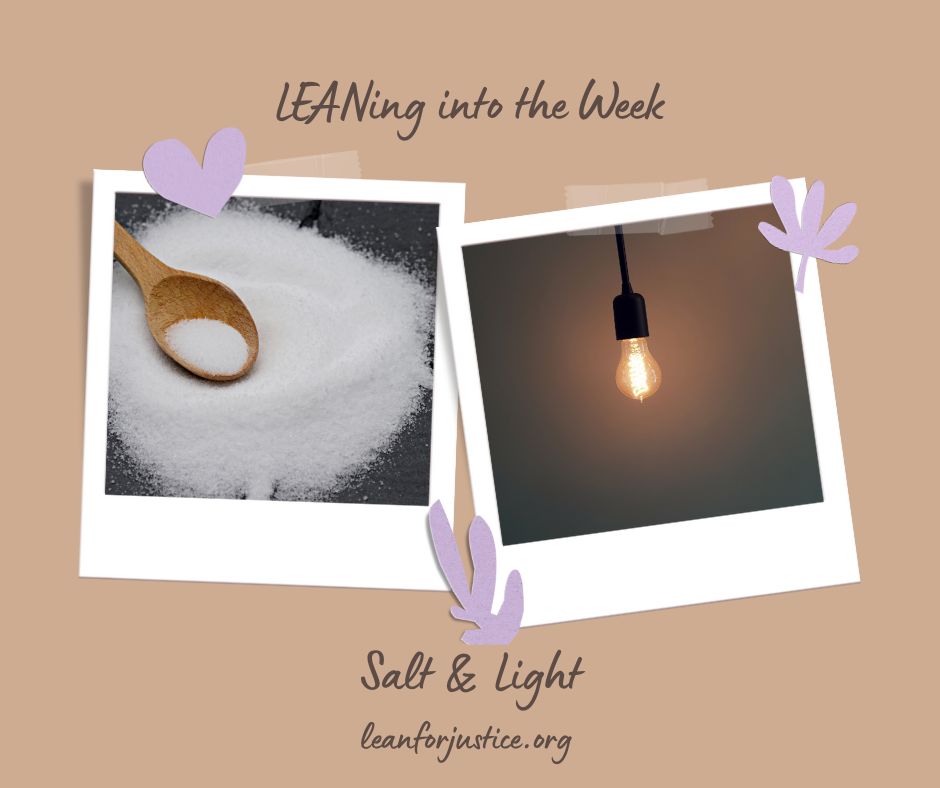
“You are the salt of the earth. You are the light of the world.” — Matthew 5:13–14
Salt is a small thing, but it changes everything.
It preserves what would otherwise spoil. It brings out flavor where things feel bland. And sometimes—let’s be honest—it irritates before it heals.
In the Sermon on the Mount, Jesus does not ask his followers to become salt and light. He names them as such. This is not a future goal or a spiritual achievement. It is an identity.
To be salt is to show up in the world in ways that preserve dignity and tell the truth. To be light is to refuse hiding hope when the world feels dim.
But salt can lose its flavor. Light can be covered up. Faith can be watered down when it costs us comfort, when accountability feels hard, or when grace is confused with avoidance.
Jesus’ call is not to cheap grace or easy forgiveness. It is a call to love that is honest, courageous, and rooted in justice. Love that holds one another accountable without becoming cruel. Love that refuses to forget harm while still choosing a future shaped by mercy.
This week, lean into the simple but challenging question Jesus places before us:
Where is God calling you to be salt?
Maybe it looks like preserving what is good when others are ready to give up. Maybe it looks like speaking truth when silence feels easier. Maybe it looks like releasing resentment so that God’s transforming love has room to work.
And where is God inviting you to let your light shine?
Not for recognition. Not for righteousness points. But so that others might glimpse a kingdom shaped by justice, peace, and dignity for all.
We are made of dust and salt. We are held by grace and called to love.
Lean into the week knowing this: You already carry what the world needs.
It has already been a busy year, and conversations about the upcoming midterm elections are intensifying. Last week, proposals to nationalize U.S. elections entered the public debate.
That suggestion prompted swift, bipartisan concern in Nevada—not as a partisan response, but as a defense of established constitutional structure and election law.
Under Article I, Section 4 of the U.S. Constitution, states are granted explicit authority to regulate the “Times, Places and Manner of holding Elections.” While Congress may set certain federal parameters, the administration of elections has historically—and intentionally—remained a state responsibility. This decentralized system is designed to prevent the concentration of power and to preserve public trust through local control and accountability.
Nevada has frequently been drawn into national election debates, particularly because the state does not require voter identification and is currently engaged in litigation after Nevada sued the Trump Administration over demands for personal voter information. These policy choices and legal disputes, however, exist squarely within Nevada’s constitutional authority.
Nevada Secretary of State Cisco Aguilar, the state’s chief elections officer, reaffirmed this legal framework:
“The Constitution makes it clear: elections are run by the states. The President doesn’t have the power to change how our elections are conducted, and what he’s suggesting is unconstitutional.”
That position was reinforced across party lines. Former Republican Governor Brian Sandoval and Democratic Assembly Speaker Richard Perkins, serving as co-chairs of the Democracy Defense Project, emphasized that election integrity depends on respecting constitutional roles rather than expanding executive authority.
Perkins cautioned that undermining state control introduces unnecessary risk to democratic stability, while Sandoval underscored a core principle of federalism:
“Nevada’s elections should be handled in Nevada, by Nevadans.”
At a time when confidence in democratic institutions is under strain, Nevada’s bipartisan response highlights a critical policy reality: election administration is not a partisan issue, but a constitutional one. Preserving state authority, respecting institutional boundaries, and maintaining transparent, locally administered elections remain essential to safeguarding free and fair elections.
 Lutheran Engagement and Advocacy in Nevada