Beginning Thursday, May 7, 2026, a cross-border effort will deliver thousands of yellow flowers to immigration detention centers in the United States and migrant shelters in Mexico as a visible sign of compassion and solidarity. Members of the Grand Canyon Synod are invited to participate—either by donating flowers or by serving as Volunteer Site Leaders in local communities. View a PDF flyer here.
This effort, organized by partners including International Friendship Park and Border Church, responds to the reality that thousands of people remain separated from their families due to detention and deportation systems. The campaign offers a simple but powerful witness: to recognize the humanity of those affected and to stand alongside them in love and prayer.
How to Participate
Donate Yellow Flowers: Individuals and congregations can contribute flowers to be delivered near Mother’s Day. Donations may be made in honor or memory of loved ones, and donors can often select where the flowers will be distributed.
Serve as a Volunteer Site Leader: Site Leaders help coordinate local actions at detention centers or shelters. Leaders participate in three short virtual meetings (orientation, media, and follow-up), typically held Thursdays at 10:00 AM PDT.
Help Identify Locations: Congregations with connections to facilities such as Florence or Eloy detention centers, or border shelters in places like Nogales or Sonoyta, are especially encouraged to engage.
If access to detention centers is not permitted, local teams will organize public witness actions—including vigils, flower displays, and press events—to call attention to the realities of family separation and to affirm the dignity of all people.
A Growing Commitment in Our Synod
This invitation comes through Jeff Jacobson of St. Andrew Lutheran Church in Las Vegas, recently designated as an AMMPARO Welcoming Congregation—joining a growing network of churches committed to walking alongside migrants and advocating for justice.
Across our synod, this work reflects our shared calling as Lutherans: to see Christ in our neighbor, to respond with mercy, and to act for justice in the world. In a time when division can feel overwhelming, even a small act—like offering flowers—becomes a proclamation of hope.
Congregations or individuals interested in learning more are also invited to reach out for conversation and coordination.
This Mother’s Day, may we embody Christ’s love across borders—bearing witness to a shared humanity that no system can divide.
Organized by partners including International Friendship Park and Border Church, this campaign reflects our Lutheran call to love our neighbor and seek justice. Learn how your congregation can take part in this meaningful witness of hope and shared humanity. View a PDF flyer here.
As followers of Jesus, we are called to create communities where all can worship, learn, and serve in safety and hope. In our time, that also means paying careful attention to basic security, risk management, and emergency preparedness in our buildings and ministries.
At the request of our Synod Vice President, Mark Myers, and following discussion at the Executive Committee and Synod Council, the Grand Canyon Synod has gathered the resources below to support congregations as they review and strengthen their safety and security practices. This page will be updated periodically as new tools become available.
Our goal is not to foster fear, but to help congregations be both welcoming and wisely watchful—“wise as serpents and innocent as doves,” caring well for children, elders, staff, volunteers, and visitors alike.
View the latest security blog posts below, or view them all here. Scroll down to discover more resources.
How to Use These Resources
These materials are intended to help congregations:
Start or deepen local conversations about security, workplace violence, and emergency preparedness.
Identify practical first steps that are low-cost or no-cost, especially for smaller congregations.
Build relationships with local partners, including law enforcement, fire, EMS, and insurance carriers.
Develop or refine written plans for responding to threats, violence, or emergencies in worship and workplace settings.
Important:
These materials are for information and planning only. They do not constitute legal advice. Congregations should consult their own attorneys, insurers, and local law enforcement when developing or implementing policies and procedures.
Every ministry context is different—size, location, building layout, neighborhood, and history. Use what fits, adapt what you can, and set aside what does not serve your congregation’s context.
You may find it helpful to assign this page to a small task group (council members, staff, ushers, and key volunteers) and have them report back with recommendations and next steps.
ELCA & Synod Resources
PROTECTING EMPLOYEES – SECURITY PROCEDURES IN THE WORKPLACE (ELCA)
This ELCA resource encourages congregations to evaluate their security procedures as part of basic risk management, recognizing that while violent acts cannot always be prevented, careful planning can reduce risks and improve response. It notes research indicating an uptick in church-related shootings and offers insight into when and where church violence most often occurs.
The document outlines practical prevention steps in three areas:
Leadership & Local Authorities – building relationships with police, providing them with building photos/blueprints, establishing emergency contact lists, and coordinating patrols and support for church events.
Staff & Volunteers – developing an emergency plan (including evacuation), communicating plans to the congregation, ensuring First Aid/CPR training and resources, and equipping ushers/greeters to watch for and report concerning behavior.
Building & Grounds – improving lighting, trimming hedges, limiting and monitoring entry points, and ensuring exits are clearly marked, unlocked, and well-lit.
Best for: Congregation councils, pastors, and staff who want a concise, church-specific starting point.
This ELCA compilation of FBI workplace violence materials focuses on prevention, threat assessment, and multidisciplinary response teams. It highlights that:
Many organizations benefit from creating assessment and response teams that include security, HR, medical, and employee assistance representatives (in larger settings), reporting to a single senior leader for clear lines of authority.
These teams often consult with law enforcement, mental health professionals, emergency responders, and other outside specialists—relationships that should be built before a crisis.
Training for employees, supervisors, and managers should cover: early warning signs of problematic behavior, de-escalation strategies, reporting procedures, cultural sensitivity, and standard response plans for violent situations.
Evaluation efforts should include uniform reporting, trend analysis, and periodic surveys to assess the impact of security measures and identify new risks.
Best for: Councils and staff exploring how to create or strengthen a threat assessment / response team and develop clear reporting and training pathways.
WORKPLACE VIOLENCE, ACTIVE ASSAILANT & INCIDENT PREPAREDNESS E-LEARNING
This resource (e-learning module) is designed to help organizations prepare for, respond to, and recover from incidents of workplace violence or active assailant situations, emphasizing:
Understanding the continuum of workplace violence (from harassment and threats to physical violence).
Basic principles of emergency response, including individual actions and organizational planning.
The importance of post-incident care, including trauma awareness and support for staff, volunteers, and community members.
Best for: Staff, ushers, volunteers, and safety teams who benefit from visual or interactive training, especially in larger congregations or multi-staff settings.
Insurance & Risk Management Partners
BROTHERHOOD MUTUAL – “CREATE A SAFER CHURCH” AND SAFETY LIBRARY
Brotherhood Mutual offers a concise article, “10 Steps to a Safer Church,” and a broader safety library designed for churches. The “10 Steps” article emphasizes that security planning does not need to be complicated or expensive, and suggests immediate, practical actions such as:
Assigning clear roles in an emergency—who calls 911, who speaks with authorities, who communicates with the congregation.
Identifying medical and security professionals within the congregation (nurses, doctors, current/former law enforcement, military).
Consolidating and monitoring entrances, using two-way radios, and assigning volunteers to watch doors and parking lots during services.
Reviewing pulpit/leadership positioning and drawing attention to exits, asking, “What if it happened here?”
These resources encourage churches to overcome denial (“it can’t happen here”) and to take low- or no-cost steps toward a safety mindset.
Best for: Congregations looking for quick, practical checklists and an accessible entry point into security planning.
Church Mutual provides a broad library of risk control resources, including:
Self-inspection safety checklists for houses of worship.
Guides on risk reduction, staff and volunteer safety, transportation safety, cybersecurity, severe weather, sexual abuse prevention, and more.
Articles on topics such as event safety, slip / trip / fall prevention, and protecting facilities and vehicles.
The ELCA’s “Protecting Employees – Security Procedures in the Workplace” document specifically points congregations to Church Mutual’s self-inspection checklists and crime-prevention guides as part of a comprehensive security review.
Best for: Councils, property committees, and finance teams who want structured checklists and guides to integrate security into ongoing risk management and stewardship of property.
Federal Law Enforcement & Active Shooter Resources
The FBI defines an “active shooter” as one or more individuals actively engaged in killing or attempting to kill people in a populated area. Their Active Shooter Safety Resources page is designed to support schools, workplaces, houses of worship, and other public settings. It includes:
An overview of the FBI’s role in assisting local and state law enforcement during active shooter incidents, including investigative and victim support services.
Active Shooter Attack Prevention and Preparedness (ASAPP) training—a two-hour course for civilians using scenario-based exercises and the Run, Hide, Fight framework.
Training videos and quick reference guides in English and Spanish.
Links to after-action reports, research studies, and planning guides for emergency operations in schools, businesses, and houses of worship.
Congregations are encouraged to contact the active shooter coordinator at their local FBI field office for questions about training, and to report threats at 1-800-CALL-FBI or online at tips.fbi.gov.
Best for: Safety teams, councils, and leaders seeking national-level guidance and training options for active shooter awareness and response.
PRE-ATTACK BEHAVIOR OF ACTIVE SHOOTERS (FBI STUDY)
This FBI research (often cited as “A Study of Pre-Attack Behaviors of Active Shooters”) analyzes active shooter incidents over many years to identify behaviors and patterns that appeared before attacks. The emphasis is on:
Recognizing that there is no single profile of an active shooter, but many exhibit observable concerning behaviors over time.
Understanding how potential attackers may communicate intent or grievances (“leakage”) to others.
Encouraging organizations to pay attention to threatening, escalating, or significantly concerning behavior and to have clear mechanisms for reporting and assessment.
Best for: Threat assessment teams, councils, and leadership groups who want to inform their policies and training with empirical research.
FBI WORKPLACE VIOLENCE & SECURITY PLANNING
The broader FBI workplace violence materials (as compiled in the ELCA “FBI Resources” PDF) cover:
The history and definition of workplace violence, including case studies of major incidents.
Strategies for security surveys—using questionnaires and staff input to identify high-risk situations, locations, or roles, and to confirm the need for improved measures.
Physical security considerations: visibility, alarm systems, access control, workspace layout, and clearly marked escape routes, including provisions for people with disabilities.
The critical importance of addressing threats and threatening behavior—recognizing, evaluating, and managing threats as a central piece of prevention.
Best for: Congregations that want a deeper dive into workplace violence concepts and how they translate into policies, physical security improvements, and ongoing evaluation.
Suggested First Steps for Congregations
You do not need to implement everything at once. Consider beginning with a few manageable, high-impact steps:
Put security on the agenda.
Schedule time at a council meeting and/or staff meeting specifically to review this page and assign next steps.
Build or reaffirm relationships with local authorities.
Contact your local police department, fire department, and EMS to introduce key leaders, share building information, and ask for guidance on safety reviews.
Review your building and grounds.
Walk through your facility with a small team and note lighting, entrances/exits, visibility, and potential hiding places. Use a self-inspection checklist from Church Mutual or your insurer if possible.
Clarify emergency roles and communication.
Decide who calls 911, who interfaces with law enforcement, and who communicates with the congregation during an emergency. Identify backups for each role.
Equip ushers, greeters, and volunteers.
Provide simple guidance on greeting, observing, and reporting concerning behavior. Ensure they know the basic emergency procedures and how to contact help quickly.
Develop or update an emergency plan.
Create a written plan that includes evacuation routes, shelter-in-place options if appropriate, communication protocols, and how to account for people with mobility or sensory needs.
Plan for training.
Consider scheduling a training session using the e-learning resource, FBI ASAPP materials, or other workshops provided by local law enforcement or your insurer.
Federal agencies, insurers, and other partners update their best practices and training options.
If your congregation has developed policies, checklists, or practices that might help others in our synod, please share them with the synod office or with Vice President Mark Myers. Together, we can support one another in creating safer sacred spaces where the gospel can be preached and lived with confidence and care.
As part of the Grand Canyon Synod 2026 Congregational Security & Preparedness series, we turn to one of the most practical and impactful steps a congregation can take: build relationships with local law enforcement, fire departments, and emergency medical services (EMS)—before a crisis occurs.
Across multiple churchwide and safety resources, one theme is clear: relationships matter. When first responders already know your building, your leaders, and your basic plans, they are able to respond more quickly, more effectively, and with greater confidence in an emergency.
If your congregation does only a few things to strengthen preparedness, this is one of the most important.
WHY THIS MATTERS
In an emergency, seconds matter. When local police, firefighters, or EMS personnel are already familiar with your facility and leadership, they do not have to start from scratch.
Simple pre-existing relationships can help:
Speed up response time and coordination
Improve communication during a crisis
Reduce confusion about building layout and access points
Support better outcomes for those in need of care
The ELCA’s Protecting Employees – Security Procedures in the Workplace resource specifically encourages congregations to build relationships with local authorities and share building information in advance, rather than waiting until an incident occurs. Download and view as PDF here.
WHAT THIS CAN LOOK LIKE
This work does not need to be complicated or formal. In many cases, it begins with a simple introduction.
Congregations might consider:
Reaching out to your local police and fire departmentsIntroduce your congregation, share contact information for key leaders, and express a desire to build a relationship.
Inviting first responders to visit your campusOffer a walk-through of your building so they can become familiar with entrances, exits, gathering spaces, and any unique features.
Providing basic building informationThis may include photos, simple floor plans, or notes about areas like nurseries, fellowship halls, or offices.
Notifying authorities of large or special eventsFestivals, holiday services, or community gatherings may benefit from additional awareness or coordination.
Asking for guidanceMany departments are willing to offer suggestions on lighting, access points, emergency planning, and communication protocols.
These steps are not about turning over responsibility, but about building mutual awareness and trust.
A MINISTRY OF PRESENCE AND PARTNERSHIP
From a Lutheran perspective, this work reflects our understanding that we are not called to serve in isolation. God works through community—through relationships, shared knowledge, and collective care.
Local first responders are already part of that community. Many are neighbors, family members, or even members of our congregations. Building relationships with them is not just practical—it is an extension of our shared vocation to care for one another.
This also helps shift the posture of security from something internal and reactive to something relational and collaborative.
A SIMPLE NEXT STEP
If your congregation has not yet made these connections, consider adding this to your next council or staff agenda:
Identify who will reach out to local police, fire, and EMS
Set a goal of making initial contact within the next month
Consider scheduling a brief site visit or conversation
Even one conversation can make a meaningful difference.
KEEP BUILDING
As with each step in this series, you do not need to do everything at once. Start small. Build one relationship. Take one step forward.
For additional tools and guidance, visit the synod’s resource hub:
Together, as congregations across the Grand Canyon Synod, we can continue to grow as communities that are not only welcoming, but also prepared, connected, and grounded in care.
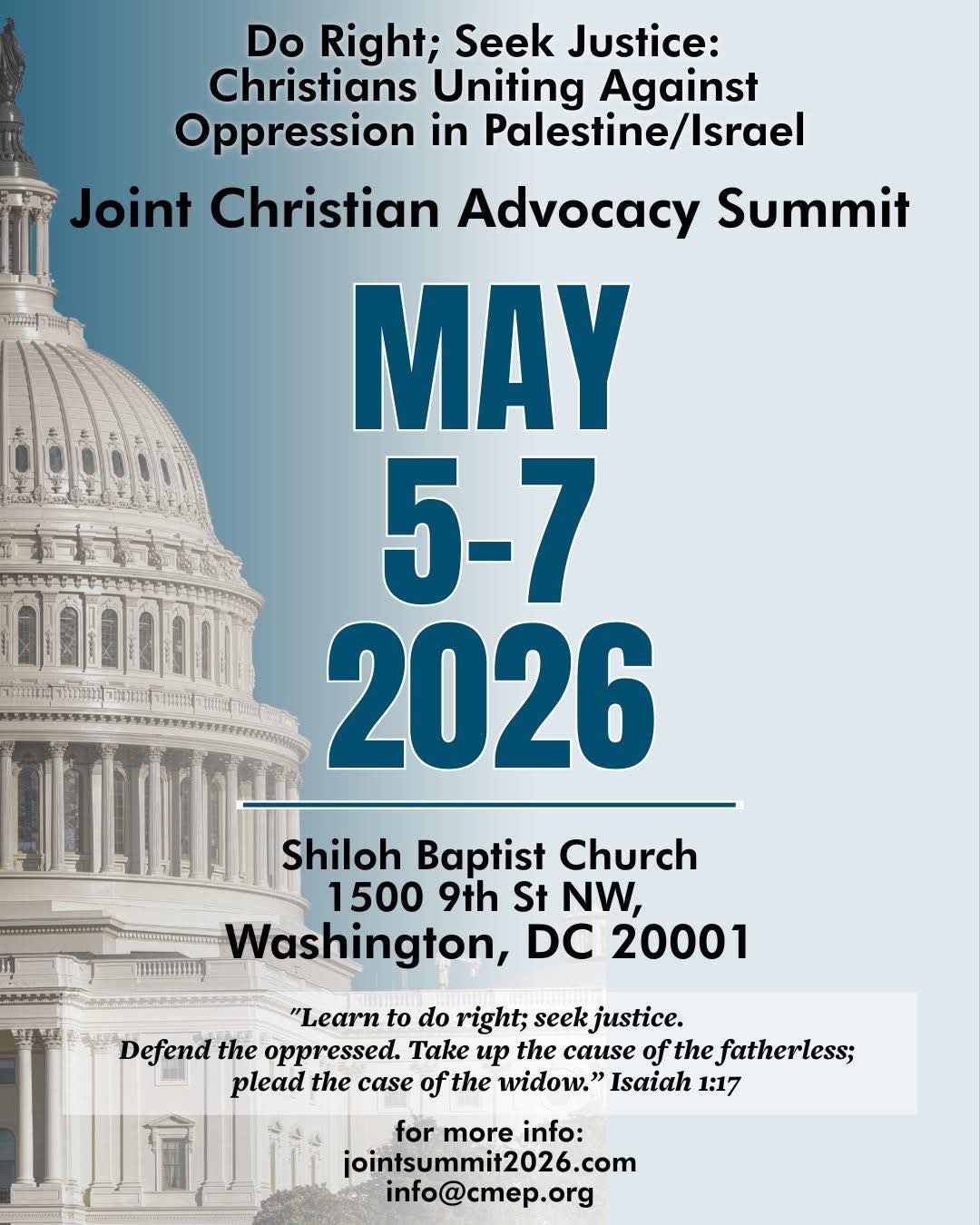
Don’t miss your chance to register for the Joint Christian Advocacy Summit, taking place May 5–7, 2026, in Washington, DC.
Learn from leading experts and practitioners, strengthen faith-rooted advocacy skills, meet directly with members of Congress and staff, and help raise a united Christian voice for a just peace in the Holy Land. Register here: https://hubs.ly/Q047m98l0
After a year of negotiations, the Senate and House have passed separate major housing bills that now must be conferenced to advance cohesive legislation. Take action.
The 21st Century ROAD to Housing Actpassed the Senate in early March by a wide bipartisan margin, and now must be conferenced with the House of Representatives which passed its own version. This is a critical step where the final shape of this legislation will be determined.
As ELCA Presiding Bishop Yehiel Curry wrote to senators ahead of the Senate passage, “In our religious tradition, housing is a moral issue that concerns human beings created in God’s image for a life of dignity in justice. When families cannot afford stable shelter, many other aspects of life – employment, education, health, and safety – are at risk.” Lutheran and ecumenical congregations are seeing the housing crisis firsthand, and many are already working to build affordable housing and emergency shelters on church property. But the faith community cannot do this alone.
The ROAD to Housing Act as amended by the Senate would expand housing supply, support rural communities, strengthen disaster recovery programs vital to Lutheran Disaster Response efforts, and open pathways to manufactured housing in underserved areas. It is critical that lawmakers pass this legislation as soon as possible ahead of a busy legislative season.
Contact your members of Congress today – and urge them to support a strong, effective conferenced version of the 21st Century ROAD to Housing Act – one that meaningfully expands access to safe affordable homes.

 Lutheran Engagement and Advocacy in Nevada