AB 5 Passed First House

Assembly Bill 5 establishes the Nevada Studio Infrastructure Jobs and Workforce Training Act, a major tax-incentive package intended to build a long-term film and media production industry in Nevada. At its core, AB 5 offers large, transferable tax credits to a private developer in exchange for a promised $400 million capital investment in a studio campus and entertainment district. The bill also creates a new fund to support workforce training in film, media, and related technology.

While the proposal aims to diversify Nevada’s economy, AB 5 raises significant concerns

• Stewardship & the Common Good
The bill carries an estimated net cost of more than $1.2 billion, according to the Nevada State Education Association. That level of revenue loss threatens the state’s ability to meet basic obligations—especially fully funding Nevada’s already under-resourced public schools. ELCA Social Statement on Sufficient Sustainable Livelihood for All calls us to steward public resources responsibly so that the needs of children, families, and the vulnerable are met before subsidizing private industry.

• Equity & Economic Justice
Earlier drafts included accountability provisions—such as reducing tax credits if studios failed to hire from under-represented groups or did not demonstrate diverse leadership. Those requirements were weakened in amendments, reducing clear pathways to equity and inclusion.

• Transparency & Accountability
The bill relies heavily on the promise that private developers will deliver long-term investment and job creation. But if investment benchmarks aren’t met, the state risks losing substantial tax revenue without receiving the projected benefits. Public investments should have strong accountability measures to ensure that Nevadans—especially workers and students—are not left bearing the cost.

• Moral Priorities
During a time of heightened need around housing affordability, food insecurity, public education, and healthcare, AB 5 directs enormous public resources toward subsidizing a single industry. Lutheran ethics calls us to evaluate public policy based on how it serves those most vulnerable, and whether it advances the flourishing of the whole community.

SB 3- PASSED

Senate Bill 3 creates the Silver State General Assistance Program, a state-run safety net designed to protect Nevadans when federal public-assistance programs—especially the Supplemental Nutrition Assistance Program (SNAP)—are disrupted during events like a federal government shutdown.

Under this bill, the Division of Welfare and Supportive Services can provide temporary financial or in-kind assistance (such as cash, electronic benefits, or vouchers) to individuals and families who already qualify for means-tested programs like SNAP, TANF, Medicaid, or LIHEAP. During an “extraordinary circumstance,” these Nevadans are considered presumptively eligible, allowing aid to be delivered quickly.

SB3 also creates a dedicated General Assistance Account in the State General Fund to hold appropriated dollars, transfers, and grants. The Administrator of the Division is empowered to implement emergency regulations when urgent action is required.

The program is not a replacement for SNAP, but a state-level backup system aimed at preventing food insecurity when federal benefits are delayed or reduced. The recent SNAP disruptions during the 2025 federal shutdown highlighted how urgently such a stop-gap measure is needed for the nearly half-million Nevadans who rely on food assistance.

AB 4 – Passed First House

After four long days, the Assembly passed Assembly Bill 4 on Sunday. AB 4 is Governor Lombardo’s omnibus crime bill, proposing sweeping changes to Nevada’s criminal statutes. Despite its “tough on crime” posture, the measure is unnecessary: statewide crime has been trending downward since 2019, according to publicly available Uniform Crime Reporting data. Yet the bill fails to address the root causes of crime—such as housing instability, poverty, mental health needs, and access to social services—and does not meaningfully improve public safety. Instead, it prioritizes punitive approaches over proven, community-centered solutions.

LEAN testified in opposition to this bill.

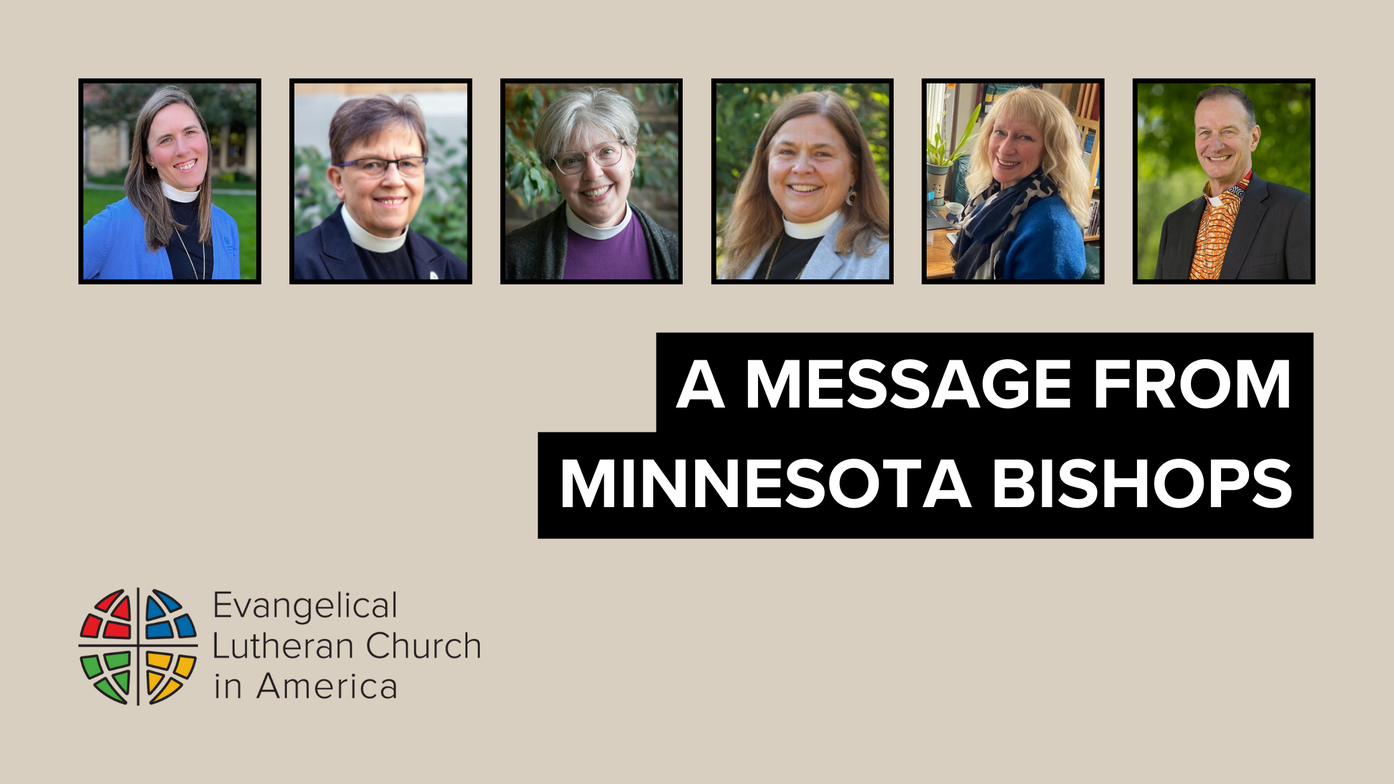
Presiding Bishop Yehiel Curry pastoral message expressing gratitude for the ELCA ministries that serve our neighbors during troubled times.

“No matter what happens next, we must continue to care for all neighbors, especially those who are marginalized,” he reminds us.

Read the full message here:

November 12, 2025

When I was installed as your presiding bishop, the preacher proclaimed that in times of division, disruption and fear, God calls us, through love, to lift up one another just as Christ lifts us up. I have taken that to heart and been alert to all the ways in which we, made into God’s own beloved through word and sacrament, testify to that love in daily service and ministry. Across the ELCA, I have seen and am deeply grateful for:

  • Ministries mobilizing to serve meals and distribute food amid the harm, chaos and confusion of a government shutdown and the ongoing blocking of food assistance for 42 million people in our nation. 
  • Congregations offering accompaniment and hope as they come alongside neighbors made vulnerable by aggressive and indiscriminate immigration enforcement.
  • Leaders from Lutheran Disaster Response urging members of Congress to commit to programs that lift up those made vulnerable in disasters.
  • Congregations reaching out to federal workers by supplying meals, meeting daily needs, providing gift cards and helping them find work.
  • Preachers faithfully proclaiming the theology of the cross that illuminates the brokenness of sin but also the mystery of a grace that claims us, frees us and sends us to be messengers of hope in a hurting world. 

As a church, we do not hold back in lifting up those whom God calls us to serve, even and especially when government abdicates its responsibilities for the common good. My installation as your presiding bishop coincided with the start of the longest government shutdown in our nation’s history. In this moment, I draw strength from the writings of Martin Luther, who used the example of Mary and the words of the Magnificat (Luke 1:46-55) to urge the rulers of his time to exercise power in ways that serve all people.  

Jesus gave us an image of a vine and its branches (John 15:1) to illustrate our connectedness to him and, through him, to one another. Our rootedness in Christ sustains us with his love. His love connects us to one another. We must stay connected to face the challenges of this moment.  

An end to the government shutdown will not immediately resolve food insecurity, so we will keep feeding and supporting our neighbors. The racial profiling and harm to our immigrant neighbors show no signs of diminishing, so we will heed God’s call to show up alongside these neighbors in solidarity. Our broken politics and partisan divisions will not heal by themselves, so we will show up through participation, bridge-building and advocacy.    

No matter what happens next, we must continue to care for all neighbors, especially those who are marginalized. Our 1994 social message “Community Violence” tells us that “we have the responsibility to join with others to hold government accountable for protecting society and ensuring justice for all, and to seek changes in policies and practices toward these ends” (p. 4). As we do, I am confident that Christ’s grace will be sufficient, freeing us to lift up others and seek justice for everyone. 

I invite you to pray for and participate in ELCA ministries that support the well-being of all including by taking advocacy action, applying for ELCA World Hunger Daily Bread Matching Grants to support your hunger ministry, and watching the recent ELCA Advocacy webinar “Faith Communities and the Realities of Food Assistance.”

Gracious God, we pray for our public servants, that they do their work in a spirit of wisdom, charity, and justice. Inspire them to use their authority to serve faithfully and to promote our common life. Guide our leaders to govern in such a way that all people enjoy a peaceful and just society. In Jesus’ name we pray. Amen. —All Creation Sings, p. 50

In Christ,

The Rev. Yehiel Curry

Presiding Bishop

Evangelical Lutheran Church in America 

The Power of Hello

Monday, November 17, 2025 
11:00 AM – 12:00 PM 
Zoom

Join the Safe Communities Coalition for a skill building workshop led by Secure Community Network’s Regional Director, David Humble. This workshop will help community and faith leaders recognize, assess, and respond to potential security concerns while maintaining a welcoming environment. Learn how simple awareness and intentional engagement can enhance safety and connection at community gatherings.Together, let’s create welcoming spaces that are both safe and connected.