
In a joint statement on the Iran war, leaders from four global Christian communions appeal for peace and reaffirm commitment to multilateralism, dialogue and diplomacy.
In a joint statement on the Iran war, leaders from four global Christian communions appeal for peace and reaffirm commitment to multilateralism, dialogue and diplomacy.
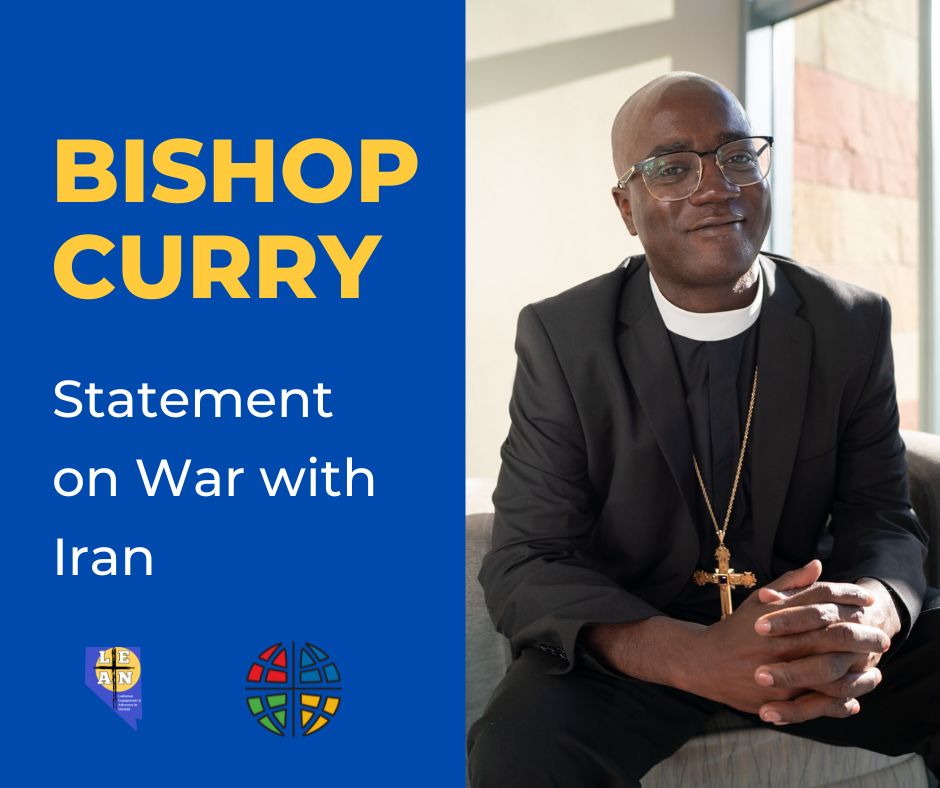
MARCH 4, 2026
Dear siblings in Christ,
They shall beat their swords into plowshares and their spears into pruning hooks; nation shall not lift up sword against nation; neither shall they learn war any more (Isaiah 2:4).
In our Lenten journey, we are reminded of our dependence on God, and we are sustained by hope in the future peace God has promised. As war involving the United States, Israel and Iran intensifies and spreads, we lament how far off that promise seems. We do not know how many people have been killed, but we know the number will continue to grow. Early reports indicate that more than 100 Iranian schoolgirls and several U.S. service members are among them.
The church of Jesus Christ is called to proclaim the peace of God’s eternal reign and to work for an earthly peace here and now. The ELCA social message “Living in a Time of Terrorism” states that this earthly peace is a “precious yet fragile good.” Its existence depends on leaders who prioritize diplomacy over military engagement and deterrence over war, and on citizens who hold government accountable whenever military action is considered.
With many of you, I am distressed that a robust, public discernment through congressional authorization did not occur prior to the United States’ engagement in this war. As Lutherans, we affirm that government and the order that just laws provide are gifts of God for our safety and well-being. This war does not represent the promotion of this just order but rather its failure.
The costs in lives and safety of this failure will be borne by those least able to avoid it — children, families and those without the means to flee. Its deadly toll has been, and will continue to be, paid with the lives of our neighbors, including our siblings in Christ in the Middle East.
This moment underscores the urgent need for robust, well-resourced diplomatic and humanitarian efforts. Our companions in the Evangelical Lutheran Church in Jordan and the Holy Land have asked our church to pray fervently for peace and safety and to advocate for the dignity and security of all people. ELCA Witness in Society will continue to provide opportunities for this advocacy.
As members of the body of Christ, join me in prayerful, hopeful solidarity with our siblings and neighbors who suffer today.
Together,
We mourn the rush to war and the combatants and noncombatants who have lost their lives.
We yearn for creation’s fulfillment in “a new heaven and a new earth” where death and pain “will be no more” (Revelation 21:1, 4).
We strive for justice and peace in all the earth, strengthened by faith in the crucified and risen Lord to persist.
We trust that, through God who sustains us, our weariness and fear will not overcome us.
In Christ,
The Rev. Yehiel Curry
Presiding Bishop
Evangelical Lutheran Church in America
Sierra Pacific Synod is hiring a Synod Disaster Response Community Organizer. This position will focus on building a synod-wide team over a three-year period to prepare for and respond to both climate-related disasters. This hybrid position can be split into two part-time roles, or one full-time position, depending on the candidates.
Interested? Learn more HERE!

The filing deadline to run for office in Nevada is quickly approaching, and many questions still remain about the future of our elections.
Voting is the most essential way to participate in democracy. It is the most common and universal form of civic participation, the baseline of civic engagement. As faithful Lutherans and advocates for education, immigration, climate action, and responsible gun laws, we must first safeguard our right to vote. If that right is weakened, our influence on these other policy areas will also be diminished.
Nevada currently has more than 2.1 million active registered voters, yet participation in primary elections remains very low. In the 2024 primary election, only about 16% of registered voters cast a ballot. That means a relatively small portion of the electorate determines which candidates move forward to the general election.
Much has happened in recent months that could alter voting policies nationwide, and Nevada is at the center of these debates. The state is currently involved in litigation regarding access to Nevada’s voter rolls, which contain highly sensitive personal information. Regardless of the issues we care most about, we cannot ignore what is happening in our elections.
The June primaries are critically important elections. Whether you belong to a political party or not, your vote shapes who appears on the ballot in November. Early voting begins Saturday, May 23, and Primary Election Day is June 5.
LEAN encourages every person of faith to make a plan to vote. Talk with your friends, family, and congregation members. Encourage one another to participate in this essential act of democracy. When people of faith participate in civic life, we help shape a more just and compassionate society.
As the United States has begun military combat operations in Iran, we are called to pray and ask for God’s mercy.
Several resources are available to assist you.
Below are three prayers from the resource Prayer Book for the Armed Services. (In addition to the print resource, PBAS is available digitally through Sundays and Seasons.)
Time of war
Eternal God, whose steadfast love never ends, we ask that you look upon the nations now engaged in war and hasten the day of peace. Look in mercy on those exposed to peril, conflict, sickness and death; and show compassion to the dying. In your good providence, remove all causes and occasions of war. Incline the hearts of all people to follow the path to peace and concord, that war may cease and the day of reconciliation may come quickly, through Jesus Christ our Lord. Amen.
Those Who Suffer from War
Merciful God, you grieve amid the pain, fear and suffering of your children. Look with compassion on all who endure the miseries of war. Be mindful, too, of those who day and night face peril in defense of our nation. Guide them in their duties as they seek justice for those subjected to tyranny and liberty for those who are oppressed. Eternal Protector of the helpless, hear the cry of the distressed and grant speedy deliverance in a new day of peace and concord. Amen.
Those in the country’s service in a time of war
Almighty God, let your protection be upon all those who are in the service of our nation. Guard them from all danger and harm; sustain and comfort those at home, especially in hours of anxiety, loneliness, and sorrow. Prepare the dying for death and the living for your service. Uphold those who bear arms on land and sea and in the air; and grant unto us and all nations a speedy, just and lasting peace, the glory of your holy name. Amen.
See also the “Litany for our Nation in a Time of War” on page 75.
Prayers in Evangelical Lutheran Worship and All Creation Sings include the prayers for Peace; National Distress; Time of Conflict, Crisis, Disaster; The Nation; Those in Civil Authority; Those in the Armed Forces. See pages 76–77 in ELW and pages 48–49 in ACS.
Hymns and songs, especially of lament, can help voice the stark reality of war and the hope for peace. See especially:
Come Now, O Prince of Peace/Ososǒ, ososǒ (ELW 247)
Bring Peace to Earth Again (ELW 700)
God of Grace and God of Glory (ELW 705)
Dona Nobis Pacem (ELW 753)
When Our World Is Rent by Violence (ACS 1052)
Ayúdanos, oh Dios/Oh, Help Us, Save Us (ACS 1055)
For the Troubles and the Sufferings/Pelas dores deste mundo (ACS 1051)
Let Your Peace Rain upon Us/Yarabba ssalami (ACS 989)
For the Healing of the Nations (Singing Our Prayer 12a)
For many more hymn suggestions and additional prayers, see the ELCA resource, “Worship Resources for Crisis in the Holy Land”. Although this resource was assembled to respond to the immediate crisis in October of 2023, many of these prayers and laments could be slightly refashioned for our current moment. The topical indexes in our worship books can also be very helpful in identifying assembly song.
Let us pray without ceasing for peace in world, for peace in our homes, for peace in our hearts.
Almighty God, all thoughts of truth and peace come from you. Kindle in the hearts of all your children the love of peace, and guide with your wisdom the leaders of the nations, so that your kingdom will go forth in peace and the earth will be filled with the knowledge of your love, through Jesus Christ, our Savior and Lord. Amen. (Prayer of the Day for Peace, Evangelical Lutheran Worship, p. 63)
 Lutheran Engagement and Advocacy in Nevada