Twelve of the 26 players on the American national team at the World Cup have immigrant or diasporic roots across eight countries.
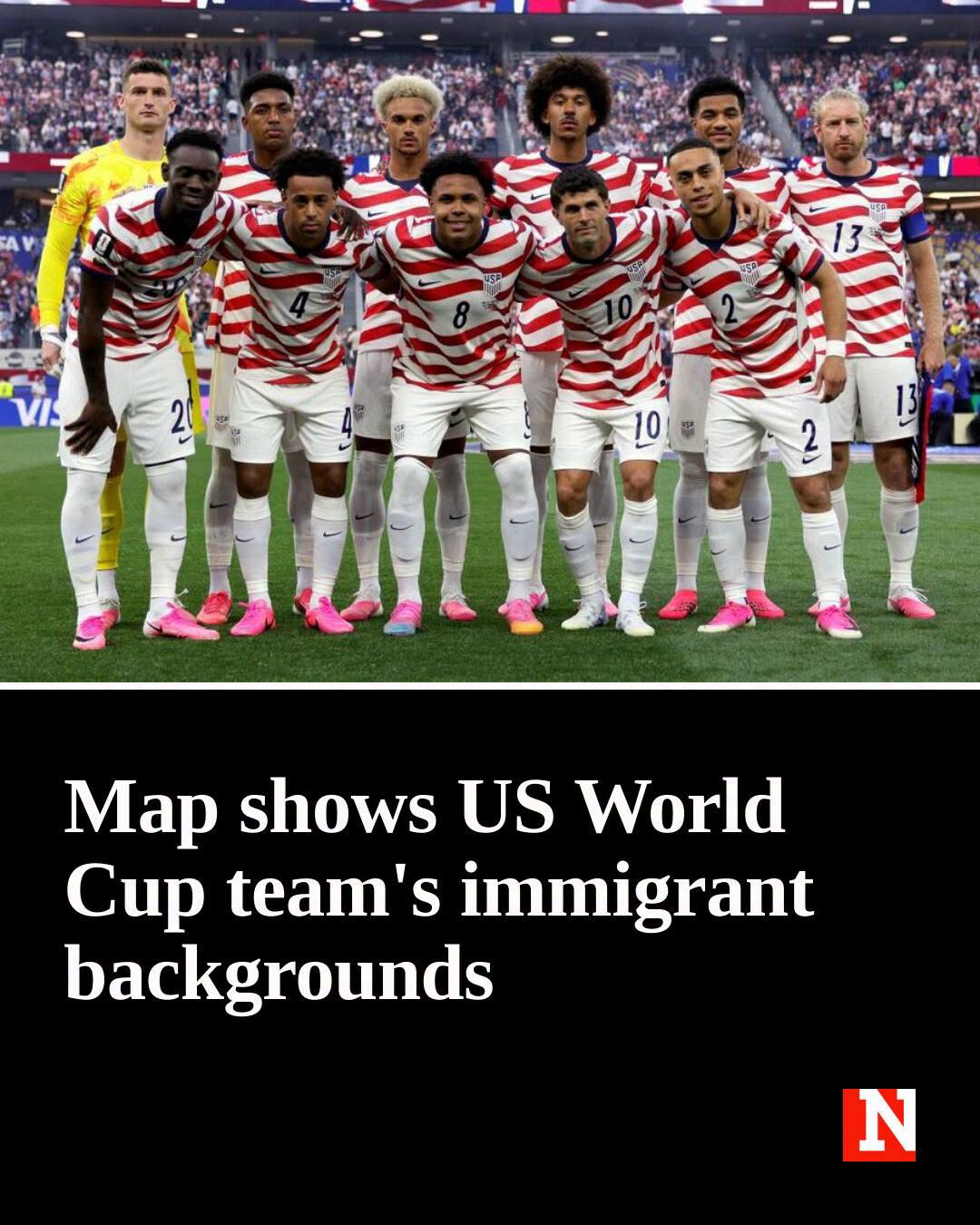
Twelve of the 26 players on the American national team at the World Cup have immigrant or diasporic roots across eight countries.
The Supreme Court’s decision to uphold birthright citizenship reaffirms what has been true for more than a century: every child born in this country is entitled to equal protection, dignity, and belonging.
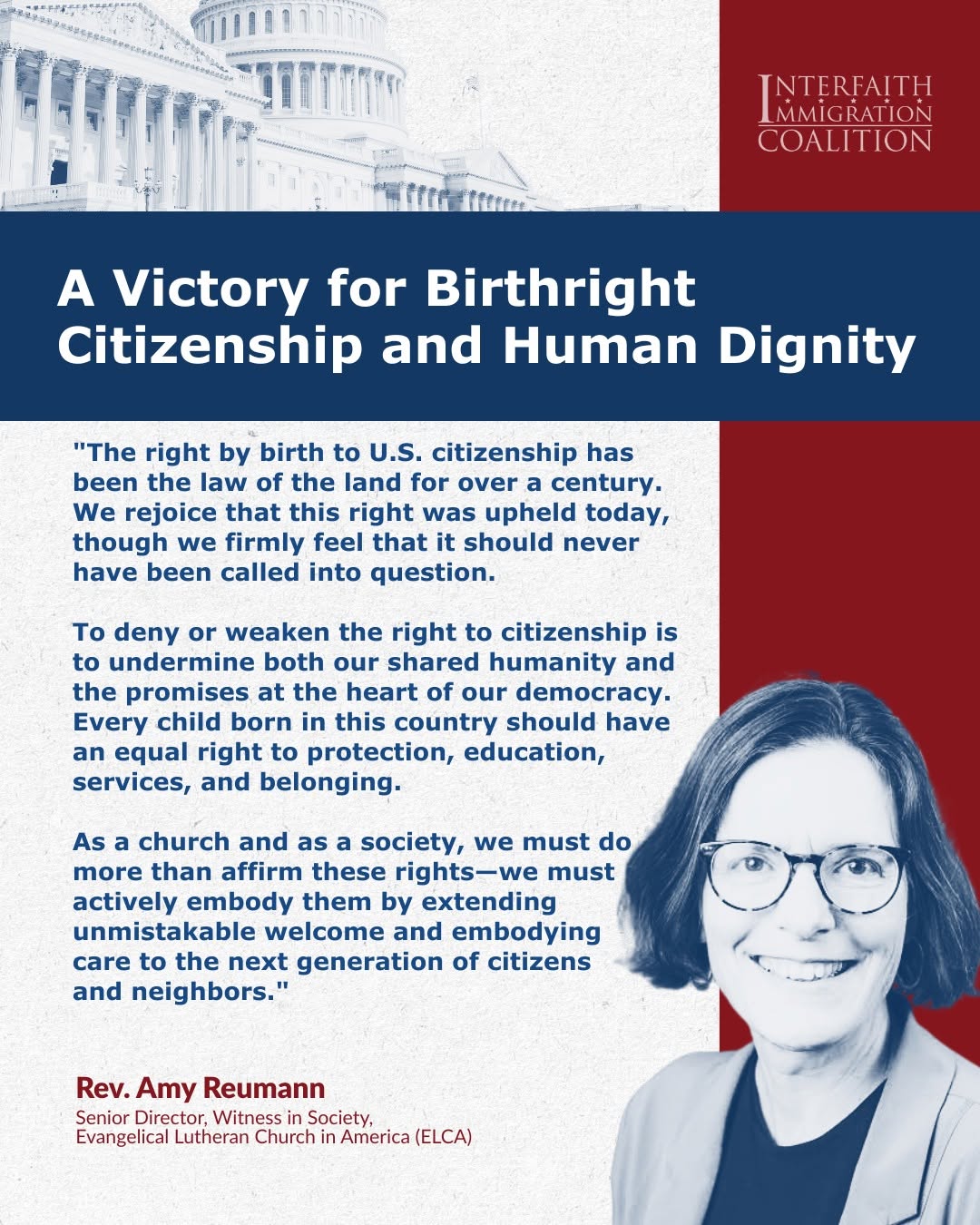
Rev. Amy Reumann emphasizes that “to deny or weaken the right to citizenship is to undermine both our shared humanity and the promises at the heart of our democracy.”
Every child deserves protection, education, and full inclusion in our communities
WASHINGTON, DC – Today, the Supreme Court issued a decision in Trump v. Barbara, invalidating the Trump administration’s Executive Order that would have ended birthright citizenship in the United States. Following are quotes from members of the Interfaith Immigration Coalition. To interview IIC members, contact media@communicationsshop.us.
Mary Katherine Morn, President and Lead Executive Officer, Unitarian Universalist Service Committee
“It should not take a Supreme Court ruling to reiterate what anyone can tell from the text of the Constitution: all people born or naturalized in this country are citizens of the United States. The administration’s racially-motivated attempts to deny equal rights and dignity to the children of immigrants cannot change the basic law of our land. However many times extremist politicians may try to scapegoat and turn us against each other, people across this country still aspire to be a multiracial and multicultural democracy. We know that all people born here should be entitled to the full rights and privileges of citizenship. We welcome the Court’s decision for reaffirming this truth.”
Christopher Kerr, Executive Director, Ignatian Solidarity Network
“We welcome today’s decision to protect the clear, foundational promise of birthright citizenship guaranteed by the 14th Amendment. In the eyes of God, every child enters this world with inherent, equal dignity, regardless of the immigration status of their parents. Catholic teaching emphasizes the universal rights of children to belong, to be protected, and to have a place in society. This ruling ensures that hundreds of thousands of children born on U.S. soil will not be cast into a lifetime of statelessness or second-class citizenship. Our work is driven by the energy and vision of young people who are building a more inclusive church and world. Today’s decision honors their place in our country and affirms that they belong here.”
Giovana Oaxaca, Senior Government Relations Manager at NETWORK Lobby for Catholic Social Justice
“From its founding, this country has represented life, liberty, and the pursuit of happiness. When our leaders fall short of these defining ideals, we all lose. That’s why the Supreme Court’s decision to uphold birthright citizenship matters so deeply. It pushes back against the White House’s attempt to deem some children born here as less deserving of full recognition and rights. Central to the Catholic faith is the conviction that all people are made in God’s image. It would be a violation of their inherent human dignity to not recognize all children born here as anything other than full citizens under the law.”
Pablo DeJesús, Executive Director, Unitarian Universalists for Social Justice
“We are relieved by the Supreme Court’s decision to uphold birthright citizenship under the 14th Amendment, reinforcing that all born in the U.S. are citizens. This ruling counters efforts to deny children their rights, thereby maintaining constitutional equality. It supports our vision for a multiracial and pluralistic democracy. It is a victory for immigrant families and all who love them as neighbors, friends, or family. This outcome aligns with our Unitarian Universalist values that uphold the inherent worth and dignity of all people. The decision prevents many from becoming stateless or second-class citizens. By safeguarding birthright citizenship, the Court has offered a measure of justice at a time when the preponderance of the majority’s rulings fall short of that metric. We are profoundly relieved they have backed away from this particular precipice.”
Rev. Kendal L. McBroom, Director of Civil and Human Rights, General Board of Church and Society
“We welcome the United States Supreme Court’s decision to preserve birthright citizenship as a foundational guarantee of the Fourteenth Amendment. This ruling affirms a constitutional principle that has long protected children born in the United States from discrimination based on the circumstances of their parents, and reinforces the promise of equal protection under the law. As United Methodists, we believe every person is created in the image of God and possesses sacred worth. Our Social Principles affirm that ‘because all people are of sacred worth and certain basic human rights are due to everyone, we are committed to supporting the equal rights, liberties, and protections of all people.’ Upholding birthright citizenship safeguards the dignity of countless children and families, and reflects our nation’s highest aspirations of justice, equality, and belonging. We pray that this decision will strengthen our collective commitment to welcome the stranger, protect the vulnerable, and ensure that every child is afforded the opportunity to flourish without fear or exclusion.”
Anna Gallagher, Executive Director, Catholic Legal Immigration Network, Inc. (CLINIC)
“We are relieved and grateful that the Supreme Court has upheld this right that is so important for our identity as a nation, and for safeguarding justice and human dignity in line with Catholic social teaching. In our amicus brief, we explained how the values of Catholic social teaching, the particular realities of undocumented immigration in the United States, and our nation’s legal history make upholding the tradition of birthright citizenship the most just outcome of this case. We are glad to receive a decision that will bring relief to immigrant families and our network. This is a win for immigrants, and a win for justice.”
Rev. Amy Reumann, Senior Director, Witness in Society, Evangelical Lutheran Church in America (ELCA)
“The right by birth to U.S. citizenship has been the law of the land for over a century. We rejoice that this right was upheld today, though we firmly feel that it should never have been called into question. To deny or weaken the right to citizenship is to undermine both our shared humanity and the promises at the heart of our democracy. As Lutherans, we affirm that God’s vision is for the flourishing of all people. Every child born in this country should have an equal right to protection, education, services, and belonging. As a church and as a society, we must do more than affirm these rights — we must actively embody them by extending unmistakable welcome and embodying care to the next generation of citizens and neighbors.”
Reverend Noel Andersen, National Field Director at CWS:
“Birthright citizenship is a promise this country made to every child born within its borders: You belong here, fully and equally. Today, the Supreme Court kept that promise, and recognized the foundational principle that anyone can be an American. The principles of our faith that endow all people with inherent God-given dignity were and are intertwined with the abolitionist efforts to embed in our constitution equal protection to all citizens — including all those born on U.S. soil.”
Darcy Hirsh, Vice President of Government Relations and Advocacy, National Council of Jewish Women (NCJW)
“Today, we breathe a collective sign of relief as the court upheld the Fourteenth Amendment, guaranteeing that every child born on American soil is an American citizen — a precedent that has stood for more than 150 years. It was reaffirmed by the Supreme Court in 1898, when Chinese American families had to fight to prove they belonged here, and it was reaffirmed again today. No president gets to rewrite the Constitution, and no president gets to decide which children born on American soil are American. Today, the Court affirmed what we have always known to be true, upholding a core tenet of our democracy. From NCJW’s earliest days in 1893, we have welcomed immigrants and fought for their full inclusion in American life. We know from our own experience as Jews what it means to be told you don’t truly belong — to have your citizenship questioned, and your community othered. That is why birthright citizenship has never been abstract to us, and why we will always fight against any effort to make belonging for anyone conditional.”
The United States Supreme Court today ruled 6-3 that the Trump administration may proceed with terminating Temporary Protected Status (TPS) for nationals of Haiti and Syria, holding that the courts have no authority to review how such decisions are made.
“This is a deeply painful day for hundreds of thousands of families who have built their lives here lawfully, paid taxes, cared for our communities, and who now face the prospect of losing everything,” said Krish O’Mara Vignarajah, President and CEO of Global Refuge.
The ruling clears the way for the administration to strip legal status and work authorization from roughly 350,000 Haitians and 6,000 Syrians, and depending on how broadly it is read, threatens protections for more than a million people from seventeen countries.
“We are deeply troubled by the reach of this ruling, which extends beyond Haiti and Syria to every TPS designation,” continued Vignarajah. “Global Refuge will continue to stand with TPS holders and their families, and to make the case in every forum still open to us that protecting people fleeing catastrophe is both who we are as a nation and what the law was written to do.”
Nevada is among the few states where tenants often must risk an eviction proceeding simply to enforce their right to a habitable home. Rather than allowing tenants to quickly petition a court to order repairs, current law frequently forces them into withholding rent, a remedy that can trigger an eviction case before the underlying health and safety issues are ever resolved
Under current Nevada law, when a landlord fails to correct certain serious habitability problems, a tenant’s primary remedies often include:
In practice, many tenants end up withholding rent, which can expose them to an eviction filing even if the underlying reason is the landlord’s failure to maintain a habitable home. While tenants may ultimately prevail, the eviction process itself can be intimidating and costly.
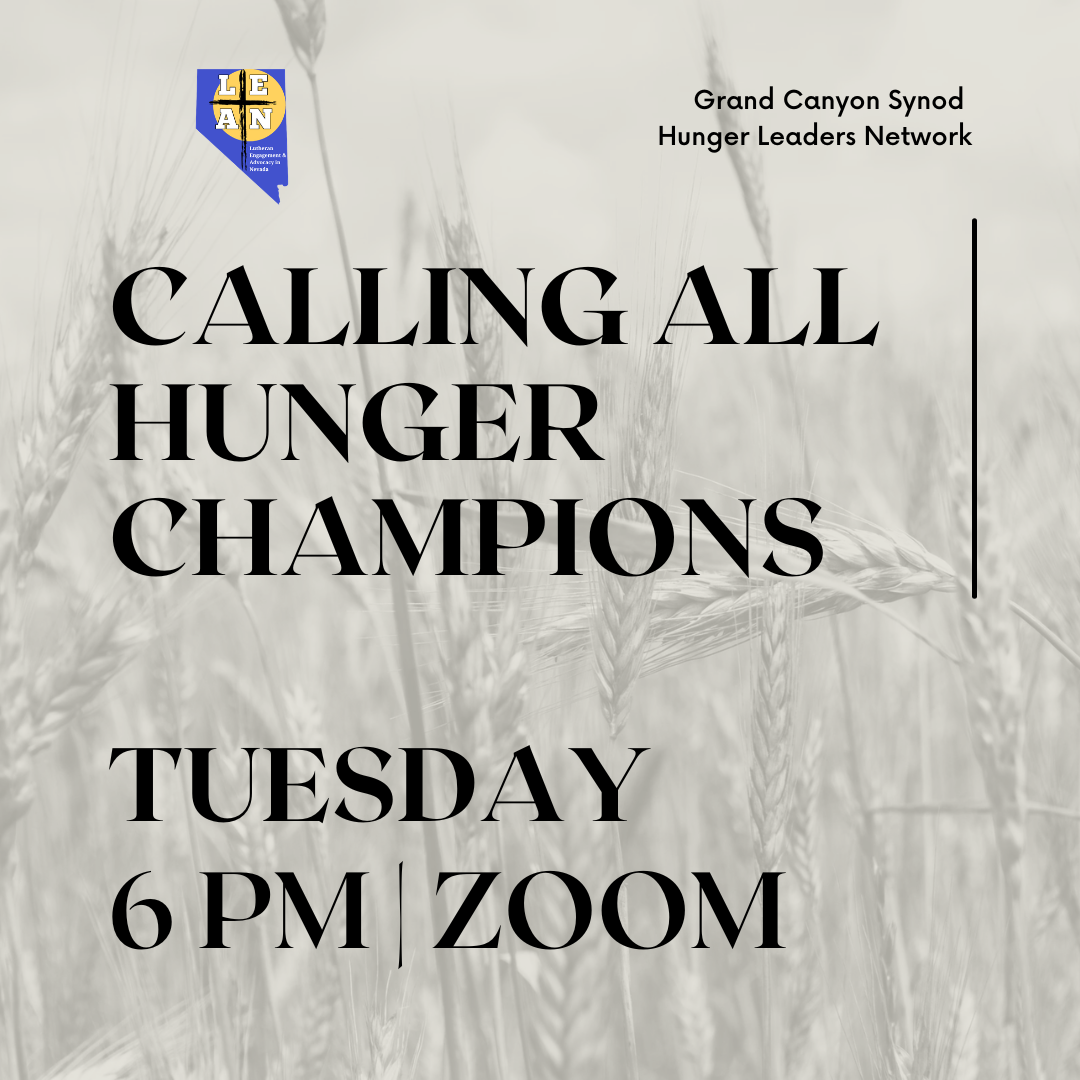
Calling all hunger champions — Join this network of the Grand Canyon Synod! Meet to hear updates on national and local Hunger and Food Insecurity efforts and initiatives, to learn from one another, and to share with the group what’s happening in our congregations. Anyone interested in alleviating hunger is welcome. Prepare to be encouraged and supported!
If you have any questions about this group, please contact Melanie Hobden (Desert Cross, Tempe) or Solveig Muus (LAMA).

