We are called to act with compassion, mercy, and grace. Welcome to Stranger. Care for the Sick. and most importantly to love one another just as Christ did.
Amen.

This 11-page ELCA resource affirms the Christian conviction that every human being is created in the image of God (imago Dei) and therefore possesses inherent, unbreakable dignity. Grounded in Scripture and Lutheran social teaching, it calls Christian communities to recognize, name, and respond to language and actions that deny or diminish this God-given worth, particularly toward immigrants and forcibly displaced people created in the Image of God.
The resource explains how dehumanizing language—such as metaphors of invasion, disease, criminality, or “us versus them” framing—erodes empathy, normalizes injustice, and lays the groundwork for discrimination and violence. Drawing on theological reflection, social science insights, and real-world stories, it highlights how such language contradicts Christian faith and the call to love one’s neighbor created in the Image of God.
It offers practical guidance for faithful response, encouraging individuals and congregations to challenge dehumanizing rhetoric, share humanizing stories, and engage others with curiosity, humility, and compassion. The resource emphasizes that Christians can disagree about policy while remaining rooted in shared dignity and respect for all people as children of God created in the Image of God.
Finally, the document outlines concrete ways to advocate for shared dignity in civic life—writing, calling, meeting with elected officials, and engaging media—so that public discourse and public policy reflect justice, hospitality, and the well-being of all. A concluding set of reflections and resources supports ongoing conversation, learning, and faithful action created in the Image of God.
Read the introductory blog post from ELCA Migration Policy Advisor, Kate Parsons.
Table of Contents
1. Grounding in Faith & Scripture
2. Recognizing Dehumanizing Language
3. Personal Reflection & Awareness
4. Responding with Shared Dignity
5. Faith, Disagreement & Civic Life
6. Moving Toward Action
Optional Closing Question

In 2023, the Grand Canyon Synod and the Southeastern Iowa Synod challenged one another to participate in spiritual and physical practices during the 40 days of Lent. This 40-40-40 Challenge was a good-natured way to engage each other and raise awareness of anti-hunger ministry and wellness for both synods. In 2024, all of the ELCA synods in Region 2 challenged one another to raise money for ELCA World Hunger in honor of ELCA World Hunger’s 50th year in mission and ministry. In 2025, Isaiah 58:11 grounded the year’s Lenten journey, in which the five Region 2 synods challenged one another to explore the intersection of hunger and water while learning of one of our Region 2 Indigenous Ministries, the 70-year-old Navajo Evangelical Lutheran Mission (NELM) in Rock Point, AZ.
The 2026 Lenten Challenge theme — “Lord, When Did We See You?”
The theme of this year’s challenge derives from Matthew 25:37-40. The passage emphasizes that caring for the poor, sick, and marginalized is an act of service to Christ, and that a person’s treatment of others is a reflection of their relationship with God. The spiritual practices for the six weeks of Lent will focus on stretching our learning, care and advocacy muscles on behalf of underserved communities. The six weeks will be broken up according to the gospel text, as below, with participants focusing on what we know and think about these siblings in Christ, as well as how we act in support and on behalf of these communities. Refer to the Matthew 25 Lenten Practices Toolkit for ideas.
Why Lent? Lent is a season of 40 days to reflect, remember our dependence on God and one another, and look forward to the ways God calls us to be. Adding one or more of these spiritual practices to your observation of Lent might help you feel more connected. A light-hearted challenge like this could help our synods be the Church together, and to see God’s vision and invitation for us to be a church for the world as we share the good news of Jesus Christ.
Participating synods:
How does the 40-40-40 Lenten Challenge work?
There are 4 Lenten practices to consider, and you commit to 3 of the 4.
How is this a Challenge?
This a little friendly competition for a good cause. Individuals from across the Region 2 synods will sign up to do three of four (or all 4!) of the practices and the synod with the most individuals signed up wins the challenge! Our goal is for individuals representing 50 congregations per synod to participate.
The more individual sign-ups, the better.
Bragging rights goes to the synod with the most individual registrations. So if you’re a family of 4, enter all 4 email addresses, and have all 4 people commit to 3 things. And no, not all 4 need to donate to ELCA World Hunger (though it’s worth considering).
Share with your congregation
Use the Matthew 25 Lenten Practices Toolkit provided! All the resources you need to spread the word in your congregation are available on the Lenten Challenge website, created especially for this challenge. Announcements in PDF and artwork in jpg format for use in newsletters, bulletin inserts, and social media can help you promote this synod-wide event. Website is https://www.lentenchallenge.org/
What do we get if we win?
The ‘winning’ bishop will play a short video with congratulatory clips recorded by the other participating bishops. This acknowledgement of the ‘superiority’ by the other synods for this one challenge is all in fun. All bishops may choose to air the video at their synod assemblies in 2026. Hunger leaders in each synod will receive progress updates each week.

The LWF expresses deep concern over the situation in Venezuela following the U.S. military action on 3 January and calls for urgent action to prevent further escalation.
The sovereignty and national integrity of Venezuela, and international law, must be respected.
The LWF stands in solidarity with the Evangelical Lutheran Church in Venezuela and with the communities affected by the situation in the country, which has been deteriorating for months.
In this time of uncertainty and concern, we hold the people of Venezuela in prayer and invite the global Lutheran communion to join us in seeking stability and peace.
Let us pray together:
God of peace, we lift our sisters and brothers in Venezuela. Protect those who are in danger. Comfort those who live with fear, loss, or uncertainty. Give wisdom to leaders, give courage and perseverance to all who work for unity and peace. In Jesus’ name we pray. Amen.

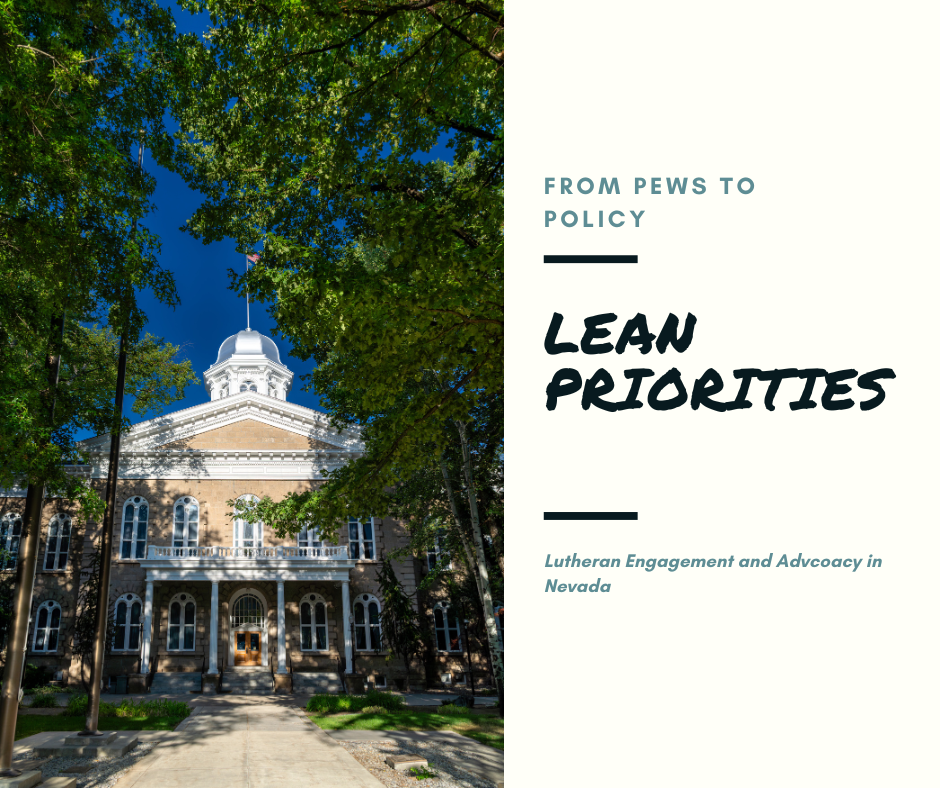
In a year marked by rising housing costs, extreme heat, and a housing market stacked against working-class Nevadans, our leaders, clergy, and community members showed what is possible when faith is put into action. Together, we helped advance policies that protect the dignity, safety, and well-being of Nevada’s families and communities.
Legislation LEAN advocated for and supported:
These victories reflect what happens when people of faith show up, speak out, and advocate together for justice.