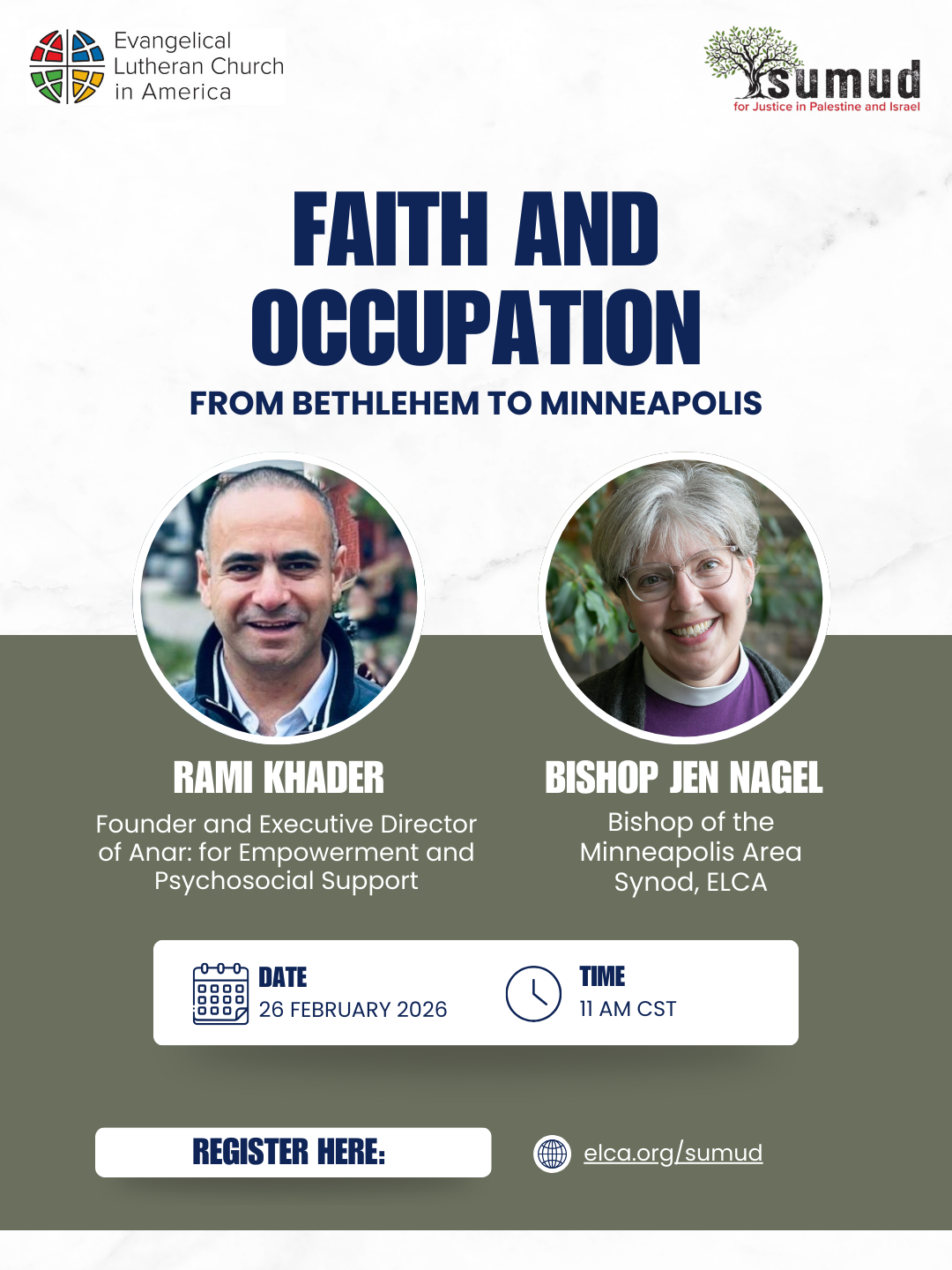
Join ELCA Sumud for a webinar linking detention and imprisonment from Minneapolis to Palestine—featuring local U.S. Immigration and Customs Enforcement impacts shared by Bishop Jen Nagel and insights from Rami Khader.
Participants: Maddi Froiland • Bishop Jen Nagel • Rami Khade
“The Evangelical Lutheran Church in America (ELCA) expresses profound concern and disappointment regarding the U.S. Environmental Protection Agency’s decision to rescind the endangerment finding on greenhouse gas emissions. This action undermines our collective responsibility to care for God’s creation and protect the well-being of current and future generations.
As people of faith, we recognize the wisdom of science as a God-given gift that illuminates our path forward. The overwhelming scientific consensus on climate change compels us to act with urgency and moral clarity. We have declared this a “Kairos moment”—an ancient Greek term meaning a critical, decisive time when action is essential. The removal of this finding sets us back precisely when moving forward on climate action is imperative.
The ELCA’s social teaching on climate change is grounded in our understanding that creation is a gift from God, entrusted to our care not for exploitation, but for stewardship. We are called to share this gift equitably and preserve it for those who come after us. Removing the endangerment finding eliminates a crucial regulatory framework necessary to fulfill this sacred responsibility.
The ELCA has consistently called for increased regulation of greenhouse gas emissions. We have also clearly rejected approaches that prioritize short-term economic considerations over the long-term social, economic, and ecological well-being of future generations. We oppose any attempts to weaponize or distort scientific research or to misrepresent the intentions of those working to address this crisis.
This EPA decision does both of those things—it distorts scientific research and prioritizes the present over the future. We urge the EPA to reconsider this decision and to restore protections that honor both scientific truth and our sacred obligation to care for creation.”
-Rev. Amy Reumann, Senior Director, Witness in Society, Evangelical Lutheran Church in America
From the article: “The time is now to talk to youth and families about what they are hearing and seeing, what actions they are taking and what ways your congregation may be able to partner with them to call for justice and together. These are not easy conversations, but we do not live in an easy world.” Use ELCA Youth Ministry Network link to find full article by author Deacon Ross Murray.
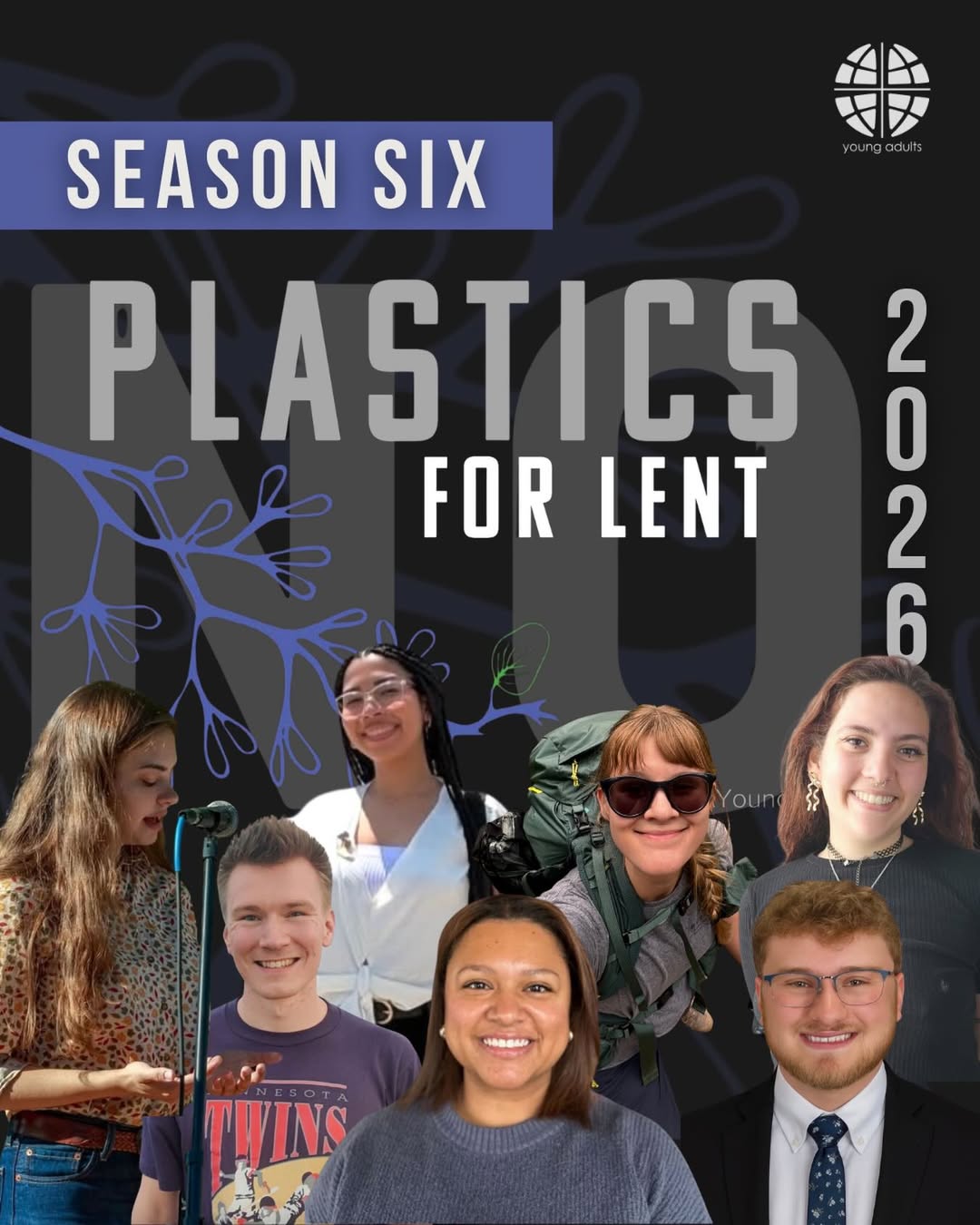
Lent begins next week and we are thrilled to announce this years NoPlasticsforLent series! The sixth(!!!) year of this resource series will focus on the intersections of climate justice, resistance, and resilience through a weekly devotional offering from young adults across the ELCA, and an be used by individuals, small groups, or large groups! Devotionals will drop weekly into the link below, and will be shared onto our stories with a profile highlight on instagram for each week’s devotional