Applications for ELCA World Hunger’s 2027 Daily Bread Matching Grants now open!
Solidarity for a Just World. In 2025, an unprecedented amount of Daily Bread Grant Applications were received, over 1000, demonstrating the need across the United States for additional support of feeding ministries. 670 ministries were awarded across all 65 synods. Together, ELCA’s feeding ministries, our Domestic Hunger Grant partners and our Advocacy work in Witness in Society, are part of a comprehensive approach to breaking the cycle of poverty and hunger – for good.
ELCA World Hunger’s Daily Bread Grants support congregations and their partners as they work toward a just world where all are fed. Evangelical Lutheran Church in America (ELCA) congregations with feeding ministries are eligible to participate. ELCA World Hunger’s Daily Bread Grants are one way our church accompanies communities throughout the United States and Caribbean as they respond to hunger and poverty. These grants provide daily bread for neighbors experiencing hunger by supplementing existing food-based ministries.
Who is eligible to apply?
ELCA Congregations
New starts
SAWCs
Strategic Ministries
Congregations in Development
SAOMs
ELCA Campus Ministries
You may submit a request for a Daily Bread Grant beginning October 1st. Feeding Ministry funding requests will be accepted beginning October 1st on a rolling basis for $500 each until all the funds are expended or for two weeks minimum, closing October 21st at midnight central time. Funding is for ELCA Congregations with a feeding ministry.
Letter of inquiry form open: Thursday, October 1st – Wednesday, October 21st 2026
Award notifications shared with applicants: November 2026
Banking & Payment dispersal: December, 2026
Thank you for all you do to work creatively and courageously toward a just world! If you have any questions about the process or about ELCA World Hunger, please reach out to the Hunger team at Hunger@elca.org.
With the reintroduction of the Truth and Healing Commission on Indian Boarding Schools Act in Congress, take a moment to remind Congress of its responsibility to survivors of the Indian boarding school era.
The U.S. federal government has identified over 400 Indian boarding schools that operated from 1819 to 1969, nearly half of which were affiliated with or received support from a religious institution. “Residential or boarding schools inflicted trauma on Indigenous children that is still being felt today, generations later,” wrote the Rev. Wanda Frenchman, Interim Director, ELCA Indigenous Ministries & Tribal Relations.
Native American leaders have called on denominations to do the work of finding all records of their involvement. ELCA Truth-Seeking and Truth-Telling Initiative efforts began in earnest in fall 2022. We have a timely opportunity to urge the United States to do the same.
Although long-overdue, successful passage of H.R.7325 / S. 761 will bring together the U.S. government and communities of faith, center the healing and truth-telling of Indigenous communities and move our country towards accountability.
Today, remaining boarding school survivors are elders. We must honor these experiences and urge Congress to move our country one step closer to truth and healing by supporting this important legislation now.
The Nevada Impact
Indian boarding school history is also Nevada history.
For nearly a century, the federal government operated the Stewart Indian School in Carson City. Open from 1890 to 1980, Stewart first brought children from Great Basin tribes, including Washoe, Paiute, and Shoshone communities, into a system designed to separate Native children from their families, languages, cultures, and traditions. Students from more than 200 tribes across the West were eventually represented there. SHPO
This history is not distant or abstract. The Stewart campus remains in our community, and survivors, descendants, and Native neighbors continue to carry its generational effects.
The ELCA’s action alert urges Congress to support the Truth and Healing Commission on Indian Boarding Schools Act, H.R. 7325 and S. 761. For Nevada, this call is deeply personal. Truth-telling must include the stories of those affected by Stewart Indian School and the federal policies that sought to erase Indigenous identity.
As Lutherans, we also have a responsibility to examine the church’s role. The ELCA’s Truth-Seeking and Truth-Telling Initiative is working to uncover predecessor churches’ involvement in Indian boarding schools. Our faithful response begins with listening to Indigenous people, acknowledging harm, and supporting the steps they identify toward healing.
Here are three ways Nevada Lutherans can respond:
Contact Congress. Use the ELCA action alert to urge Nevada’s U.S. senators and your representative to support the Truth and Healing Commission on Indian Boarding Schools Act. Personalize your message: explain why this history matters to you as a Nevadan and person of faith.
Learn locally. Visit the Stewart Indian School Cultural Center & Museum in Carson City, engage its resources, and bring a group from your congregation. Let the stories shared there shape your understanding rather than treating the site as a historical footnote. The museum was created with Stewart alumni, families, and Nevada tribal communities at the center. Stewart Indian School
Make listening an ongoing commitment. Build relationships with Nevada tribal nations, Indigenous-led ministries, and Native organizations. Follow their leadership, respect tribal sovereignty, and support their priorities beyond a single event, land acknowledgment, or observance.
We cannot undo this history. But we can help ensure it is heard, documented, and met with action. Truth and healing begin close to home.
Contact your lawmakers today. Customize your message with your experiences and values.
If you would like to schedule time with your legislator, please reach out to Pastor Paul,and he is willing to work with ELCA Advocacy Partners to secure a time.
Nevada’s public policy isn’t shaped only in the Governor’s Office or during the 120 days of the Nevada Legislature.
Across state government, appointed boards, commissions, councils and authorities help oversee programs, advise state agencies, regulate professions and make decisions affecting Nevada communities.
Here are some of the public bodies worth knowing, and why voting for Governor Matters.
Housing, Homelessness & Community
Advisory Committee on Housing
Housing affordability, development and housing policy remain major challenges across Nevada. This committee provides an important connection between housing stakeholders and state government.
Nevada Commission on Homelessness
Homelessness involves housing, health care, behavioral health, employment and human services. State coordination can determine whether Nevada responds primarily to homelessness as a public-order issue or invests in long-term housing and supportive services.
State Land Use Planning Advisory Council
Land-use decisions affect housing, transportation, public lands, water, economic development and the growth of Nevada communities.
Hunger, Poverty & Human Services
Council on Food Security
Food insecurity affects children, families, older adults and working Nevadans across the state. The council helps Nevada consider strategies for addressing hunger and improving access to nutritious food.
Nevada Commission on Aging
Nevada’s aging population faces challenges involving housing, health care, transportation, food security, caregiving and economic security.
Nevada Commission on Services for Persons with Disabilities
People with disabilities interact with housing, transportation, employment, education, health care and public-benefit systems.
Health Care & Human Dignity
State Board of Health
Public health decisions can affect communities throughout Nevada, including policies involving disease prevention, health standards and statewide health regulations.
Commission on Behavioral Health
Nevada continues to confront shortages and gaps in mental-health and substance-use services.
Children’s Behavioral Health Authority — Northern Nevada
Children and families in Northern Nevada face significant challenges accessing appropriate behavioral-health services.
Children’s Behavioral Health Authority — Southern Nevada
Southern Nevada’s rapidly growing population creates its own challenges for children’s behavioral-health services.
Maternal and Child Health Advisory Board
Maternal health, prenatal care, infant health and access to maternity services remain important Nevada policy concerns.
Advisory Committee on the State Program for Oral Health
Dental care is health care, yet cost and provider access can make oral-health services difficult to obtain.
Children, Families & Education
Statewide Independent Living Council
Independent living policies affect whether Nevadans with disabilities can live, work and participate fully in their communities.
Nevada Early Childhood Advisory Council
Child care, early education, family supports and school readiness have consequences for children as well as Nevada’s workforce and economy.
Commission on Postsecondary Education
Education after high school includes universities, colleges, career training and other pathways that can significantly affect economic opportunity.
Economic Dignity & Workers
Governor’s Workforce Development Board
Workforce policy connects education, employers, workers and Nevada’s economic-development strategy.
Nevada Equal Rights Commission
The commission addresses discrimination in areas including employment and public accommodations.
Employee-Management Committee
Public employees provide many of the services Nevadans depend upon every day. State personnel policy affects those workers and the government’s ability to recruit and retain them.
Creation Care, Water & Public Lands
State Environmental Commission
Environmental regulations affect air, water, pollution, development and public health.
Outdoor recreation intersects with conservation, public lands, tourism and economic development.
Colorado River Commission of Nevada
Few resources are more important to Nevada’s future than water and energy. Decisions involving the Colorado River affect millions of people throughout the Southwest.
Energy & Nevada’s Future
Governor’s Office of Energy — Advisory Bodies and Energy Planning
Nevada faces rapidly changing questions involving electricity demand, renewable energy, transmission, affordability and major energy users such as data centers.
Democracy, Ethics & Public Trust
Commission on Ethics
Public trust requires government officials to act in the public interest and follow Nevada’s ethics laws.
Commission on Judicial Selection
When vacancies occur on Nevada’s Supreme Court, Court of Appeals or district courts, the judicial-selection process helps determine who may be appointed to positions with enormous influence over Nevada law and the administration of justice.
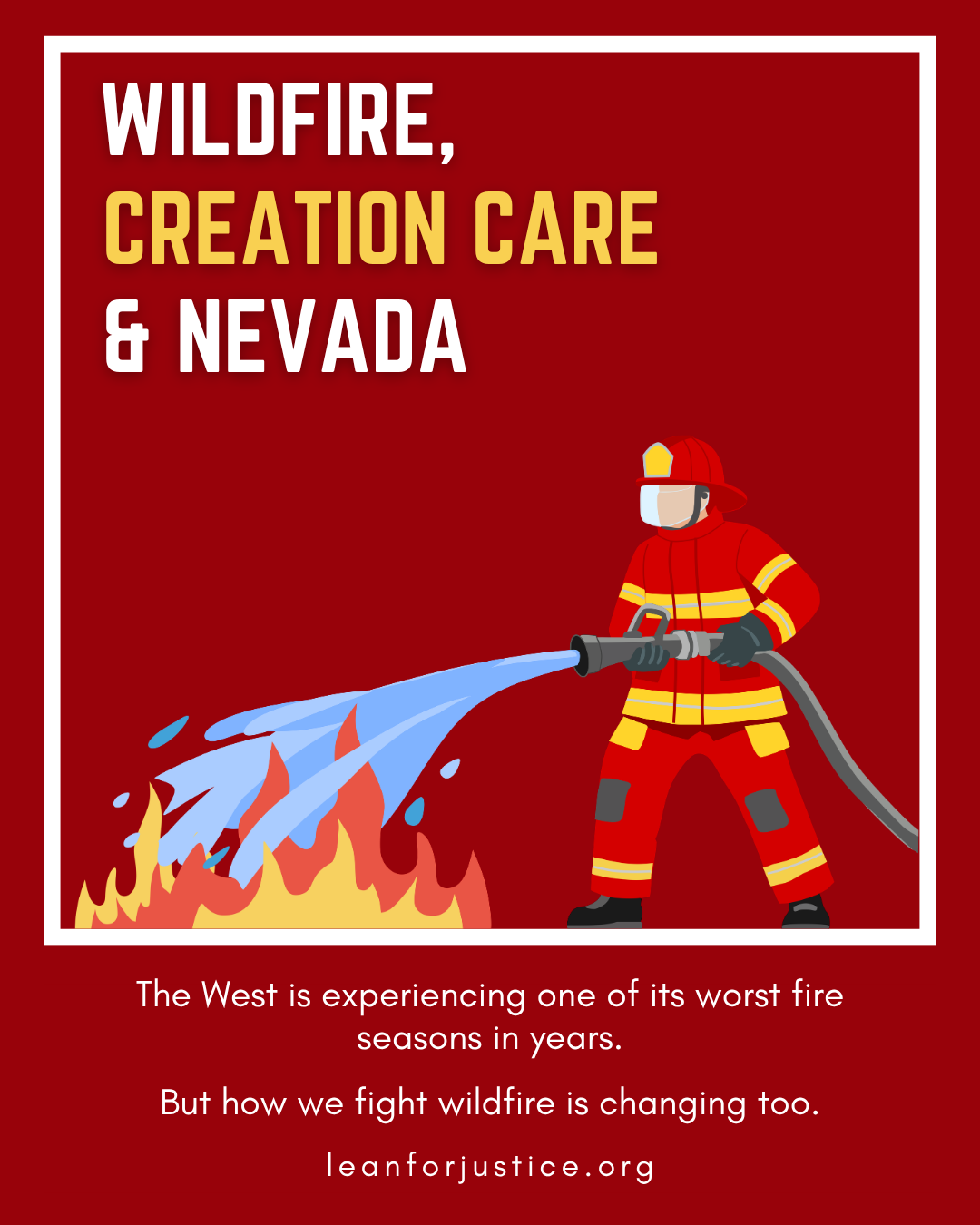
Nevada’s wildfire season is testing more than our firefighters. It is testing the system we have built to respond when communities are threatened.
Nevada’s firefighting system depends heavily on cooperation. Local fire departments, the Nevada Division of Forestry, federal agencies, neighboring jurisdictions and the Nevada National Guard share people, equipment and resources when fires overwhelm any one agency.
That system works because people step up for one another. But this fire season is also showing how stretched it can become.
The Nevada Division of Forestry has a base firefighting budget of roughly $4.5 million, while an average fire year can cost around $24 million. Nevada often has to rely on contingency funding and legislative advances to cover the difference.
And while we rightly talk about the cost of fighting fires, we also need to talk about the cost of preventing them.
Nevada’s state forester estimates that every $1 invested in reducing wildfire fuels can save roughly $4 in future firefighting costs.
As Nevada prepares for the 2027 Legislative Session, wildfire policy should be part of our conversation about Creation Care.
Are we adequately funding prevention before a fire starts?
Are firefighters and local departments receiving the resources they need?
Are our communities prepared to evacuate and care for neighbors who may need additional assistance?
And are we building a wildfire system prepared for the Nevada of tomorrow — or continuing to borrow enough resources to make it through today?
Creation Care means more than responding when the smoke appears. It means investing in our communities, caring for the people protecting them, and stewarding creation before disaster strikes.
In rural Nevada, giving birth can already mean a long drive. If maternity units close, that drive could become even longer.
A recent KFF analysis found Nevada has some of the longest travel times in the nation between rural hospitals that provide maternity care and the next in-state hospital with those services. In some cases, the next option may be more than two hours away.
That distance matters during labor. It can mean delayed emergency care and greater risk for both parents and babies.
Medicaid helps sustain rural maternity care, financing nearly half of births in rural communities nationwide. When coverage is reduced or hospitals lose Medicaid revenue, small rural hospitals may find it even harder to keep labor-and-delivery services open.
Nevada already has maternal-health deserts. Every family—whether they live in Reno, Las Vegas, Elko, Ely, Fallon, or a rural community in between—deserves timely, safe, affordable care before, during, and after pregnancy.
Maternal health is rural health. Maternal health is health justice. And it must be a Nevada priority.