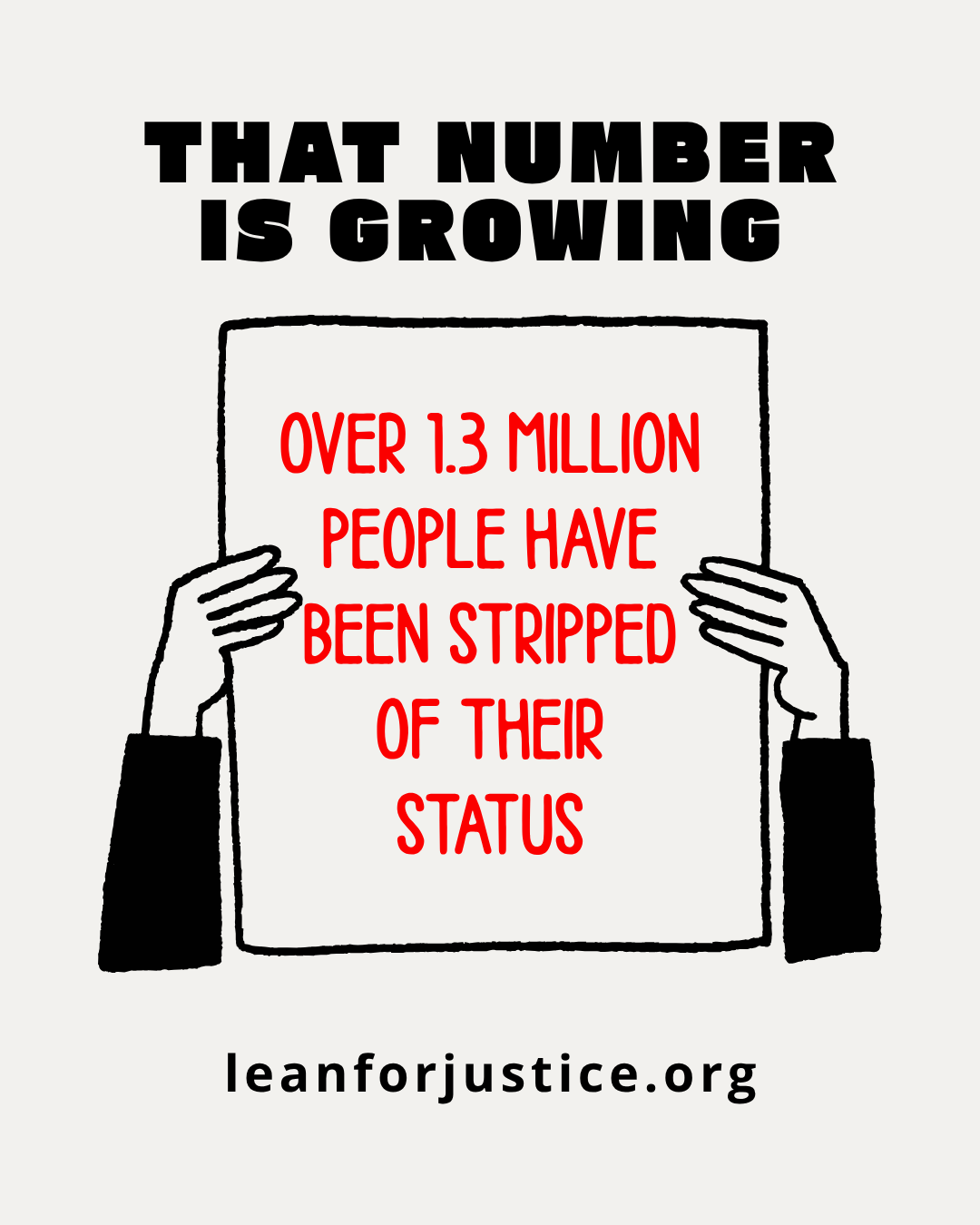
Temporary Protected Status, or TPS, is a humanitarian immigration protection for people already living in the United States who cannot safely return to their home countries because of armed conflict, natural disaster, or other extraordinary and temporary conditions.
TPS does not create a path to citizenship. While a country’s TPS designation is in effect, eligible individuals can receive protection from deportation and authorization to work in the United States.
What is happening to TPS?
TPS protections have narrowed dramatically during 2026.
The Trump administration has moved to terminate TPS designations for numerous countries. Recent court decisions have allowed several of those terminations to move forward.
In June, the U.S. Supreme Court allowed the administration to proceed with ending TPS protections for people from Haiti and Syria while litigation continued. Subsequent federal court decisions have cleared the way for the administration to terminate protections for people from South Sudan, Burma/Myanmar, Somalia, and Ethiopia, among others.
The legal situation continues to change, and litigation remains underway in some cases.
For affected TPS holders, termination can mean losing protection from deportation and employment authorization. It can also create uncertainty for families who have spent years—and in some cases decades—living, working, worshiping, raising children, paying taxes, and building lives in the United States.
This matters in Nevada
This is not simply a national immigration debate. TPS holders are part of Nevada communities.
According to Congressional Research Service data, approximately 5,825 people with TPS lived in Nevada as of March 31, 2025.
They are our neighbors, co-workers, caregivers, congregation members, business owners, parents and friends.
Immigrant workers are also an important part of Nevada’s workforce, including industries such as hospitality, construction, food service, care work, agriculture and other essential sectors.
When someone loses authorization to work, the consequences can extend far beyond one individual.
A family can lose income. An employer can lose an experienced worker. Children can face uncertainty about a parent’s future. Congregations and community organizations may see increased needs for food, housing, legal assistance and emergency support.
Behind every statistic are people and families.
Why should Lutherans care?
For Nevada Lutherans, immigration is not only a political question. It is also a question about how we understand our relationship with our neighbor.
The ELCA social message on Immigration reminds us:
“Hospitality for the uprooted is a way to live out the biblical call to love the neighbor in response to God’s love in Jesus Christ.”
Scripture repeatedly calls God’s people to remember and care for the stranger.
“The stranger who resides with you shall be to you as the citizen among you; you shall love the stranger as yourself.” — Leviticus 19:34
Jesus also reminds us:
“I was a stranger and you welcomed me.” — Matthew 25:35
The ELCA’s teaching on immigration recognizes both the legitimate role of government in creating an orderly immigration system and the responsibility of Christians to advocate for policies grounded in human dignity, justice, compassion and concern for our neighbors.
TPS was created by Congress because circumstances can arise when returning people to their countries of origin is unsafe.
As protections are withdrawn, people of faith can ask an important question:
How should our immigration policies balance the rule of law with human dignity, family unity, due process, community stability and protection for people facing dangerous conditions?
What can Nevada Lutherans do?
Contact Nevada’s members of Congress
Congress has the authority to change federal immigration law and create more permanent protections for longtime TPS holders.
Nevada Lutherans can contact our U.S. senators and representatives and ask what they are doing to provide stability for TPS holders, their families and the communities where they live.
An ELCA Action Alert.
Share Nevada stories
Public policy affects real people.
If your congregation, ministry, workplace, school or neighborhood includes TPS holders or families affected by changing immigration policies, consider helping their stories be heard, with their permission and with careful attention to their safety and privacy.
Pastors, employers, educators, health care workers, social service providers and community members can also help policymakers understand how changes in immigration policy affect Nevada communities.
Never publicly identify someone’s immigration status without their explicit permission.
Connect people with trusted legal resources
Immigration law is complicated, and the status of individual TPS designations is changing rapidly.
Anyone who currently has TPS or whose employment authorization may be affected should consider speaking with a qualified immigration attorney or accredited nonprofit immigration legal-service provider.
A person’s options may depend on their country of origin, family circumstances, immigration history, asylum eligibility or other factors.
Congregations should not provide immigration legal advice unless the person providing it is appropriately qualified.
Instead, congregations can help neighbors find trustworthy legal assistance.
Prepare for impacts on families
The termination of TPS can affect more than someone’s immigration status.
Congregations and community organizations may encounter:
- Job and income loss
- Housing or food insecurity
- Family separation concerns
- Questions about employment authorization
- Increased demand for legal assistance
- Fear surrounding travel or interactions with government agencies
- Children and families experiencing significant uncertainty
Faith communities can prepare by building relationships now with immigrant-serving organizations, food assistance programs, housing organizations and reputable legal-service providers.
Pray, accompany and advocate
Christian public witness involves more than responding to a policy debate.
We pray for neighbors living with uncertainty.
We listen to the experiences of immigrants in our communities.
We accompany families seeking safety and stability.
And we advocate for public policies that uphold human dignity, family unity, due process and the common good.
Temporary Protected Status exists because Congress recognized that extraordinary circumstances can make returning home unsafe.
As protections are withdrawn for communities that have built lives in the United States, people of faith have an important role to play: accompanying affected families, connecting neighbors with trustworthy resources, and asking policymakers how our immigration system can uphold human dignity, family unity, due process and the common good.
Our neighbors are more than an immigration status.
As Lutherans, we are called to see the human beings behind our public policies—and to love and serve our neighbors.
Sources & Learn More
ELCA Social Message: Immigration
The ELCA’s social teaching on immigration emphasizes welcoming the stranger, advocating for fair and generous immigration laws, and recognizing the dignity of newcomers.
Congressional Research Service: Temporary Protected Status and Deferred Enforced Departure
Provides background on TPS, congressional authority and national and state-level TPS population data.
U.S. Citizenship and Immigration Services: Temporary Protected Status
Provides official information about current TPS designations, eligibility requirements, employment authorization and country-specific updates.
Important: TPS policies and court cases are changing rapidly. Information in this resource is current as of August 19, 2026. Individuals affected by TPS changes should consult qualified immigration counsel for advice about their individual circumstances.
Lutheran Engagement and Advocacy in Nevada (LEAN) provides advocacy and educational resources for Nevada Lutherans. This resource is for general educational purposes and is not legal advice.

