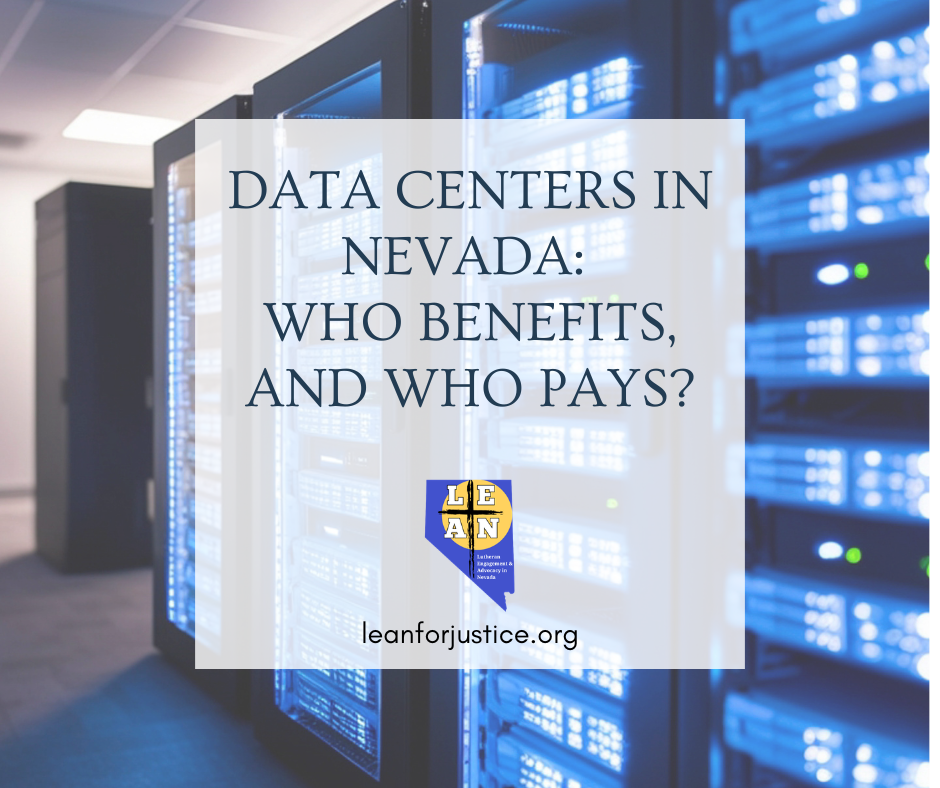
Data centers have become one of the most urgent public-policy issues heading toward Nevada’s 2027 Legislative Session. The facilities that power cloud computing and artificial intelligence can bring investment and construction work, but their rapid growth also raises serious questions about electricity costs, water, tax fairness, public lands, and local control.
Across Nevada, communities are asking a simple question: Who benefits, and who pays?
In Reno, the City Council has extended its pause on new data-center permits through August 2027 while it considers stronger local rules. In Boulder City, voters will decide this November whether data centers should become an allowed use on an additional 14,000 acres of city-owned land in the Eldorado Valley. Meanwhile, a separate proposal on nearby federal land has been paused during an appeal after concerns about its environmental review.
These local decisions matter statewide. Data centers require enormous amounts of electricity, and expanding the grid to serve them should not shift new costs onto families, small businesses, or people already struggling with high utility bills. Water use is also a major concern in a state shaped by drought, limited groundwater, and the ongoing uncertainty of the Colorado River.
Nevada’s tax incentives deserve close attention, too. The state has provided substantial abatements to attract data centers, even as communities need revenue for schools, housing, health care, infrastructure, and climate resilience. Nevadans deserve transparent information about every subsidy: what a company receives, what it promises in return, how many permanent jobs it creates, and whether those promises are met.
LEAN believes economic development must serve the common good. Before new data centers move forward, Nevada should ensure:
- Communities have meaningful notice, transparency, and a real voice in local land-use decisions.
- Data centers pay their fair share of new generation, transmission, and infrastructure costs.
- Water use, air pollution, and impacts on desert ecosystems and public lands are independently assessed and publicly reported.
- Tax abatements include clear public benefits, enforceable job and wage standards, and regular disclosure.
- Tribal nations and communities most affected by development are consulted early and treated as partners.
- Nevada has statewide standards so protections do not depend solely on a community’s ZIP code.
Technology can be part of Nevada’s future. But that future must protect our water, keep energy affordable, respect public lands and Tribal sovereignty, and ensure that prosperity is shared—not subsidized at the public’s expense.


Pingback: LEANING INTO: Data Centers | Lutheran Engagement and Advocacy in Nevada