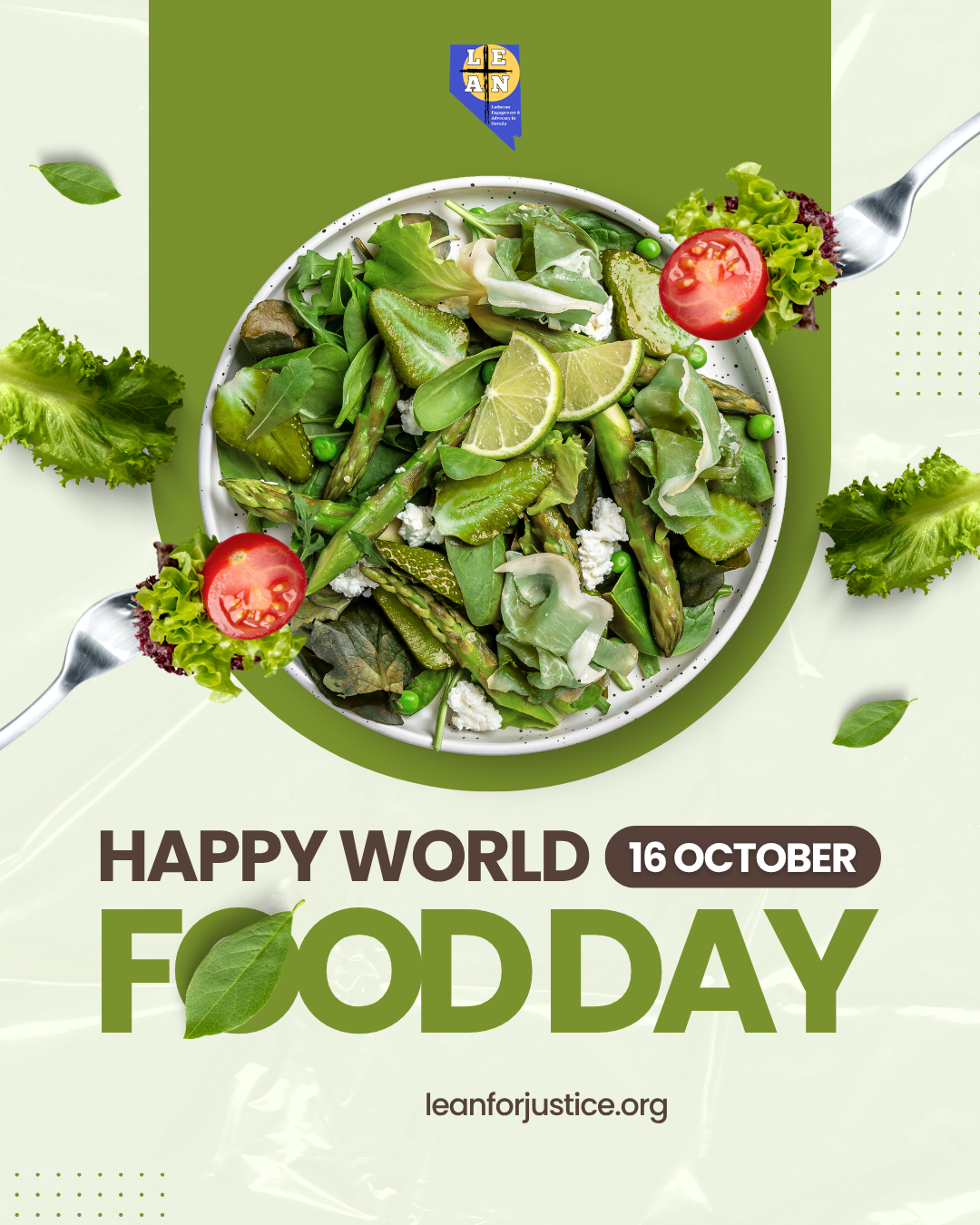
Join people around the world in raising awareness of hunger and taking collective action to end it for good.
This year’s World Food Day theme, “Innovate today. Nourish tomorrow.”, highlights how we can combine traditional knowledge with forward-thinking solutions to ensure that everyone has access to nutritious food. Your congregation or community is invited to join ELCA World Hunger in taking action.
Set a goal to raise money for an ELCA Good Gifts bundle or use ELCA World Hunger resources to learn more about global hunger and inspire innovative projects in your community. When we work together, we can build a just world where all are fed.
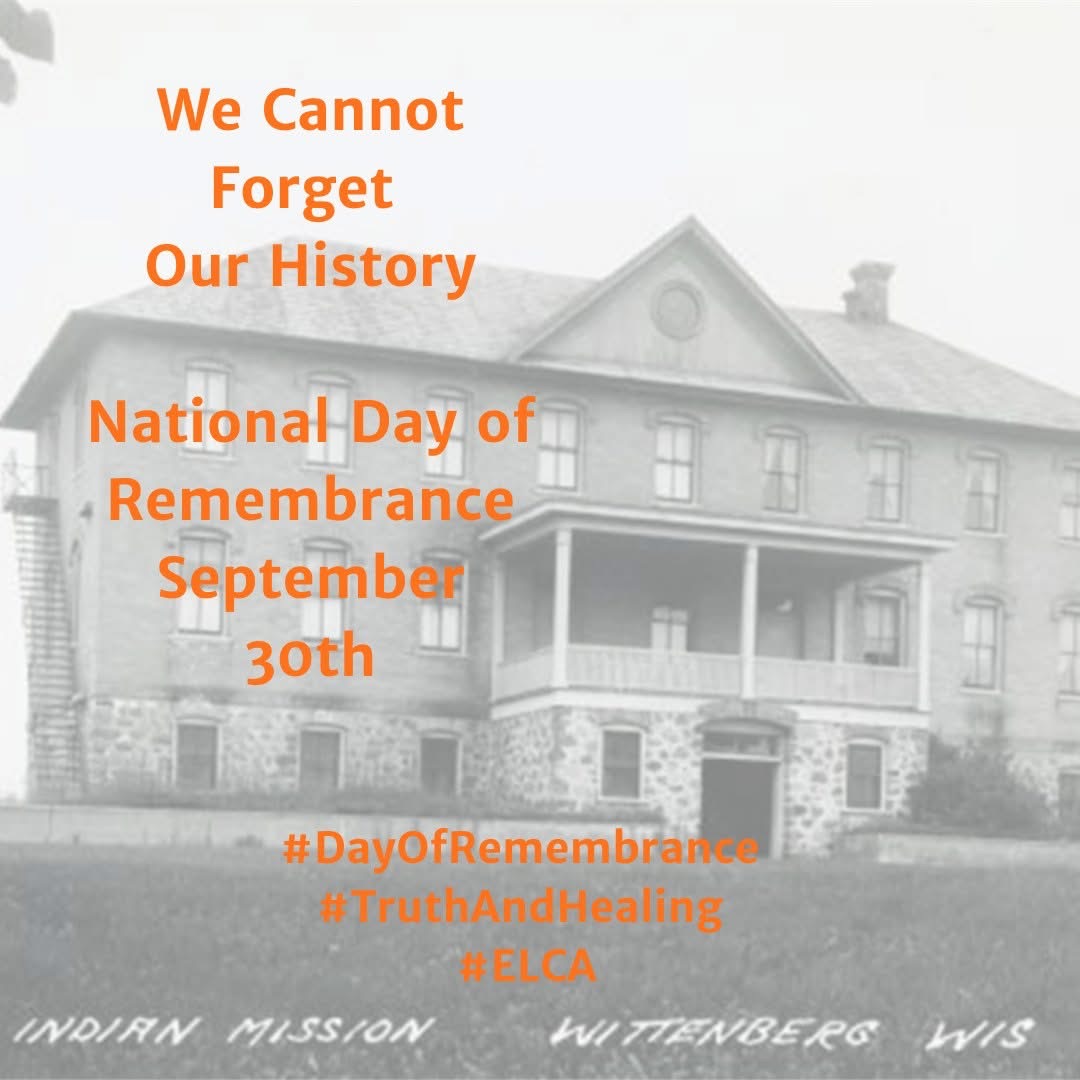
Sept. 30 is the National Day of Remembrance for U.S. Indian Boarding Schools, but for the Rev. Wanda K. Frenchman, who was raised by survivors of a Catholic boarding school, that day of remembrance is every day.
The ELCA is deepening its commitment to truth-telling and healing around the legacy of Indian boarding schools. ELCA Ministries of Diverse Cultures and Communities (MDCC) Indigenous Ministries helps to equip congregations to observe the National Day of Remembrance. The “Truth-Seeking and Truth-Telling Initiative” is researching and acknowledging Lutheran and broader Christian involvement in Indian boarding schools and their continuing impact on Native peoples. Ministries around the country are doing community work to restore traditions and relationships.
Read a personal reflection from Frenchman in Living Lutheran and learn more about the work of ELCA MDCC.
Hear from Indigenous leaders, congregations, and synods engaged in land return and reconciliation efforts, and learn how communities across the ELCA are putting this commitment into action.
Gov. Joe Lombardo has signed an executive order changing the rules for data centers seeking new state tax abatements in Nevada.
The order, effective immediately, establishes what the administration calls the “Nevada Standard for Responsible Data Center Development.” It does not stop data-center development or eliminate Nevada’s incentive program. Instead, it places new conditions on companies seeking future tax breaks.
SCHOOLS: Data centers seeking new abatements must pay the Local School Support Tax in full. The Nevada Independent reports that about $236 million in school-support taxes has previously been abated through the program.
ENERGY: Companies seeking incentives must commit to covering their electricity costs and not interfering with the public’s access to electricity during grid emergencies. The state is also being directed to plan for rapidly growing data-center power demand over the next decade.
WATER: Developers seeking tax breaks must agree to meet applicable water standards, bringing Nevada’s limited water resources more directly into the incentive process.
TAX BREAKS CONTINUE: Nevada is **curtailing—not eliminating—**its data-center incentive program. The state has approved an estimated $461 million in data-center tax abatements over the past 11 years.
THE IMPORTANT LIMIT: These new guardrails primarily apply to companies seeking new state tax abatements.They are not a comprehensive set of regulations governing every data center operating or proposed in Nevada.
For Lutheran Engagement and Advocacy in Nevada, this rapidly developing issue sits at the intersection of creation care, education, economic justice, utility affordability and responsible stewardship of public resources.
As Nevada considers billions of dollars in new data-center investment, important public-policy questions remain:
Who pays for the infrastructure? How are residential ratepayers protected? How will Nevada safeguard its water? What should companies receiving public incentives contribute to our schools and communities? And which protections should ultimately be written into Nevada law?
LEAN will continue following these developments as Nevada prepares for the 2027 Legislative Session.
Child care is essential infrastructure for Nevada families.
As pandemic-era federal funding ended, the number of Nevada families receiving child care assistance fell from more than 15,000 in 2024 to about 5,700 today. Meanwhile, eligible families remain on waitlists, and Nevada’s income rules are now the most restrictive in the nation.
For too many parents, especially single parents, child care costs make work, school, and family stability harder—not easier.
This is not simply a private family challenge. It is an economic justice issue, a workforce issue, and a children’s well-being issue.
As Nevada prepares for the 2027 Legislative Session, we have an opportunity to invest in affordable, high-quality child care and the providers who make it possible.
Because every family deserves the chance to work, learn, and thrive.