LEAN On The Road: Sierra Pacific Synod Regional Gathering

Last Saturday, the Sierra Pacific Synod gathered for a Regional Gathering in Reno focused on worship, learning, and faithful engagement in the world around us.

The day began with worship led by the Sierra Pacific Synod Youth Committee, followed by a keynote from Pastor Khander Khalili and members of the synod’s delegation to the Holy Land, who shared powerful reflections and experiences from their journey.

In the afternoon, LEAN Advocacy Director, Pastor Paul Larson, led a workshop titled Discipleship in Democracy: Resisting Authoritarianism. The workshop explored how ELCA social statements ground us in our public witness and why elections matter as people of faith. Together, participants reflected on what faithful civic engagement looks like in today’s world, ways congregations can become engaged in their communities, and how we move from the pews into the public square in faithful and hopeful ways.

The conversation centered on how we resist seeing our neighbors as enemies, and instead engage one another as members of a shared democracy called to seek the common good, uphold human dignity, and love our neighbors.

We are thankful for opportunities to gather in community, deepen our faith, and continue discerning how we are called to live as disciples in public life.

May is Asian and Pacific Islander Heritage Month

Nevada’s AAPI communities are an essential part of the story of our state. They enrich our neighborhoods, businesses, schools, faith communities, and public life.

At the same time, many AAPI communities continue to face discrimination, language barriers, and inequities in healthcare, housing, and economic opportunity.

As people of faith, we are called to reject racism, celebrate diversity, and build communities rooted in dignity and belonging for all people.

At LEAN, we give thanks for the leadership, cultures, and contributions of AAPI Nevadans.

Understanding How ELCA Social Statements Are Formed

Understanding How ELCA Social Statements Are Formed

A Resource for Congregations, Leaders, and Public Witness Ministries

What Is an ELCA Social Statement?

A social statement is the teaching document of the Evangelical Lutheran Church in America on a major social issue. These statements help guide the church’s understanding, discernment, advocacy, and public witness.

They are not political platforms or partisan documents. Instead, they are theological and ethical teaching resources rooted in:

  • Scripture
  • Lutheran theology
  • Worship and prayer
  • Human experience
  • Scientific and social analysis
  • Broad churchwide conversation

Social statements are intended to help Lutherans think faithfully and act responsibly in public life.

Examples include:

  • Human Sexuality: Gift and Trust
  • Faith, Sexism, and Justice
  • Caring for Creation
  • Faith and Civic Life
  • Sufficient, Sustainable Livelihood for All
  • Freed in Christ: Race, Ethnicity, and Culture

Why Do Social Statements Matter?

Social statements:

  • Shape the church’s public witness
  • Guide advocacy ministries like Lutheran state public policy offices
  • Offer ethical guidance for congregations and members
  • Help the church speak collectively on complex issues
  • Encourage faithful conversation across difference

Importantly, social statements are not meant to end discussion. They are meant to deepen discernment.

The ELCA often describes itself as a “community of moral deliberation,” meaning the church studies, listens, debates, prays, and discerns together before speaking publicly.

How Is an ELCA Social Statement Formed?

The process usually takes several years and involves the whole church.

Step 1: A Need Is Identified

A social issue emerges that the church believes requires deeper theological reflection.

This can happen through:

  • Churchwide Assembly actions
  • Requests from synods or congregations
  • Social changes or crises
  • Advocacy concerns
  • Emerging ethical questions

The Churchwide Assembly authorizes work to begin.

Step 2: A Task Force Is Formed

The ELCA appoints a diverse task force that may include:

  • Pastors and deacons
  • Lay leaders
  • Scholars
  • Advocates
  • People with lived experience
  • Representatives from across regions and demographics

The goal is broad representation of the church.

Step 3: Research, Listening, and Study

The task force begins extensive work that includes:

  • Biblical study
  • Lutheran theological reflection
  • Historical analysis
  • Social science research
  • Listening sessions
  • Stories from impacted communities

This stage often includes:

  • Surveys
  • Synod listening events
  • Congregational engagement
  • Public feedback opportunities

The church intentionally invites disagreement and dialogue during this phase.

Step 4: A Draft Is Released

A draft statement is published for churchwide feedback.

Congregations, synods, advocacy groups, seminaries, and individuals are invited to:

  • Read the draft
  • Discuss it
  • Submit comments
  • Recommend changes

This is one of the most important parts of the process because it reflects the ELCA’s commitment to communal discernment rather than top-down declarations.

Questions often asked during this phase:

  • Is this faithful to Scripture?
  • Is this pastorally sensitive?
  • Does this reflect Lutheran theology?
  • Who is missing from the conversation?
  • What unintended consequences could emerge?

Step 5: Revisions Are Made

The task force reviews thousands of comments and revises the draft.

This can lead to:

  • Major theological clarification
  • Language changes
  • Additional nuance
  • Expanded pastoral guidance
  • Stronger grounding in lived experience

Some drafts go through multiple revisions before final consideration.

Step 6: Churchwide Assembly Votes

The final draft goes before the biennial Churchwide Assembly.

Voting members:

  • Debate the document
  • Offer amendments
  • Discuss theological concerns
  • Vote on adoption

A two-thirds majority is required for adoption.

If adopted, the statement becomes official social teaching of the ELCA.

What Happens After Adoption?

Once adopted, social statements are used in many ways:

Congregations

  • Adult forums
  • Bible studies
  • Confirmation
  • Social ministry reflection
  • Public engagement discussions

Advocacy Ministries

Organizations like Lutheran state public policy offices use them as grounding documents for advocacy and public witness.

Church Leaders

Pastors and bishops may use them when addressing ethical or social issues.

Individual Lutherans

Members may use them to deepen their own discernment and civic engagement.

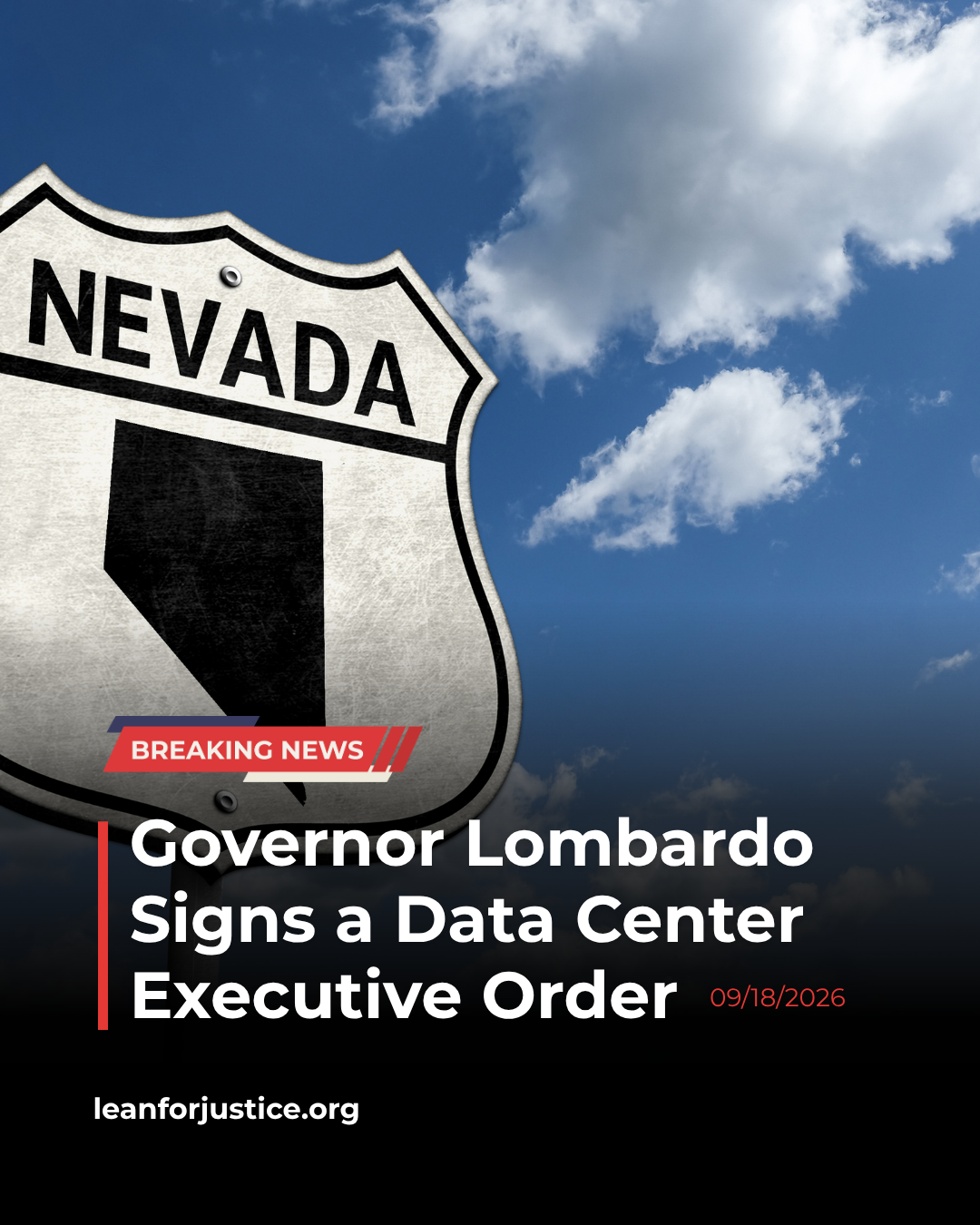
Who should get Nevada’s power: data centers or residents?

As Nevada’s energy demand grows, a new question is emerging: who gets priority?

NV Energy has said it plans to stop supplying power to Liberty Utilities by May 2027, affecting roughly 49,000 Lake Tahoe-area customers who will need a new power source. Reports connect this shift to rising electricity demand in Northern Nevada, especially from expanding data centers. 

Data centers already used an estimated 22% of Nevada’s electricity in 2024, and that number could rise to 35% by 2030

Supporters point to jobs, tax revenue, and economic growth. But communities are also asking faithful and practical questions:

Who pays when the grid is strained?
Who bears the burden of higher utility costs?
What happens to air quality, water use, noise, drought stress, and residential access to power?

At LEAN, we believe Nevada’s energy future must put residents, workers, vulnerable communities, and the common good at the center. Data centers should not come at the expense of families simply trying to keep the lights on.Read more

May is National Asthma and Allergy Awareness Month

May is National Asthma and Allergy Awareness Month, and in Nevada, this hits close to home.

When temperatures soar, air quality suffers. Dust storms, extreme heat, and air pollution do not just make us uncomfortable; they can trigger asthma attacks, worsen allergies, and send our neighbors to the ER. A recent report by the American Lung Association ranks Las Vegas in the top 15.

And who bears the heaviest burden?

Families in under-resourced communities. Neighbors who cannot afford to keep the AC running. Households without clean indoor air. Communities that are often the last to see relief while utility bills continue to rise.

Clean energy is not just about the environment.

It is about breath.
It is about health.
It is about justice.

At LEAN, we are committed to a Nevada where every neighbor can live with dignity, equity, and clean air to breathe.