When we think about elections, it’s easy to focus on the race for governor or Congress. But some of the most important decisions affecting our daily lives are made in the Nevada Legislature.
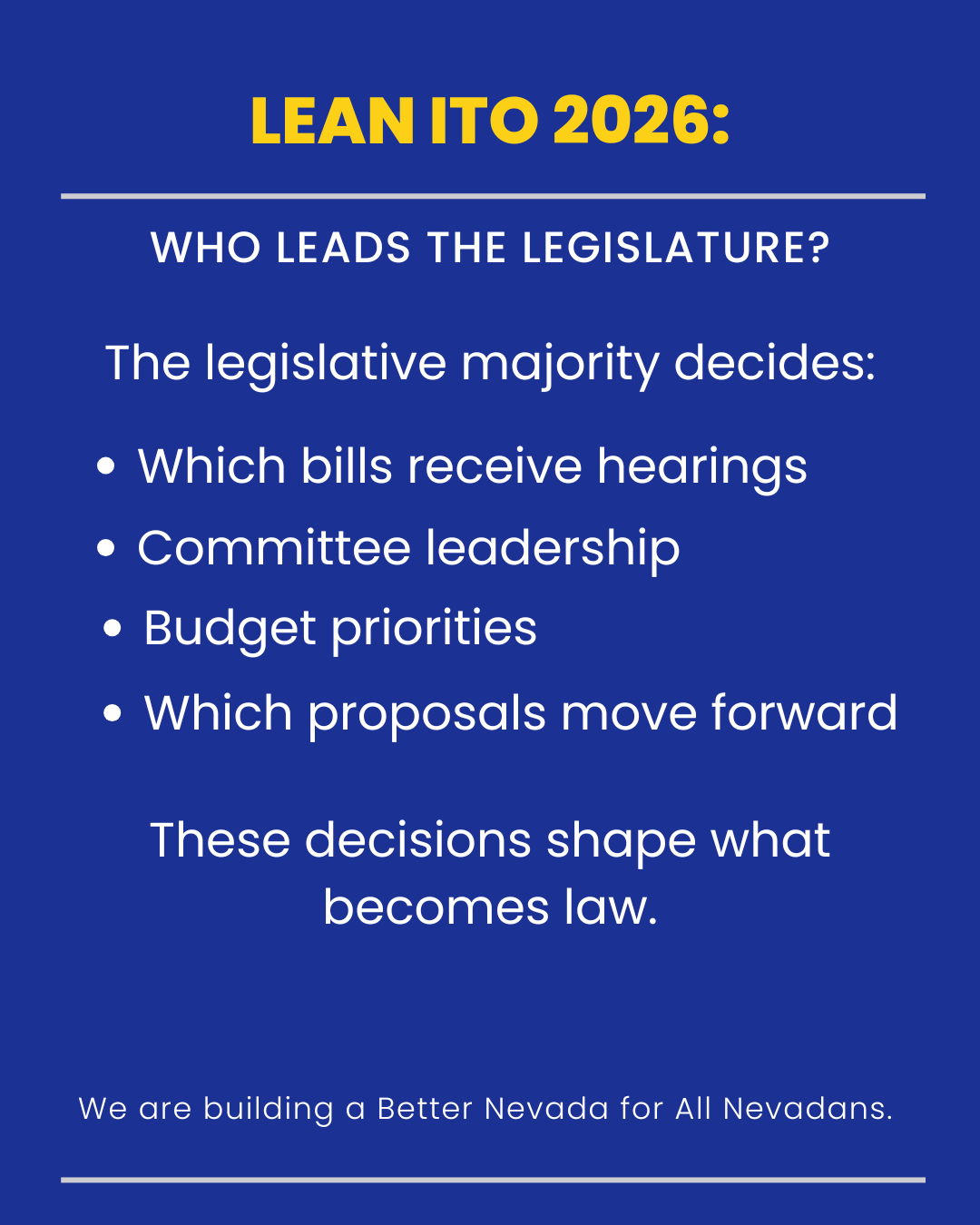
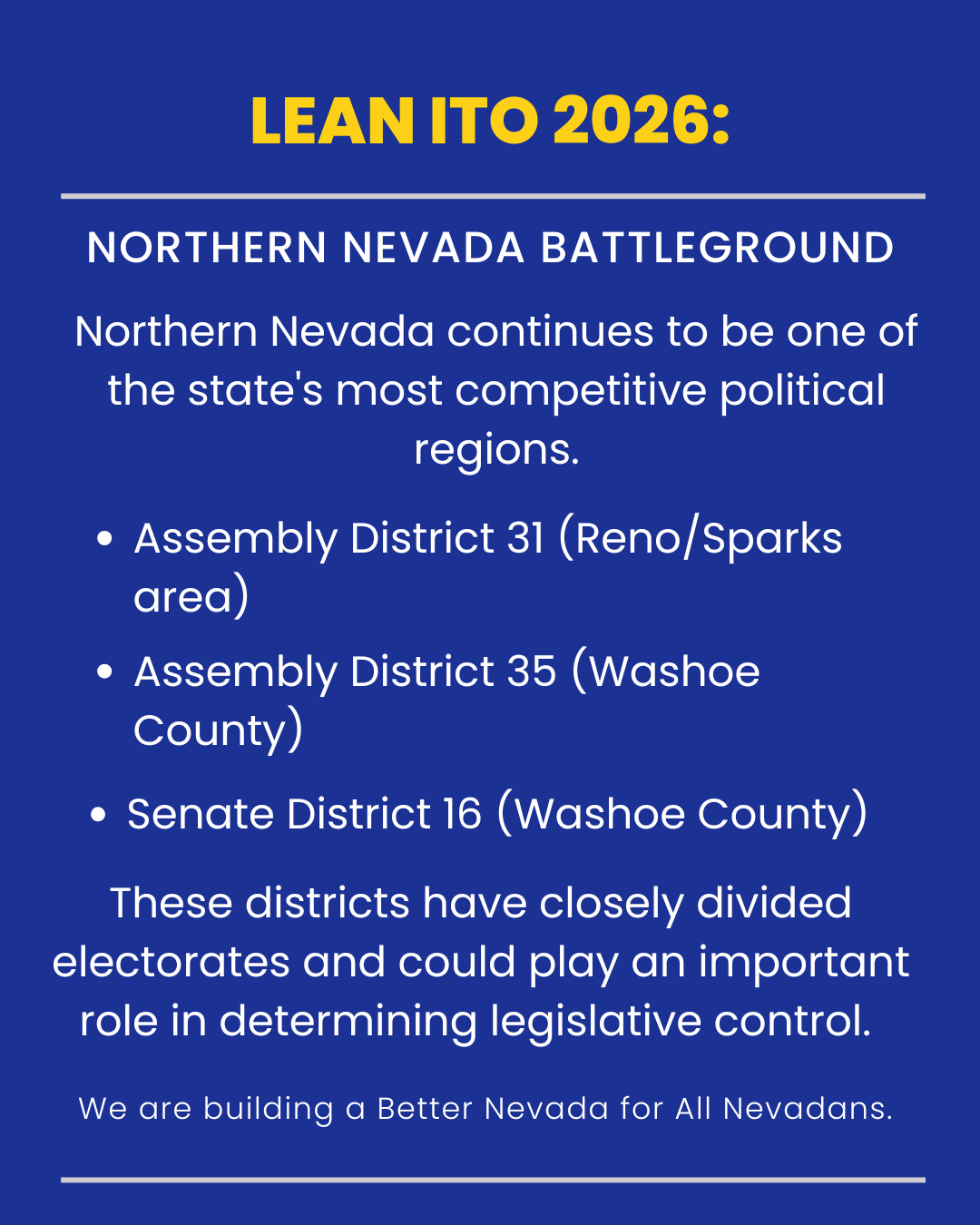
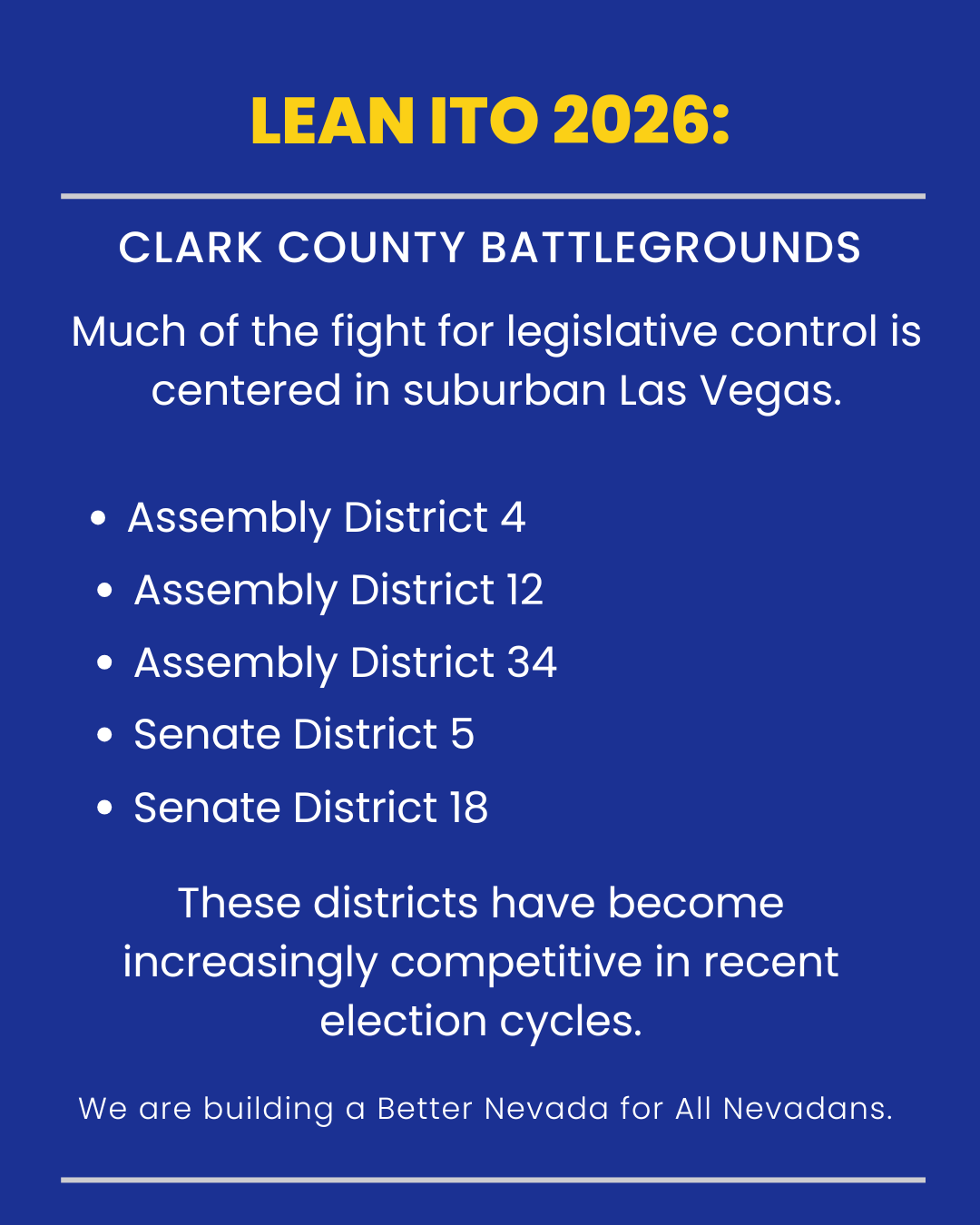
In 2026, a handful of competitive Assembly and Senate races could determine who controls Carson City in 2027. That means these elections will shape what bills are introduced, which proposals receive hearings, how state resources are prioritized, and what policies ultimately reach the governor’s desk.
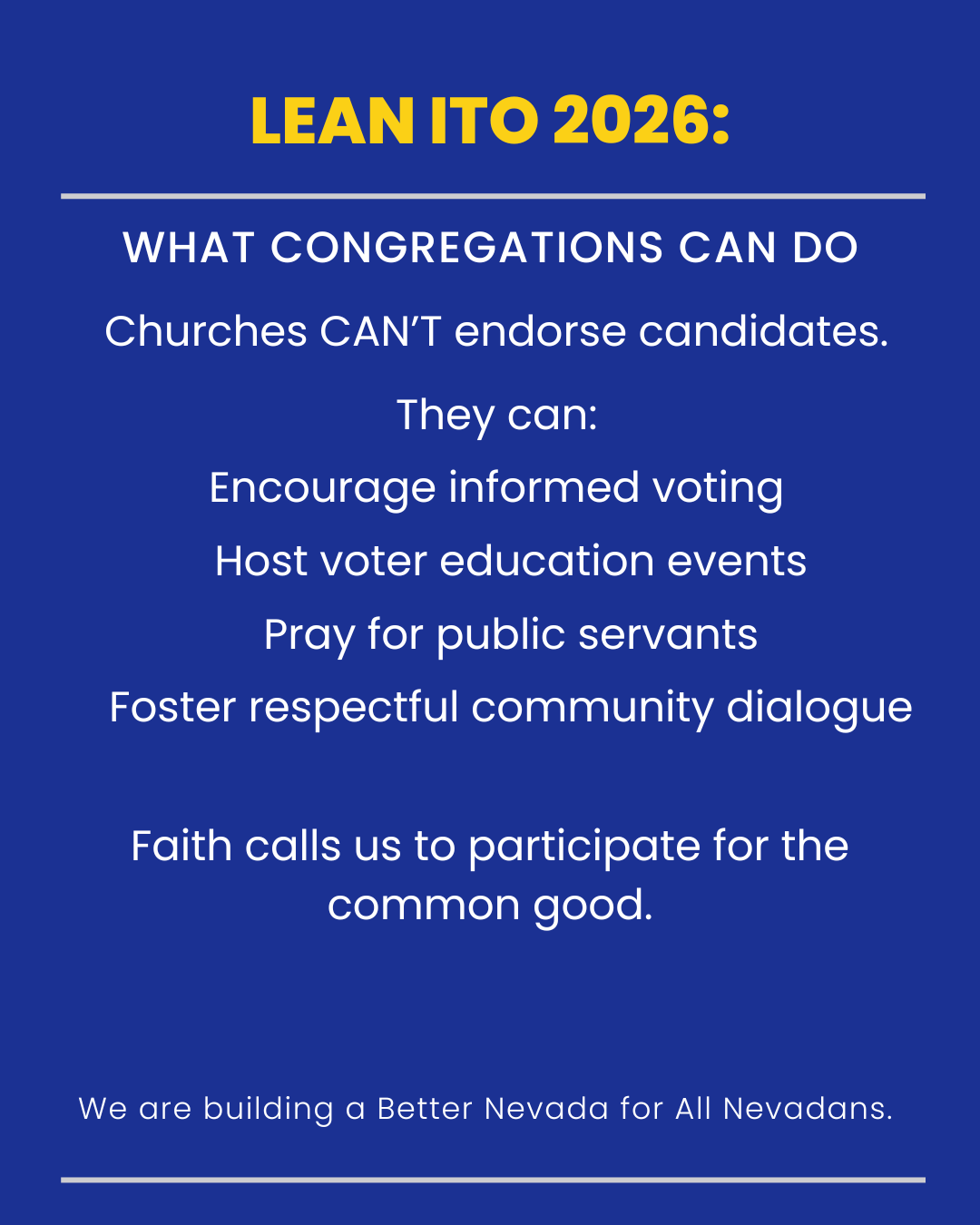
For people of faith, civic engagement isn’t about political parties—it’s about loving our neighbors and seeking the common good.
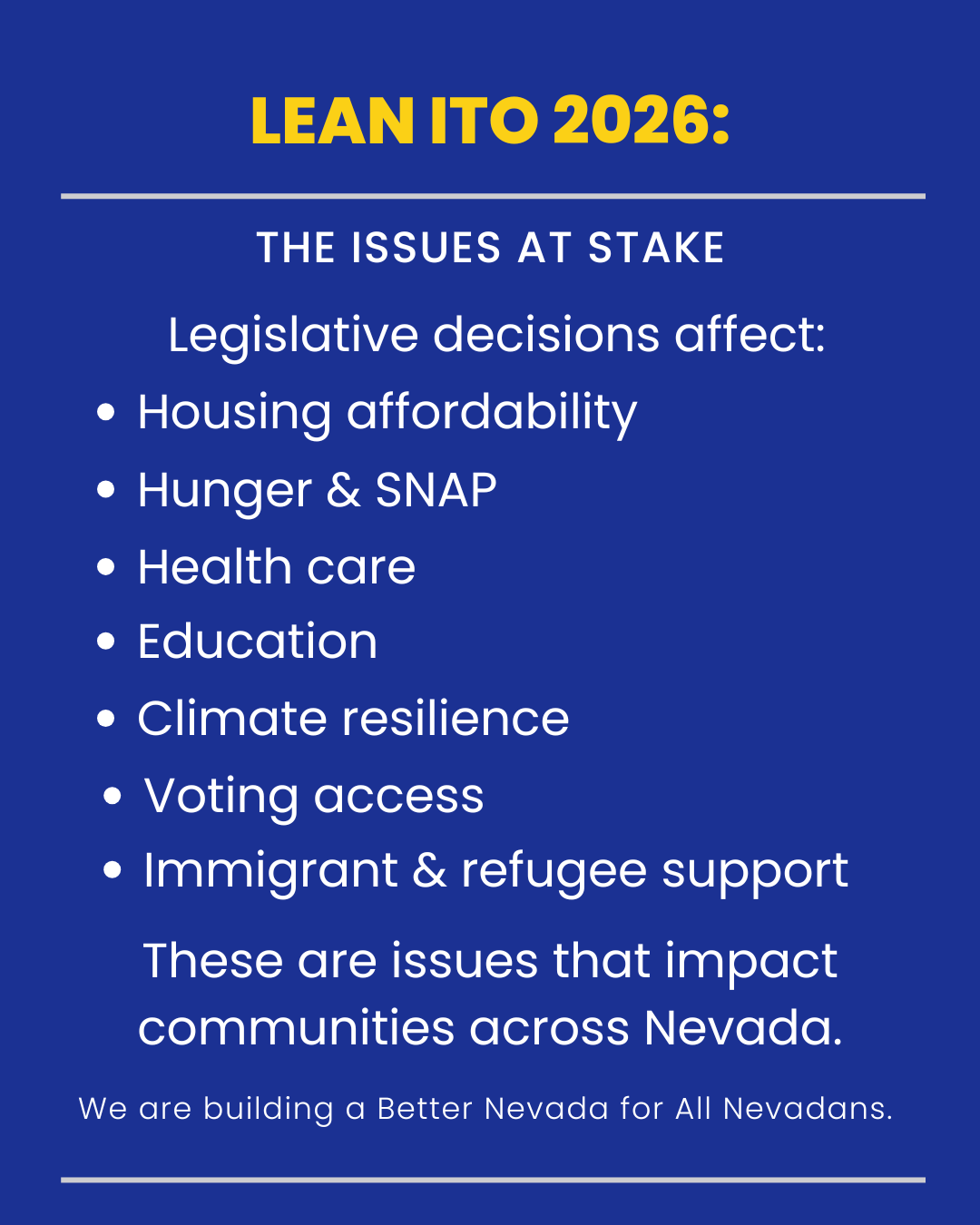
The decisions made during the next Legislative Session will influence issues that matter deeply to Lutheran Engagement and Advocacy in Nevada:
Affordable housing
Hunger and food security
Health care access
Free, fair, and accessible elections
Creation Care
Welcoming immigrants and refugees
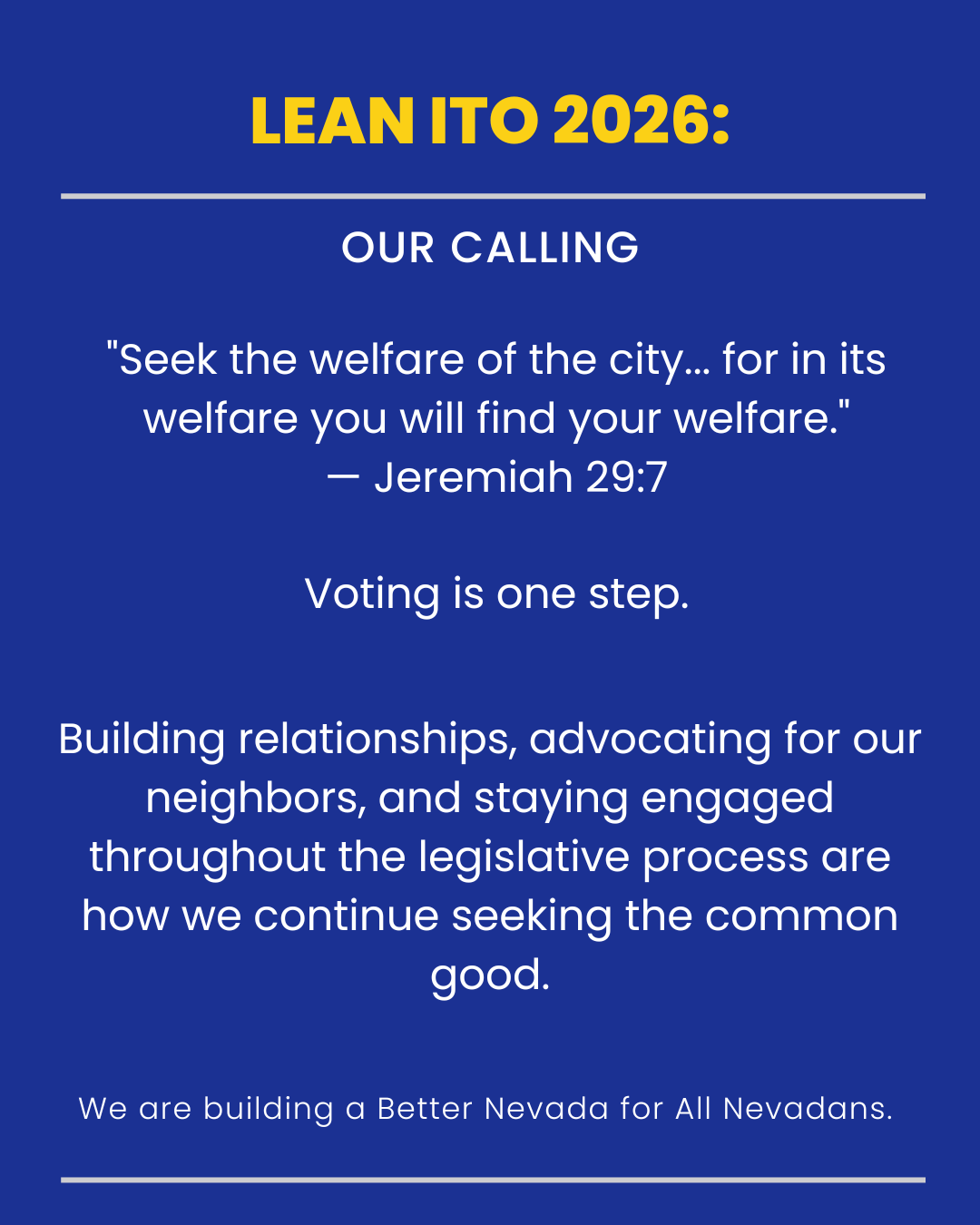
As Jeremiah reminds us:
“Seek the welfare of the city… for in its welfare you will find your welfare.” (Jeremiah 29:7)
As Election Day approaches, take time to learn about the candidates in your legislative district, encourage others to vote, and continue building relationships with those elected to serve. Democracy doesn’t end when ballots are counted, it continues through faithful engagement.
The 250th anniversary of the Declaration of Independence invited many of us to look back — to remember the nation’s founding promises, to give thanks for real gifts, and to tell the truth about the people excluded from those promises. But now that the celebration has passed, the more urgent question is not only what we remember. It is what we will build.
For Lutherans, the work ahead is not nostalgia. It is vocation. We are called to live as neighbors, citizens, voters, advocates, servants, and truth-tellers in a complicated public life. We can honor the best ideals of our nation by asking how our communities, laws, budgets, and public choices can better reflect the dignity of every person.
LAMA’s earlier reflection on the Declaration of Independence spoke of gratitude for the Declaration’s vision of equality, rights, consent of the governed, and resistance to tyranny, and of humility, because those promises were never extended equally to all. Enslaved people, Indigenous peoples, women, immigrants, and many others were excluded from the freedom the document proclaimed. That history is not just a past-tense concern. It asks something of us now.
The Arizona Center for Economic Progress made a similar point as America250 approached: Arizona’s story must include all of us. Our state has been shaped not only by the wealthy and powerful, but also by working families, immigrants, teachers, caregivers, small business owners, Tribal communities, faith communities, and neighbors organizing from the bottom up. If our public celebrations tell a story of liberty while our public budgets leave families without a fair chance to thrive, then our story remains unfinished.
That is where people of faith come in.
The question ahead is not whether churches should care about public life. Our neighbors’ lives are shaped by public decisions every day: whether a child has enough to eat, or a senior can see a doctor; whether a family can afford rent, or a student can learn safely; whether a worker can earn a living wage, or a migrant is treated with dignity; or whether every eligible voter can participate without fear or obstruction.
Faithful civic engagement begins with listening. Who is being left out of the story? Whose voices are missing from the room where decisions are made? What would public policy look like if it were shaped not by fear, scarcity, or the interests of the powerful, but by the well-being of all?
For LAMA, the next chapter calls us to recommit to public witness rooted in love of neighbor. That means advocating for food security and a Farm Bill that protects SNAP. It means defending Medicaid/AHCCCS and access to health care. It means supporting housing and homelessness solutions, public education, immigrant welcome, voting access, fair taxation, care for creation, and budgets that invest in people rather than deepen inequality.
It also means practicing democracy as a discipline of faith. We can register voters, learn about candidates and ballot measures, attend town halls, request meetings with lawmakers, write letters, testify at the Capitol, use Arizona’s Request to Speak system when the Legislature is in session, and invite our congregations into respectful conversation about the common good. None of this requires everyone in the church to agree on every policy detail. It does require us to remember that disengagement is not neutrality when neighbors are harmed.
The ELCA’s social statement Faith and Civic Life: Seeking the Well-being of All reminds us that civic participation is part of our Christian calling. Lutherans do not place our ultimate hope in political parties, elected officials, courts, or constitutions. But we do believe God is at work in the world, calling us to seek justice, peace, and the well-being of all creation.
After America250, people of faith have an opportunity to move from commemoration to commitment. We can ask better questions, and tell a fuller story. We can build broader coalitions. We can continue to stand with those pushed to the margins. We can help our congregations become places where civic life is practiced with courage and compassion.
The anniversary has passed. The work remains.
The next 250 years will be shaped by the choices we make now — not only in Washington, D.C., or at the Arizona Capitol, but in congregations, school boards, city councils, county offices, neighborhoods, ministries, and voting booths across our state. Let’s step into that future not with despair, but with hope grounded in God’s love and with hands ready for the work of justice!
“Seek the welfare of the city… for in its welfare you will find your welfare.” — Jeremiah 29:7
During a recent meeting of the Nevada Legislature’s Interim Commerce and Labor Committee, lawmakers heard testimony on property ownership and the growing challenge of wildfire risk. One concern raised was the increasing number of homeowners insurance cancellations and non-renewals, not only in high-risk mountain communities, but even in places like Pahrump.
Homeownership doesn’t end when you receive the keys. For a growing number of Nevadans, keeping homeowners insurance is becoming another major challenge.
A recent report from The Nevada Independent found that Washoe County has experienced a sharp increase in homeowners insurance cancellations and non-renewals as insurers respond to increasing wildfire risk. Even homeowners who have invested in defensible space and other fire mitigation efforts are finding it more difficult to obtain or keep affordable coverage.
When insurance becomes unaffordable, or unavailable, the consequences extend beyond individual homeowners. It affects families, neighborhoods, housing affordability, local economies, and the long-term stability of our communities.
As people of faith, we believe everyone deserves a safe place to call home. Loving our neighbors means supporting policies that strengthen community resilience, reduce wildfire risk, promote responsible stewardship of our public lands, and help ensure families can access affordable homeowners insurance.
Housing justice is about more than building homes. It’s also about making sure people can afford to stay in them.
A recent report shows that Nevada is seeing a decline in Affordable Care Act marketplace enrollment as enhanced federal premium subsidies have expired. For many Nevadans, rising premiums mean difficult choices between paying for health insurance and paying for groceries, rent, housing, or other basic necessities.
New federal data show that Nevada’s Affordable Care Act Marketplace enrollment fell from 107,749 people in February 2025 to 99,663 in February 2026.
That means 8,086 fewer Nevadans had active Marketplace health coverage—a decline of 8 percent in just one year.
The decline followed the expiration of enhanced premium tax credits that had helped lower monthly insurance costs. Nationally, Marketplace enrollment fell by more than 2.6 million people, or 12 percent.
These numbers represent neighbors who may now be delaying preventive care, skipping prescriptions, or living without health insurance because coverage has become too expensive. When people lose coverage, they are more likely to wait until a health concern becomes an emergency. The consequences are felt not only by individuals and families but by our entire community.
As people of faith, we believe every person is created in the image of God and deserves the opportunity to live a healthy, dignified life. Access to affordable health care is one way we love our neighbors and seek the common good.
At Lutheran Engagement and Advocacy in Nevada (LEAN), we support policies that expand access to affordable, quality health care and protect Nevada families from losing the coverage they depend on. We encourage Congress to pursue solutions that keep health care within reach for working families, older adults, small-business owners, and everyone who relies on the Marketplace for coverage.
Healthy communities begin with healthy people, and healthy people need affordable access to health care.
Natalie Abudayyeh has spent one month in Israeli detention with no charge.
On June 2, 2026, Natalie Abudayyeh, a 21-year-old Lutheran young adult of the Church of the Reformation congregation of the Evangelical Lutheran Church in Jordan and the Holy Land (ELCJHL), was abducted from her university housing at gunpoint by Israeli forces alongside three of her classmates. An “Update from Bishop Dr. Imad Haddad on Natlie Abudayyeh: 6 July” can be read from the ELCJHL Facebook page. To date, Abudayyeh has not been charged with any offenses. It is not known why Abudayyeh was abducted or continues to be held in Israeli detention, and no information has been shared with her lawyer, her family or her church. Abudayyeh’s family and pastor have all been denied access to see her, and her lawyer has only been able to speak to her through a video chat.
The ELCA has named the priority to “defend the human rights of groups most susceptible to violations, especially all minorities, women, and children” in the social statement For Peace in God’s World (p. 14). In 1 Corinthians 12:26, we are reminded: “If one member suffers, all suffer together with it; if one member is honored, all rejoice together with it.” Our voice as Americans and as Christians matters in proclaiming that Abudayyeh, her classmates, and the thousands of other Palestinians being held without charge have human rights and must be treated with the dignity, respect and humanity they deserve.
Abudayyeh is the latest victim of an institutional system of incarceration that mistreats Palestinian prisoners. Palestinians are processed in Israeli military court, while Israeli citizens are processed under a civil court which offers more rights and freedoms. Abudayyeh’s detention comes at a time when Israeli settlers and Israeli security forces continue to target the indigenous Christian community of Palestine. In 2025 alone there were 155 documented incidents in Israel and East Jerusalem against Christians, their property, and Christian institutions and houses of worship, as well as a marked increase in attacks on Christian communities in the West Bank. While Palestinians of any faith continue to face systemic persecution and violence, the uptick in violence specifically targeting the Christian community has risen markedly since October 2023.
Please take a moment to advocate for the release of Natalie Abudayyeh and her classmates.
Contact your lawmakers today. Customize your message with your experiences and values.
If you would like to schedule time with your legislator, please reach out to Pastor Paul,and he is willing to work with ELCA Advocacy Partners to secure a time.






 Lutheran Engagement and Advocacy in Nevada