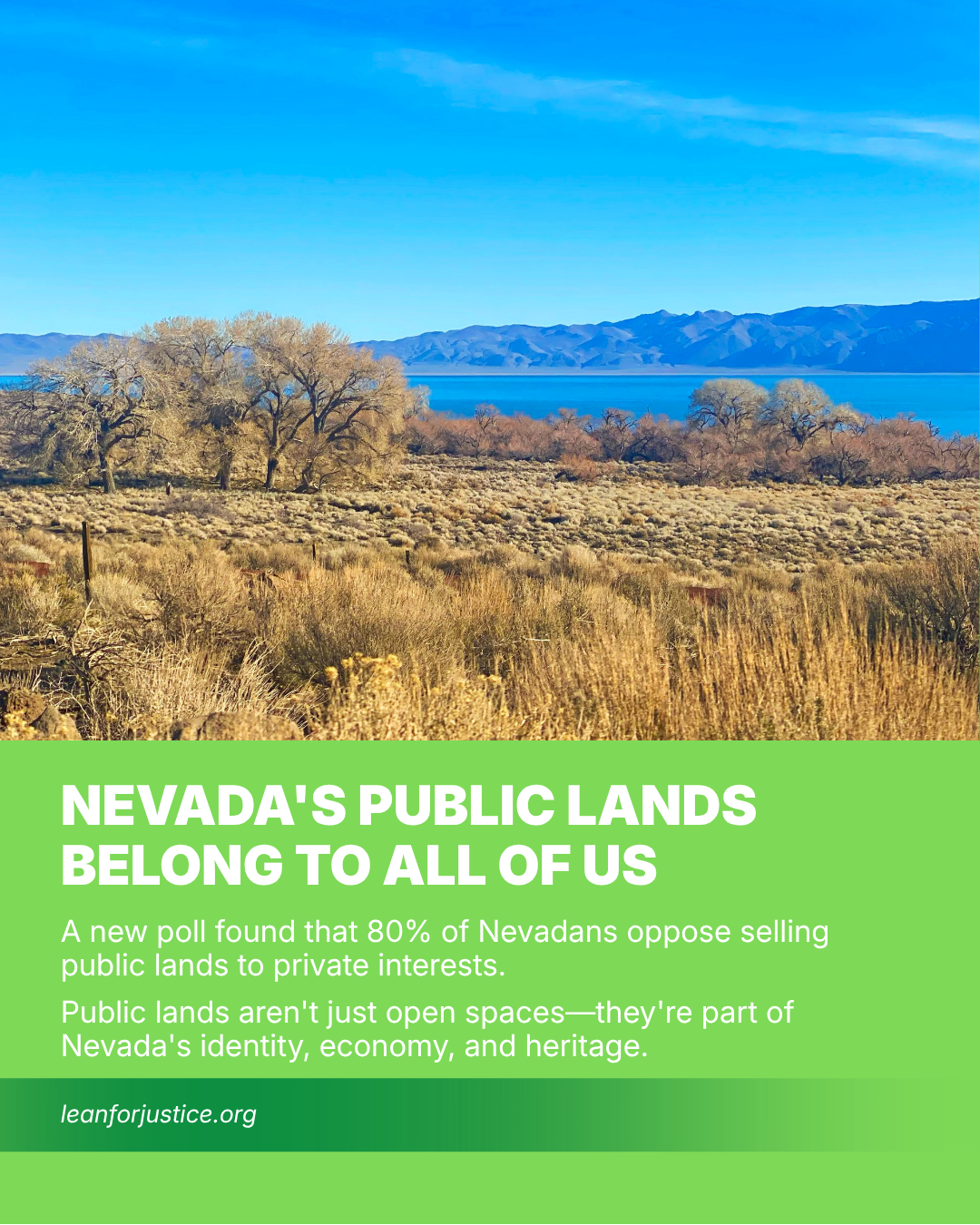
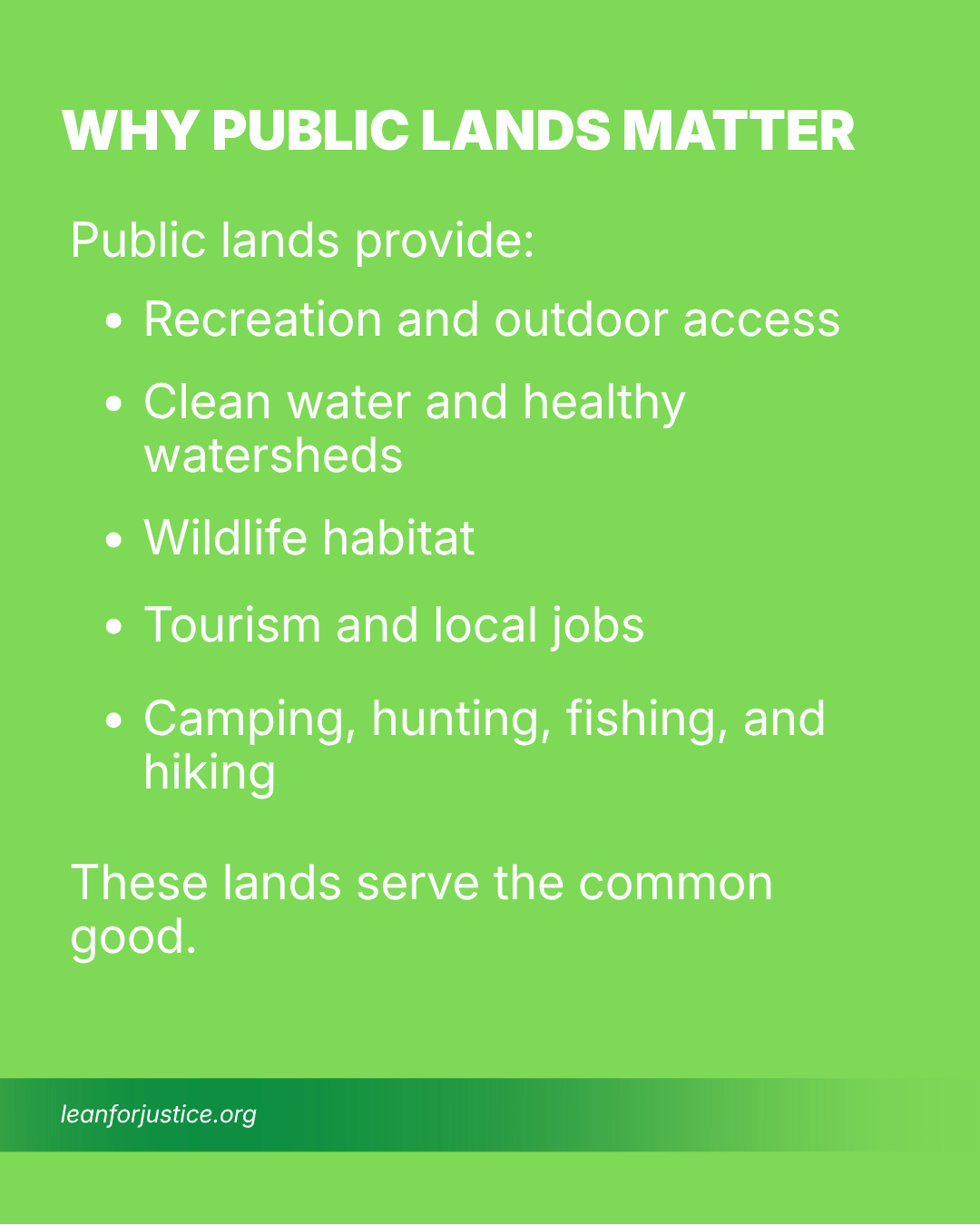
Two issues continue to be top priorities for Nevadans: protecting our public lands and addressing the housing crisis.
Recent polling shows overwhelming support for keeping public lands in public hands, while communities across the state continue to seek practical solutions to make housing more affordable.
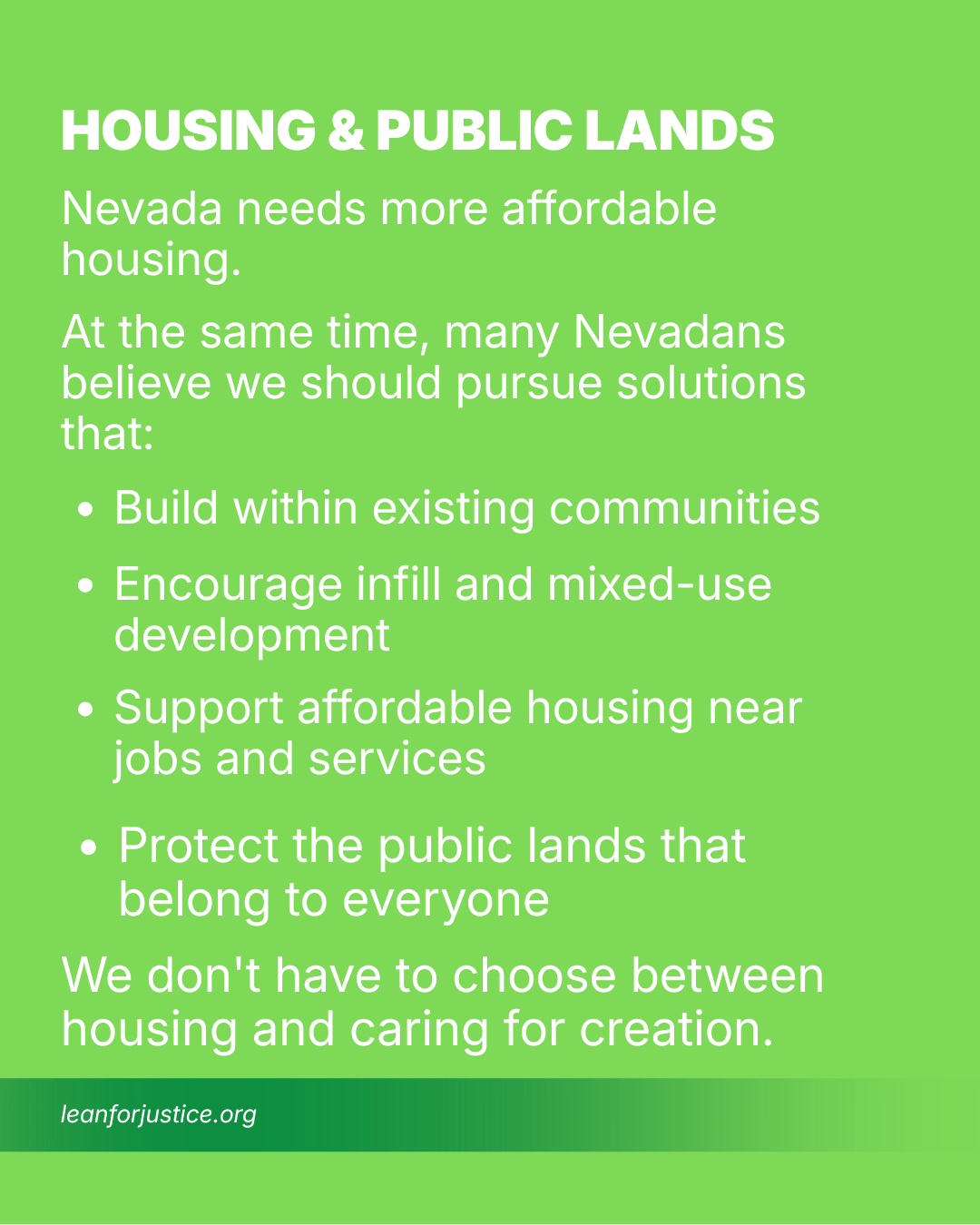
At LEAN, we’ve been following both conversations closely. We’ve examined the proposed federal housing legislation and continue to advocate for balanced solutions that include building more housing in existing communities, thoughtful rezoning, expanding housing options like ADUs and “missing middle” housing, and protecting the public lands that are central to Nevada’s identity.
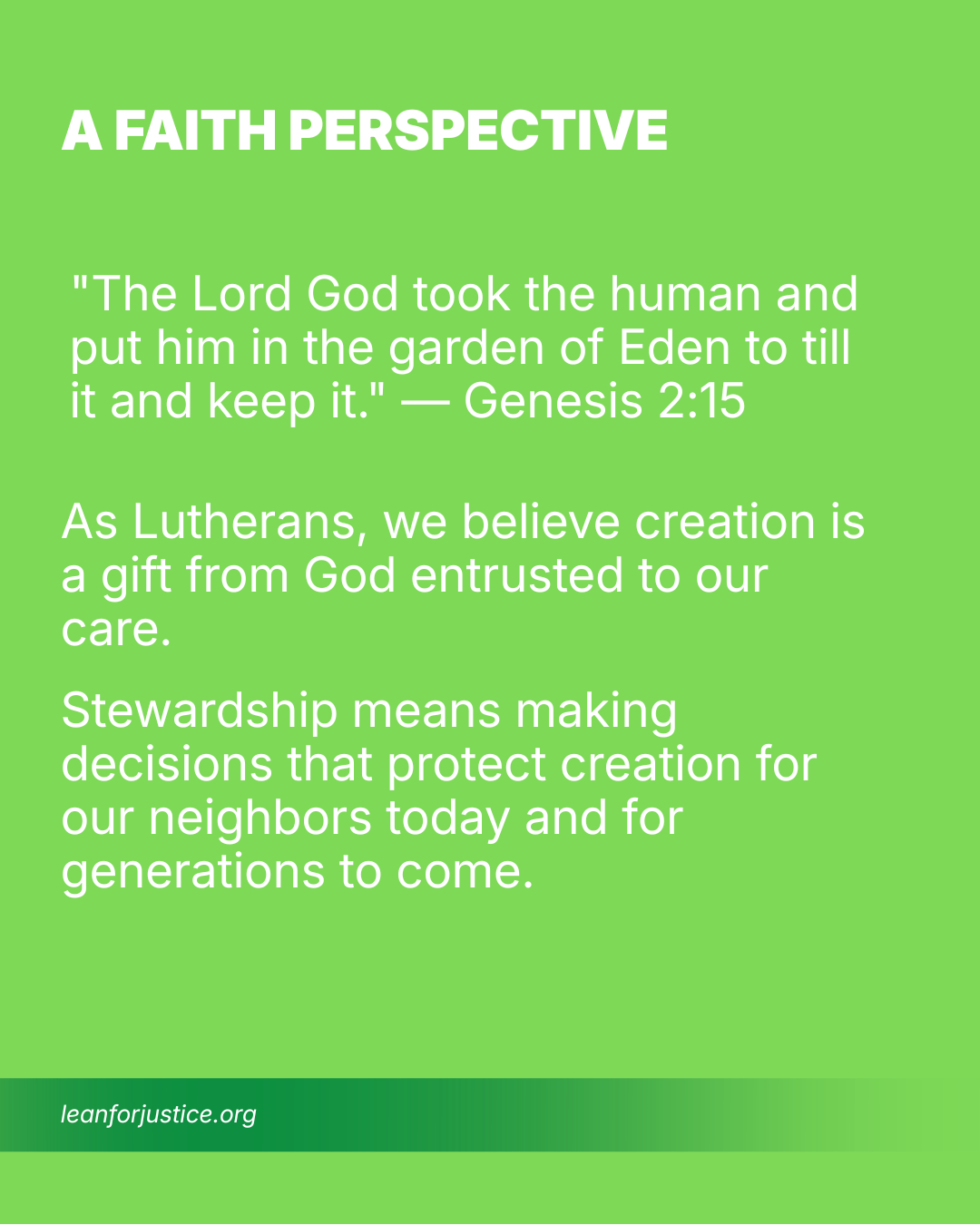
As people of faith, we believe caring for our neighbors means both protecting God’s creation and ensuring everyone has access to a safe, affordable place to call home.
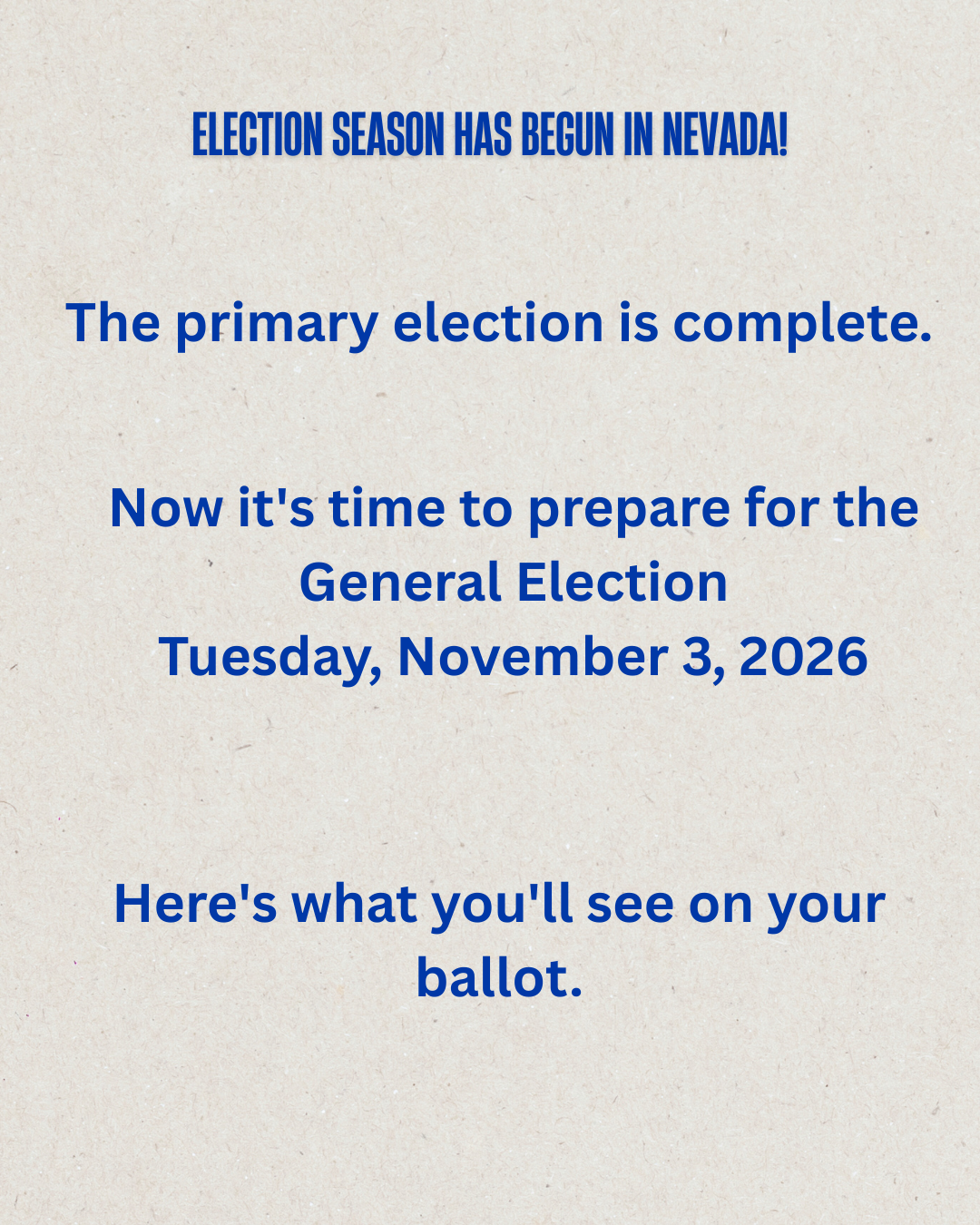
With just over three months until early voting begins for Nevada’s 2026 General Election, now is the time to prepare.
Election laws, court decisions, and voting procedures continue to evolve at both the state and federal levels. Taking a few minutes now to verify your voter registration, understand important deadlines, and become familiar with Nevada’s voting process can help ensure your voice is heard this November.
Lutheran Engagement and Advocacy in Nevada (LEAN) has prepared this overview to help congregations understand recent developments that may affect the upcoming election.
As Lutherans, we believe participating in civic life is one way we seek the welfare of our communities (Jeremiah 29:7). We also recognize and celebrate the dedicated public servants—including many Lutherans—who faithfully administer our elections.
Throughout Nevada, Lutheran congregations have long served their communities by:
Hosting neighborhood polling locations.
Providing spaces for respectful community conversations.
Serving as election workers, poll workers, and county election officials.
Encouraging informed and faithful civic participation.
As we prepare for this election season, LEAN wants to remind our congregations that Nevada’s elections are administered by local election officials who work throughout the year to conduct secure, transparent, and accessible elections.
If your congregation would like to host a nonpartisan voter information presentation with your local county election officials, Lutheran Engagement and Advocacy in Nevada would be happy to help coordinate one. Please contact Advocacy Director Rev. Paul Larson.
Recent Election Developments
Over the past year, several state and federal developments have shaped conversations about election administration.
Federal Requests for State Voter Registration Data
The U.S. Department of Justice has requested voter registration information from states as part of broader election administration efforts. Some states have cooperated while others have challenged portions of these requests in court, raising questions about federal authority and voter privacy.
The SAVE Act
The Safeguard American Voter Eligibility (SAVE) Act would require documentary proof of U.S. citizenship when registering to vote in federal elections.
Supporters argue the legislation would strengthen election integrity by ensuring only eligible citizens register to vote.
Opponents argue it could create additional barriers for eligible voters who do not readily possess documents such as passports or certified birth certificates.
As of this writing, the legislation has not become law.
Voter Registration List Maintenance
States regularly update voter registration lists to remove duplicate registrations, deceased voters, or individuals who have moved.
Supporters believe these efforts help maintain accurate voter rolls.
Voting rights organizations have expressed concern that aggressive maintenance practices may mistakenly affect eligible voters, making it important for voters to periodically verify their registration status.
Mail Voting
Mail voting continues to be the subject of national debate.
Some federal officials have advocated for tighter restrictions, while election officials and numerous studies have found documented cases of voter fraud through mail voting to be rare. Several recent executive actions related to mail ballots remain under legal challenge.
Federal Role in Election Administration
Recent executive actions have proposed expanding the federal government’s role in election administration and voter verification. Because states traditionally administer elections, several of these actions are currently being reviewed through the courts.
Election Assistance Commission
Changes have been proposed regarding the leadership and direction of the U.S. Election Assistance Commission, the independent federal agency that develops voluntary voting system guidelines and provides election resources to states.
Voting Machines and Hand Counts
Questions about voting equipment have continued in some communities. A few Nevada counties explored hand-counting ballots but ultimately determined the process required significantly more staffing, increased costs, and additional time to complete election results.
How You Can Prepare
Verify Your Voter Registration
Check your voter registration regularly between now and Election Day.
If your registration information changes or requires verification, addressing it early helps avoid problems later.
Watch Your Mail
Election officials may mail notices requesting updated voter registration information.
Take time to review any election-related mail carefully and respond promptly if action is needed.
Know the Deadlines
Whether voting by mail, during early voting, or on Election Day, familiarize yourself with registration deadlines and ballot return deadlines well before the election.
If you vote by mail, return your ballot as early as possible.
Report Problems
If you experience voting difficulties or observe possible election problems, assistance is available.
Election Protection operates a nationwide, nonpartisan voter assistance hotline:
866-OUR-VOTE (866-687-8683)
Trained volunteers and legal experts can answer questions and help address voting concerns.
Walking Together with Hope
Elections can bring excitement, disagreement, and uncertainty. As followers of Christ, we are called to engage our democracy with humility, truthfulness, and love for our neighbors.
We encourage every eligible voter to become informed, participate peacefully, and pray for all who administer our elections and all who seek public office.
Together, we can help build communities marked by trust, civility, and hope.
“Seek the welfare of the city where I have sent you… for in its welfare you will find your welfare.” — Jeremiah 29:7\
A Final Word
At Lutheran Engagement and Advocacy in Nevada, we believe our democracy is strongest when every eligible voter can participate confidently and peacefully.
We are grateful for the work of Nevada Secretary of State Cisco Aguilar, Nevada’s county clerks, registrars of voters, election workers, and the thousands of volunteers who help administer our elections. Their year-round work ensures that elections are conducted with professionalism, transparency, and accountability.
As Secretary Aguilar has reminded Nevadans, elections are not just conducted on Election Day—they are the result of months of preparation, testing, bipartisan oversight, and public transparency. Nevada’s election system includes numerous safeguards designed to protect both election security and voter access.
As Election Day draws closer:
Verify your voter registration.
Learn about your voting options and deadlines.
Seek information from trusted, official election sources.
Be cautious before sharing election information on social media.
Treat election workers, poll workers, and fellow voters with kindness and respect.
As people of faith, we are called to love our neighbors, seek the common good, and participate in civic life with humility and integrity. Regardless of political affiliation or candidate preference, every eligible voter deserves the opportunity to cast a ballot freely, safely, and confidently.
If your congregation would like to host a nonpartisan voter education event, invite your local county election officials to speak, or learn more about voting in Nevada, Lutheran Engagement and Advocacy in Nevada would be honored to help coordinate those opportunities.
May we enter this election season committed to truth, civility, prayer, and hope—trusting that faithful citizenship is one way we live out our calling to seek the welfare of our communities (Jeremiah 29:7).
“Let each of you look not to your own interests, but to the interests of others.” — Philippians 2:4
Why it matters: Data centers are becoming one of Nevada’s fastest-growing industries. They also require significant amounts of electricity, land, and—depending on the cooling technology, water. As communities weigh the economic benefits alongside concerns about infrastructure, public health, and environmental impacts, several local governments have begun pausing new development while they consider new regulations. These discussions are expected to influence legislation during the upcoming session.
February 2025
Reno declines to adopt data center regulations
The Reno City Council voted against adopting new standards regulating issues such as:
Water consumption
Energy demand
Noise
Community impacts
At the time, data centers continued to be regulated similarly to warehouse developments.
Throughout 2025
Rapid growth accelerates
Northern Nevada continued attracting major data center investments because of:
Available industrial land
Tax incentives
Existing fiber infrastructure
Access to regional power
Multiple new projects received local approvals, increasing public concern about cumulative impacts on neighborhoods and utilities.
Spring 2026
Nevada Legislature studies the issue
During interim legislative committee hearings, lawmakers heard testimony from:
Local governments
Utility representatives
Environmental organizations
Industry representatives
Community advocates
Key concerns included:
Electric grid capacity
Water use
Land use planning
Tax incentives
Local control
Long-term economic benefits versus infrastructure costs
The hearings signaled that data center policy is likely to become a major legislative issue in 2027.
May 14, 2026
Reno adopts Nevada’s first data center moratorium
The Reno City Council voted 6–1 to temporarily stop accepting new data center permit applications.
The pause was intended to give city staff time to develop regulations addressing:
Appropriate locations
Infrastructure impacts
Energy demand
Community compatibility
This made Reno the first Nevada city to enact a data center moratorium.
June 1–2, 2026
Moratorium extended through August 2027
Following extensive public testimony, Reno voted to extend the moratorium until August 31, 2027, or until permanent regulations are adopted.
City officials committed to working with regional partners and the public to develop long-term policies.
May–June 2026
Humboldt County begins its own process
County commissioners advanced a temporary moratorium while drafting zoning regulations specifically for data centers.
Officials emphasized the need to establish clear standards before additional projects move forward.
June 2026
Henderson considers a temporary moratorium
The Henderson City Council introduced an ordinance that would temporarily halt new data center permit applications while evaluating:
Water consumption
Energy infrastructure
Community impacts
Future development standards
The proposal reflects growing concern that Southern Nevada should establish policies before additional large facilities are approved.
June 2026
Clark County approves expansion while debate continues
Clark County approved an expansion of an existing Switch data center after commissioners concluded many public concerns raised did not apply to that specific project because it used renewable energy and closed-loop cooling.
The hearing nevertheless demonstrated growing public concern about:
Electric demand
Water use
Environmental impacts
Job creation
Future growth
It also highlighted that different Nevada jurisdictions are taking different approaches.
Looking Ahead: 2027 Nevada Legislative Session
Lawmakers are expected to consider statewide policies addressing questions such as:
Should Nevada establish statewide siting standards?
How should data centers pay for new electric infrastructure?
Should water use requirements differ by cooling technology?
Should local governments retain primary authority?
How should tax incentives be structured?
How can Nevada balance economic development with community and environmental impacts?
The conversation has shifted from whether Nevada should prepare for rapid data center growth to how that growth should be managed. Local governments are increasingly using temporary moratoriums as planning tools while they develop long-term regulations, and the Legislature will likely be asked to determine whether statewide standards are needed.
UPDATE: Henderson decides against moratorium, and will explore a code change.
Use this printable page to help people find ELCA advocacy tools! At a meeting, on a table, wherever – QR codes and urls can be a shortcut to connecting! Thanks for sharing
We’ve all seen those books titled [Topic] for Dummies, the kind that promise to teach you just enough to understand a complicated subject. When it comes to Nevada public policy, you don’t need to buy a book. One of the best resources is already available to every Nevadan, free of charge.
The Nevada Legislative Counsel Bureau Research Division serves as the nonpartisan research arm of the Nevada Legislature. Its mission is to provide legislators with accurate, objective, and well-researched information so they can make informed decisions on behalf of the people of Nevada. The good news is that these same resources are available to every member of the public.
As the 84th Nevada Legislative Session begins in 2027, there has never been a better time to become a more informed and engaged citizen.
Start by visiting the Nevada Legislature website. From there, explore the Research Division and the Research Library. You’ll find an impressive collection of research briefs, issue papers, fact sheets, legislative histories, reports submitted to the Legislature, and searchable databases. Whether you’re interested in housing, education, elections, health care, behavioral health, water, energy, transportation, or public safety, you’ll discover reliable, nonpartisan information prepared by professional policy analysts.
The Research Division’s publications are especially helpful if you’re looking for a quick overview of an issue before contacting your legislators or following a bill. Their fact sheets and issue papers explain complex policy topics in plain language and provide valuable background for understanding legislation and public debate.
The Legislative Counsel Bureau exists primarily to support Nevada’s lawmakers, but its work belongs to all Nevadans. Your tax dollars fund this research, and it represents one of the most trustworthy sources of information available on state government and public policy. In an age when misinformation can spread rapidly, access to objective, evidence-based information is more valuable than ever.
As people of faith, we are called not only to care for our neighbors but also to participate thoughtfully in the public life of our communities. The ELCA social statement Church in Society: A Lutheran Perspective reminds us:
“God works through the family, education, the economy, the state, and other structures necessary for life in the present age… Christians also exercise their calling by being wise and active citizens. Christians need to be concerned for the methods and content of public deliberation.”
Being an informed citizen is one way we live out that calling. Before contacting your legislators, testifying on a bill, or discussing an issue with friends and neighbors, take advantage of the outstanding resources available through the Legislative Counsel Bureau. Learning more about the issues facing Nevada equips all of us to advocate more faithfully and more effectively for the common good.
 Lutheran Engagement and Advocacy in Nevada