Across Nevada, food banks, congregations, and community ministries help our neighbors put food on the table. That work matters. So do the public decisions that shape whether families can afford groceries after paying for housing, utilities, transportation, and health care.
When we pray, “Give us this day our daily bread,” we are reminded that our neighbors’ well-being is part of our shared responsibility.
This month, Lutheran Engagement and Advocacy in Nevada invites you to give, serve, listen, and advocate. Support a local pantry. Volunteer with your congregation. Ask elected officials to protect food assistance and invest in families.
What is one action your congregation can take this September?
The 84th Session of the Nevada Legislature doesn’t begin until February 2027.
But here’s the thing: the work has already started.
Interim committees are wrapping up their work. Bill Draft Requests are beginning to take shape. Advocates, agencies, legislators and community organizations are already identifying the issues that could define the next legislative session.
And LEAN is paying attention.
Here are some of the big areas we’re watching:
Housing Affordability Nevada has made important investments in housing, but building more housing doesn’t automatically make it affordable. We’ll be watching tenant protections, senior rents, fees, homelessness, affordable housing, manufactured housing and institutional investors.
Hunger & Food Insecurity Federal SNAP changes could have major consequences for Nevada families and our state budget. Charity matters, but we cannot food-drive our way out of hunger.
Health Care & Maternal Health With maternity services disappearing in some communities and rural Nevada already facing serious gaps in care, access to maternal health, Medicaid, behavioral health and health-care workers will be important.
Energy & Data Centers Data centers bring investment, but they also require enormous amounts of electricity, water and infrastructure. Who receives the benefits — and who gets the bill?
Water & the Colorado River Nevada is a desert. As the Colorado River shrinks, difficult choices are coming about conservation, growth and who bears the burden.
Creation Care Public lands. Wildfire. Extreme heat. Renewable energy. Water. Wildlife. Development. How do we grow while caring for the Nevada future generations will inherit?
Public Education Nevada has made historic investments in education. Now lawmakers are asking what accountability should look like. LEAN will be asking whether Nevada’s children have the resources and opportunities they need to flourish.
Criminal Justice Public safety and accountability matter. So do rehabilitation, restoration, reentry and human dignity.
Immigration & Welcoming Communities Federal immigration decisions are felt locally—in our families, workplaces, schools and congregations. How do we welcome our neighbor and protect human dignity?
Voting Rights & Democracy LEAN is nonpartisan. But nonpartisan does not mean disengaged. Accessible voting and trustworthy elections matter for healthy communities.
Economic Justice & Nevada’s Budget Eventually almost every conversation comes back to one question:
How are we going to pay for it?
Budgets aren’t just spreadsheets. They tell a story about our priorities.
This isn’t LEAN’s final 2027 legislative agenda. We still have months to go, hundreds of bills haven’t even been written, and Nevada will undoubtedly surprise us.
But we’re watching.
We’re learning.
We’re listening.
And when February comes, we’ll be ready to show up.
The Legislature doesn’t begin until February. Faithful advocacy begins now.
Shelters matter. Emergency beds matter. Outreach matters. They provide safety, stability, and a place for people to begin connecting with services.
But a shelter bed is not a home.
These are band-aids for a much larger policy failure.
The larger question is: What happens next?
If someone enters a shelter, receives services, and is ready to move forward, but there is no affordable or supportive housing available, where are they supposed to go?
That is one of the challenges highlighted by Nevada’s latest homeless census. A recent look at the numbers from The Nevada Independentshows both the progress being made and the challenge that remains.
In Clark County, nearly 3 in 5 people experiencing homelessness were unsheltered, compared with roughly 1 in 5 in Washoe County. Washoe County has invested heavily in outreach, shelter, and the Nevada Cares Campus, demonstrating that getting people indoors and connected with services can make a difference.
But the numbers also remind us that homelessness does not exist separately from Nevada’s larger housing crisis.
Rising rents. Limited affordable housing. Too few permanent supportive housing options. Behavioral and physical health needs. Seniors and families struggling to keep up with the cost of housing.
All of these contribute to what we see on our streets.
So, as Nevada continues investing in emergency shelter and services, we also need to ask:
How do we prevent people from becoming homeless in the first place?
How do we increase affordable housing?
How do we expand permanent supportive housing?
How do we help seniors, families, people with disabilities, and others remain safely housed?
Shelter can be an important step toward stability. We need shelters, outreach workers, supportive services, and emergency beds.
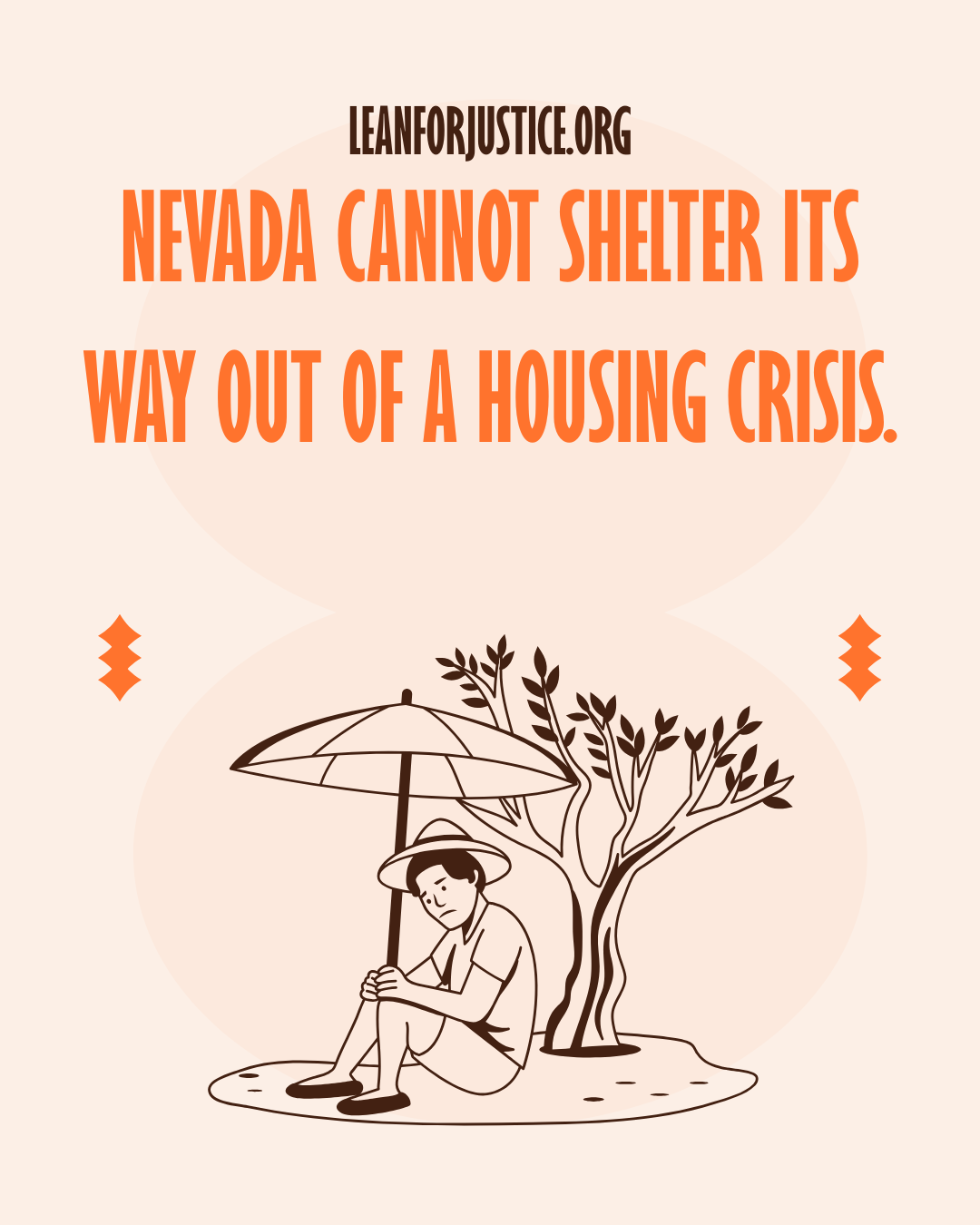
But Nevada cannot shelter its way out of a housing crisis.
“God’s work. Our hands.” Sunday is coming up on September 13. Have you seen ELCA Advocacy’s helpful resource to help congregations connect hands-on service with faithful public witness?
The resource, “Advocacy in Service to Our Neighbor,” reminds us that Lutherans celebrate “God’s work. Our hands.” because we care about our communities and witness to God’s love in our local places. It grounds advocacy in Lutheran social teaching, naming our shared commitment to the common good, dignity, equity, and the well-being of all neighbors. It also lifts up civic engagement as one way we help ensure that every voice is heard and every vote is counted.
The supplement includes a template letter congregations can use to write to elected officials. Some congregations may prefer this hands-on letter-writing approach to digital action alerts, and the ELCA Washington Office is willing to deliver collected day-of-service letters to federal lawmakers. This can be an easy, concrete activity to add to a food drive, service project, fellowship hour, adult forum, youth gathering, or worship-adjacent event.
The resource is especially timely because “God’s work. Our hands.” Sunday falls during what ELCA Advocacy calls “prime time” for civic engagement. In the seven weeks that follow, congregations can connect their service to:
National Voter Registration Day on September 15,
National Voter Education Week October 5-9,
Election Hero Day on October 20, and
Vote Early Day on October 27.
The guide also offers ways to get the conversation flowing across generations. It suggests asking questions such as, “What was it like the first time you voted?” and “How has your faith impacted your voting choices?” Those questions can open the door to deeper reflection on Lutheran social teaching, civic life, and our shared responsibility for the common good.
Congregations might also use “God’s work. Our hands.” Sunday to help neighbors access the right to vote. The resource suggests activities such as holding a voter registration drive, learning about opportunities to serve as a poll worker or poll watcher, planning hospitality for election workers, or joining with local faith partners for prayer, public witness, or community-building around Election Day.
For LEAN, this is exactly the kind of faithful civic engagement Nevada needs. Service matters. So does advocacy! When we pack food boxes, assemble hygiene kits, serve meals, welcome neighbors, or support community ministries, we also learn something about the policies that shape hunger, housing, health care, immigration, education, voting access, and public life.
“As people of faith, ELCA members recognize elections as an expression of our call to love and serve our neighbor,” the resource says. That is a powerful reminder for this season. Our public witness does not have to be partisan to be faithful. We can encourage voting, support election workers, listen across generations, write to lawmakers, and help our neighbors participate safely and confidently in civic life.
This September 13, let “God’s work. Our hands.” be more than a day of service. Let it be a day of prayer, learning, advocacy, and faithful love for the neighbor — with hands ready for service and voices ready for justice.
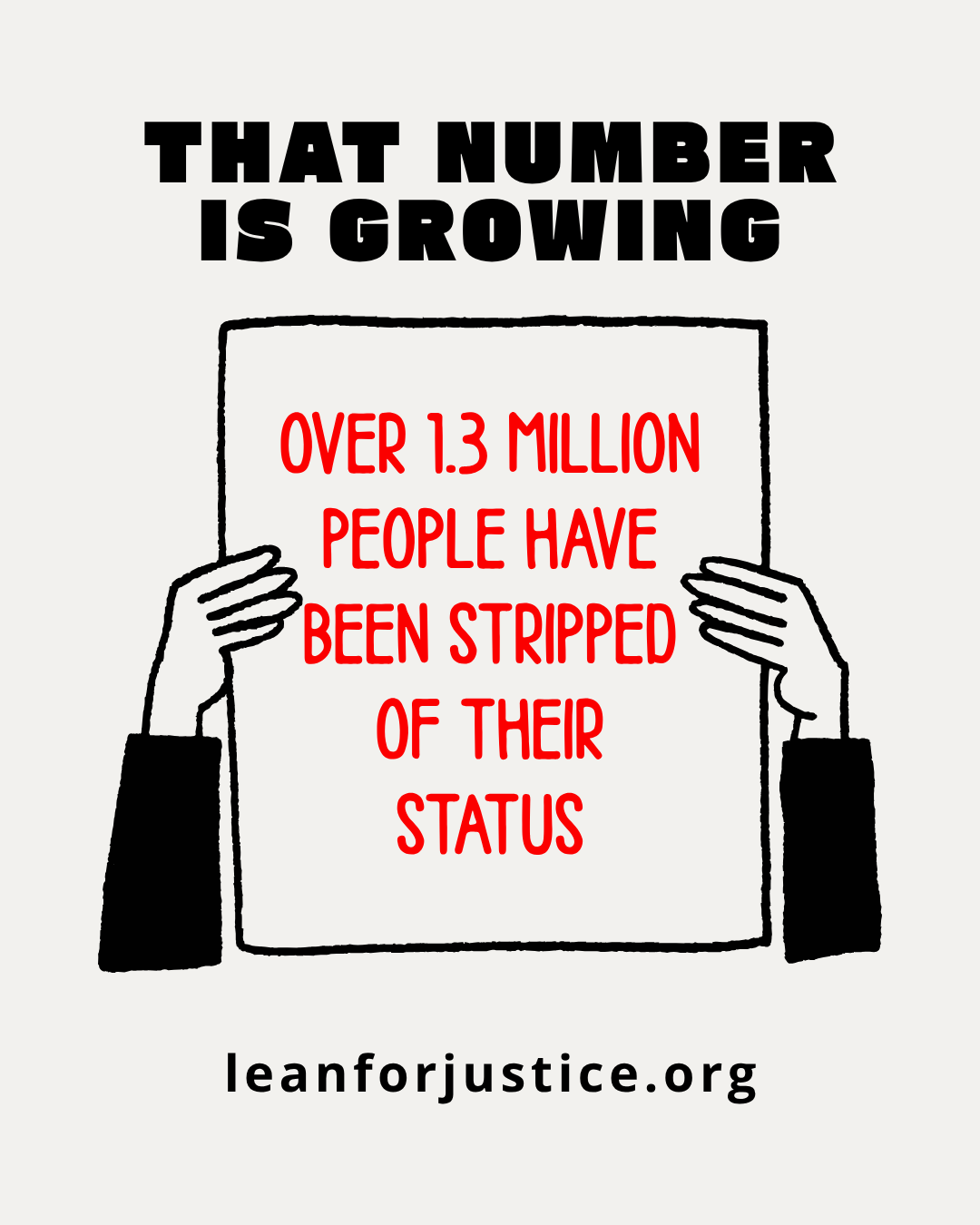
Temporary Protected Status, or TPS, is a humanitarian immigration protection for people already living in the United States who cannot safely return to their home countries because of armed conflict, natural disaster, or other extraordinary and temporary conditions.
TPS does not create a path to citizenship. While a country’s TPS designation is in effect, eligible individuals can receive protection from deportation and authorization to work in the United States.
What is happening to TPS?
TPS protections have narrowed dramatically during 2026.
The Trump administration has moved to terminate TPS designations for numerous countries. Recent court decisions have allowed several of those terminations to move forward.
In June, the U.S. Supreme Court allowed the administration to proceed with ending TPS protections for people from Haiti and Syria while litigation continued. Subsequent federal court decisions have cleared the way for the administration to terminate protections for people from South Sudan, Burma/Myanmar, Somalia, and Ethiopia, among others.
The legal situation continues to change, and litigation remains underway in some cases.
For affected TPS holders, termination can mean losing protection from deportation and employment authorization. It can also create uncertainty for families who have spent years—and in some cases decades—living, working, worshiping, raising children, paying taxes, and building lives in the United States.
This matters in Nevada
This is not simply a national immigration debate. TPS holders are part of Nevada communities.
According to Congressional Research Service data, approximately 5,825 people with TPS lived in Nevada as of March 31, 2025.
They are our neighbors, co-workers, caregivers, congregation members, business owners, parents and friends.
Immigrant workers are also an important part of Nevada’s workforce, including industries such as hospitality, construction, food service, care work, agriculture and other essential sectors.
When someone loses authorization to work, the consequences can extend far beyond one individual.
A family can lose income. An employer can lose an experienced worker. Children can face uncertainty about a parent’s future. Congregations and community organizations may see increased needs for food, housing, legal assistance and emergency support.
Behind every statistic are people and families.
Why should Lutherans care?
For Nevada Lutherans, immigration is not only a political question. It is also a question about how we understand our relationship with our neighbor.
The ELCA social message on Immigration reminds us:
“Hospitality for the uprooted is a way to live out the biblical call to love the neighbor in response to God’s love in Jesus Christ.”
Scripture repeatedly calls God’s people to remember and care for the stranger.
“The stranger who resides with you shall be to you as the citizen among you; you shall love the stranger as yourself.” — Leviticus 19:34
Jesus also reminds us:
“I was a stranger and you welcomed me.” — Matthew 25:35
The ELCA’s teaching on immigration recognizes both the legitimate role of government in creating an orderly immigration system and the responsibility of Christians to advocate for policies grounded in human dignity, justice, compassion and concern for our neighbors.
TPS was created by Congress because circumstances can arise when returning people to their countries of origin is unsafe.
As protections are withdrawn, people of faith can ask an important question:
How should our immigration policies balance the rule of law with human dignity, family unity, due process, community stability and protection for people facing dangerous conditions?
What can Nevada Lutherans do?
Contact Nevada’s members of Congress
Congress has the authority to change federal immigration law and create more permanent protections for longtime TPS holders.
Nevada Lutherans can contact our U.S. senators and representatives and ask what they are doing to provide stability for TPS holders, their families and the communities where they live.
An ELCA Action Alert.
Share Nevada stories
Public policy affects real people.
If your congregation, ministry, workplace, school or neighborhood includes TPS holders or families affected by changing immigration policies, consider helping their stories be heard, with their permission and with careful attention to their safety and privacy.
Pastors, employers, educators, health care workers, social service providers and community members can also help policymakers understand how changes in immigration policy affect Nevada communities.
Never publicly identify someone’s immigration status without their explicit permission.
Connect people with trusted legal resources
Immigration law is complicated, and the status of individual TPS designations is changing rapidly.
Anyone who currently has TPS or whose employment authorization may be affected should consider speaking with a qualified immigration attorney or accredited nonprofit immigration legal-service provider.
A person’s options may depend on their country of origin, family circumstances, immigration history, asylum eligibility or other factors.
Congregations should not provide immigration legal advice unless the person providing it is appropriately qualified.
Instead, congregations can help neighbors find trustworthy legal assistance.
Prepare for impacts on families
The termination of TPS can affect more than someone’s immigration status.
Congregations and community organizations may encounter:
Job and income loss
Housing or food insecurity
Family separation concerns
Questions about employment authorization
Increased demand for legal assistance
Fear surrounding travel or interactions with government agencies
Children and families experiencing significant uncertainty
Faith communities can prepare by building relationships now with immigrant-serving organizations, food assistance programs, housing organizations and reputable legal-service providers.
Pray, accompany and advocate
Christian public witness involves more than responding to a policy debate.
We pray for neighbors living with uncertainty.
We listen to the experiences of immigrants in our communities.
We accompany families seeking safety and stability.
And we advocate for public policies that uphold human dignity, family unity, due process and the common good.
Temporary Protected Status exists because Congress recognized that extraordinary circumstances can make returning home unsafe.
As protections are withdrawn for communities that have built lives in the United States, people of faith have an important role to play: accompanying affected families, connecting neighbors with trustworthy resources, and asking policymakers how our immigration system can uphold human dignity, family unity, due process and the common good.
Our neighbors are more than an immigration status.
As Lutherans, we are called to see the human beings behind our public policies—and to love and serve our neighbors.
Sources & Learn More
ELCA Social Message: Immigration The ELCA’s social teaching on immigration emphasizes welcoming the stranger, advocating for fair and generous immigration laws, and recognizing the dignity of newcomers.
Congressional Research Service: Temporary Protected Status and Deferred Enforced Departure Provides background on TPS, congressional authority and national and state-level TPS population data.
U.S. Citizenship and Immigration Services: Temporary Protected Status Provides official information about current TPS designations, eligibility requirements, employment authorization and country-specific updates.
Important: TPS policies and court cases are changing rapidly. Information in this resource is current as of August 19, 2026. Individuals affected by TPS changes should consult qualified immigration counsel for advice about their individual circumstances.
Lutheran Engagement and Advocacy in Nevada (LEAN) provides advocacy and educational resources for Nevada Lutherans. This resource is for general educational purposes and is not legal advice.
 Lutheran Engagement and Advocacy in Nevada